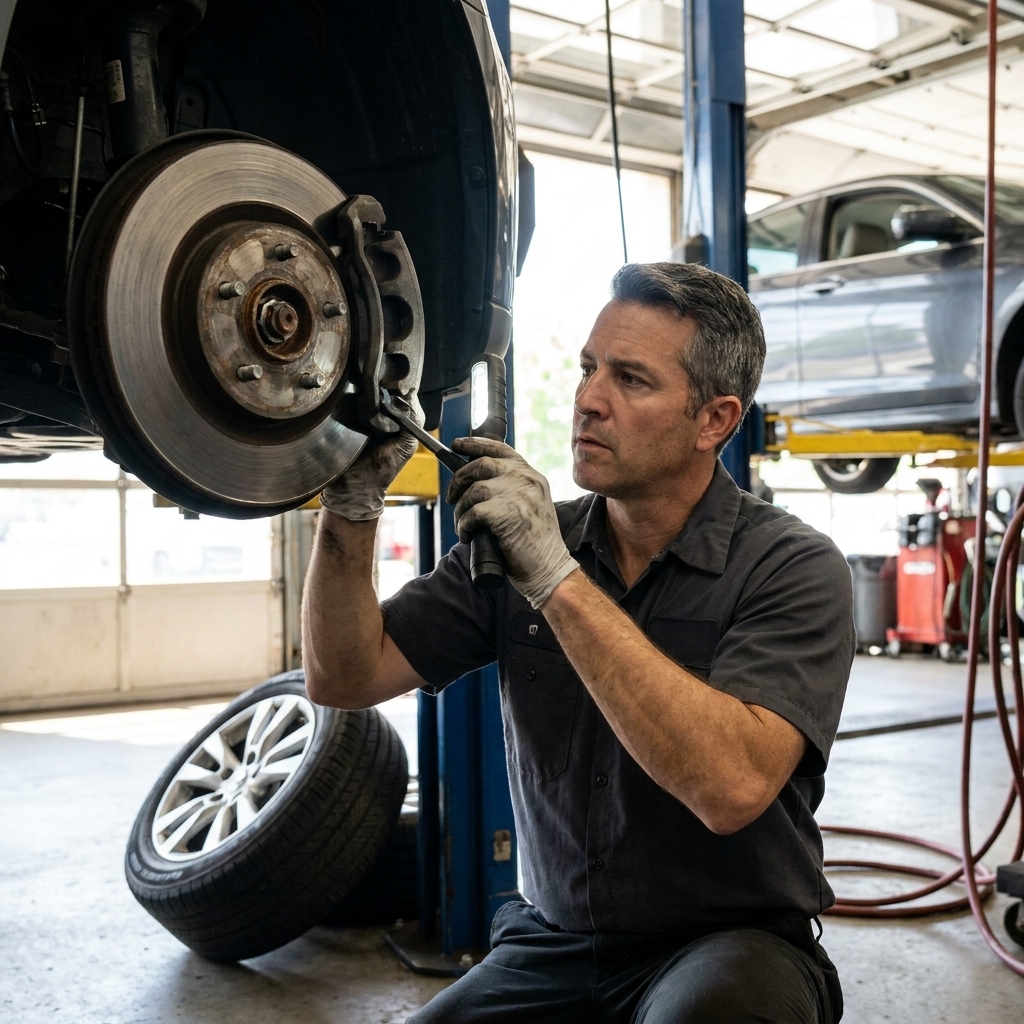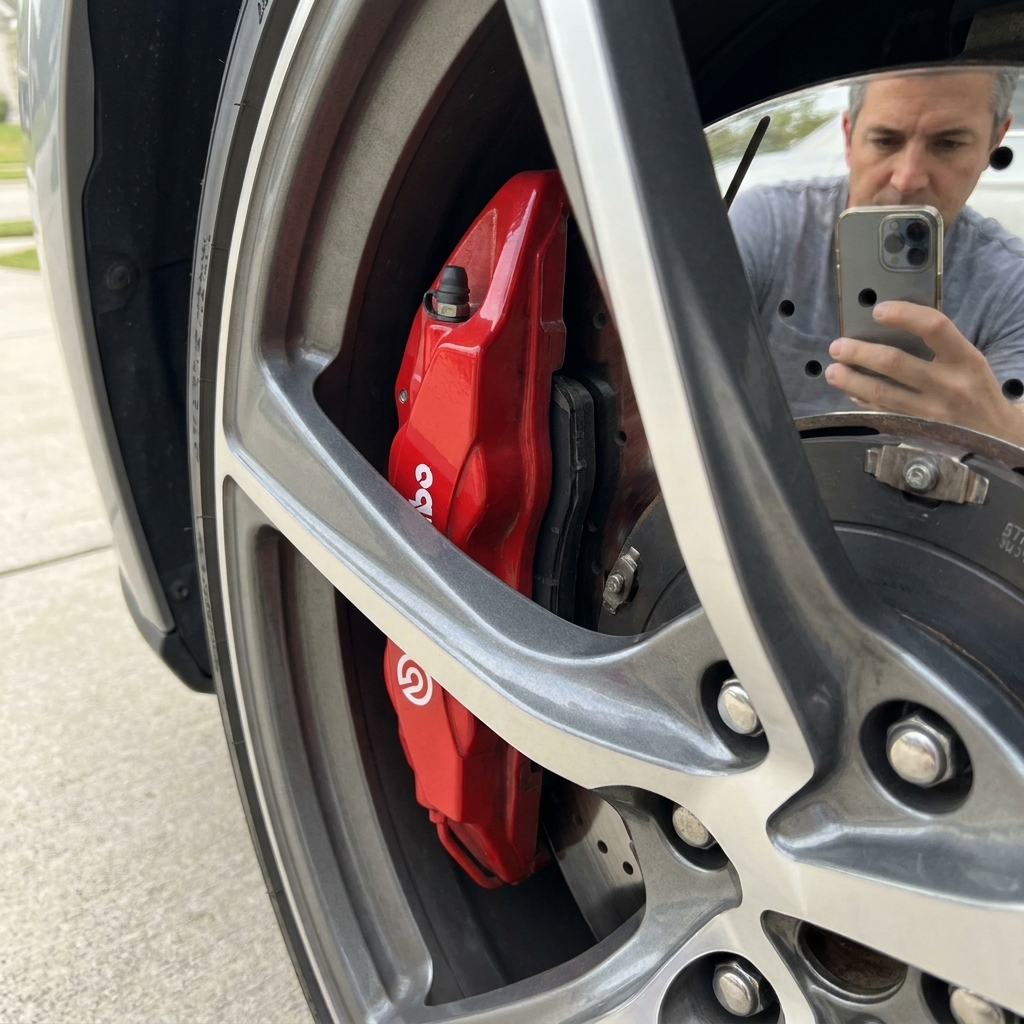
A step-by-step, driveway-friendly guide to visually inspecting brake pads and rotors for wear, damage, and warning signs, with clear next steps if you find p...
I grew up in Michigan watching my grandpa fix whatever rolled into our driveway, and I still love a good driveway repair. But after years in independent shops, I learned something just as important as “how to fix it”: knowing when not to.
This guide breaks down five repairs most drivers can handle with basic tools and patience, plus five you should leave to a qualified mechanic unless you have the right equipment, experience, and a solid reason to take the risk.
Before you turn a wrench
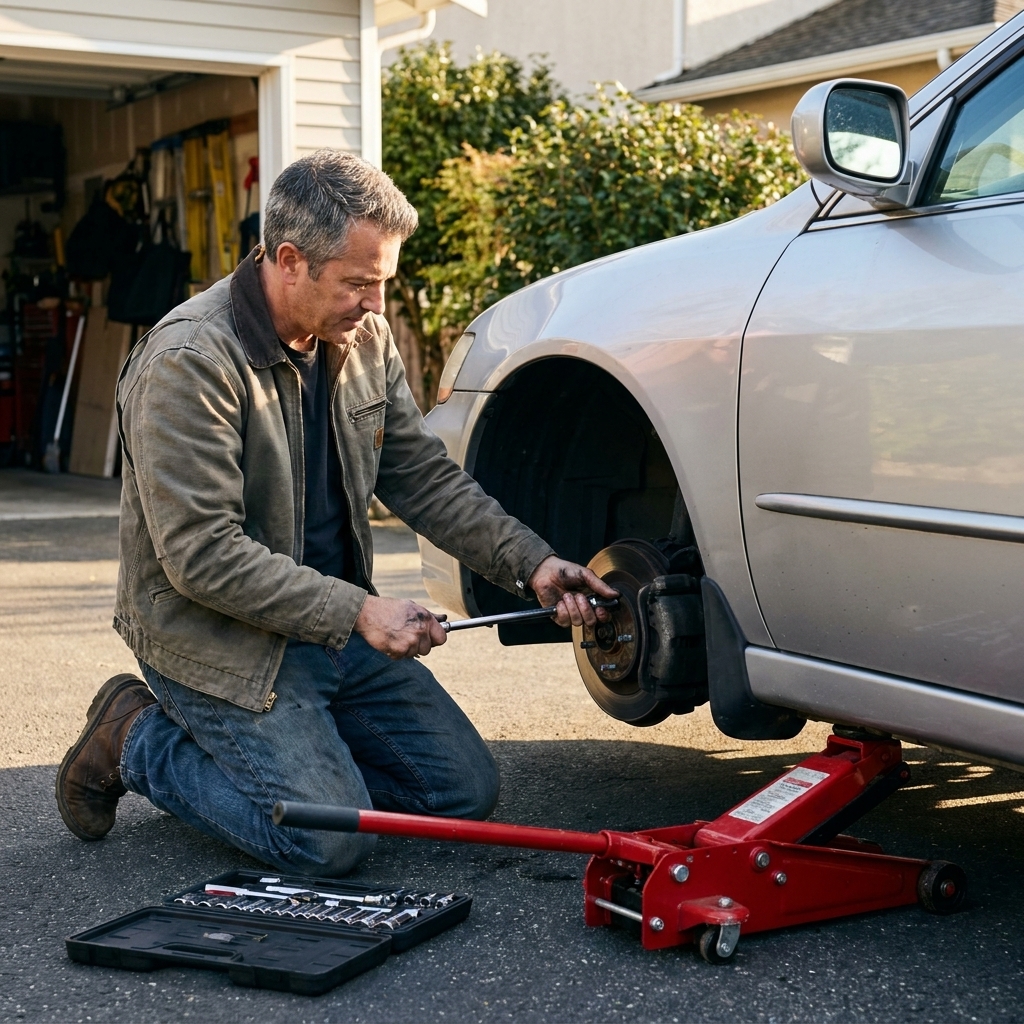
My quick safety checklist
- Flat ground, wheels chocked: If the car can roll, it will.
- Jack stands always: A jack is for lifting, stands are for holding. Never work under a car supported only by a jack.
- Let hot parts cool: Exhausts, radiators, and brakes can burn you fast.
- Use the right lifting points: Check your owner’s manual. Pinch welds and subframe points are not guesses.
- Take photos as you go: Hoses, clips, bolt locations. Your phone is your memory.
- If you smell fuel, stop: Ventilate, back out, and reassess. Fuel vapors are no joke.
Tool basics that pay for themselves
- Socket set (metric and SAE if you drive older domestic)
- Torque wrench (especially for wheels and spark plugs)
- Floor jack and jack stands
- OBD-II scanner (even a basic one)
- Safety glasses and nitrile gloves
- Plastic trim clip tools and a decent flashlight
5 car repairs you can do yourself
These are the jobs I recommend to friends who want to start saving money without gambling with safety or turning a Saturday into a tow truck.
1) Replace engine air filter and cabin air filter
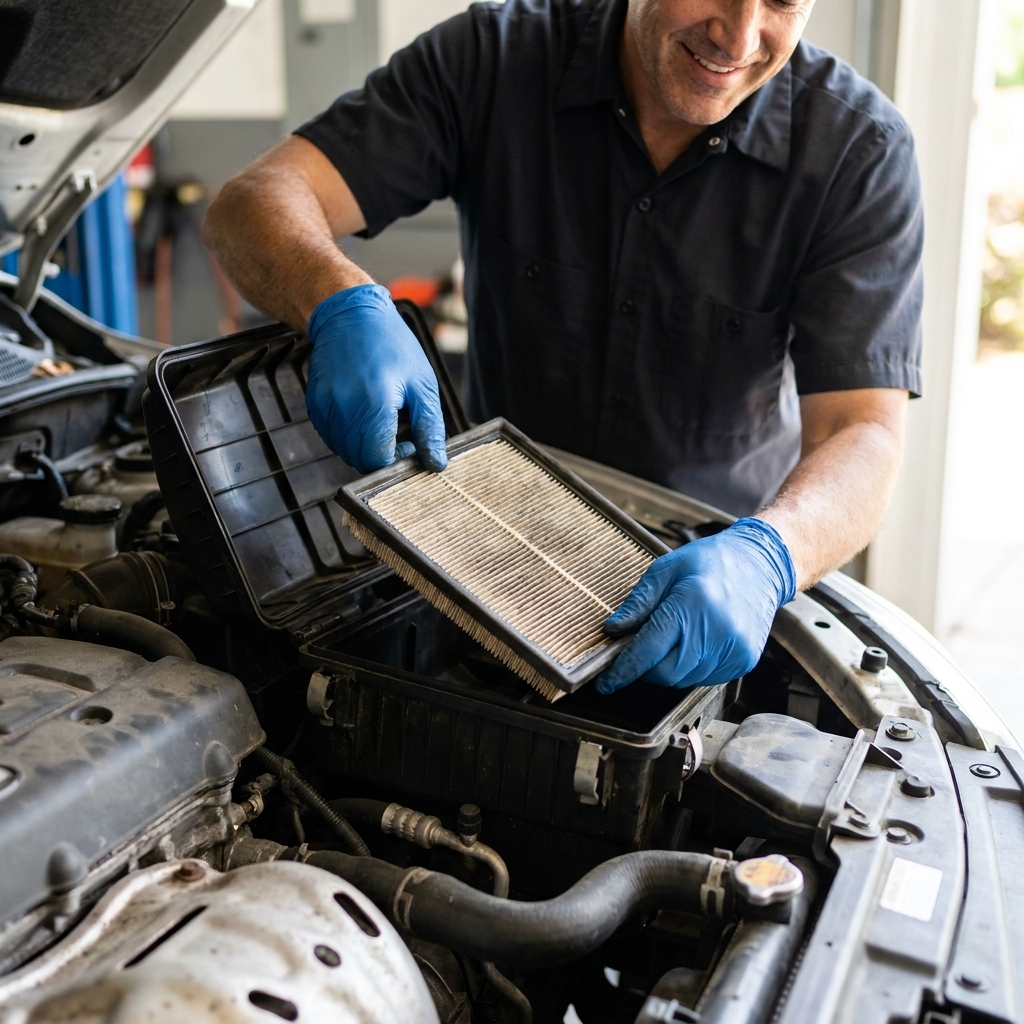
If you want the highest confidence-to-savings ratio, start here. A clogged engine air filter can hurt performance and fuel economy. A dirty cabin filter usually shows up as weak airflow, slow defogging, and a car that smells like a gym bag.
- Typical tools: Usually none, sometimes a screwdriver or 8 mm socket.
- What to watch for: Make sure the filter seats evenly and the airbox closes fully. Gaps can let unfiltered air into the engine.
- How often: Check it at every oil change and follow your owner’s manual for replacement intervals. Many drivers end up replacing somewhere around 15,000 to 30,000 miles, sooner in dusty areas.
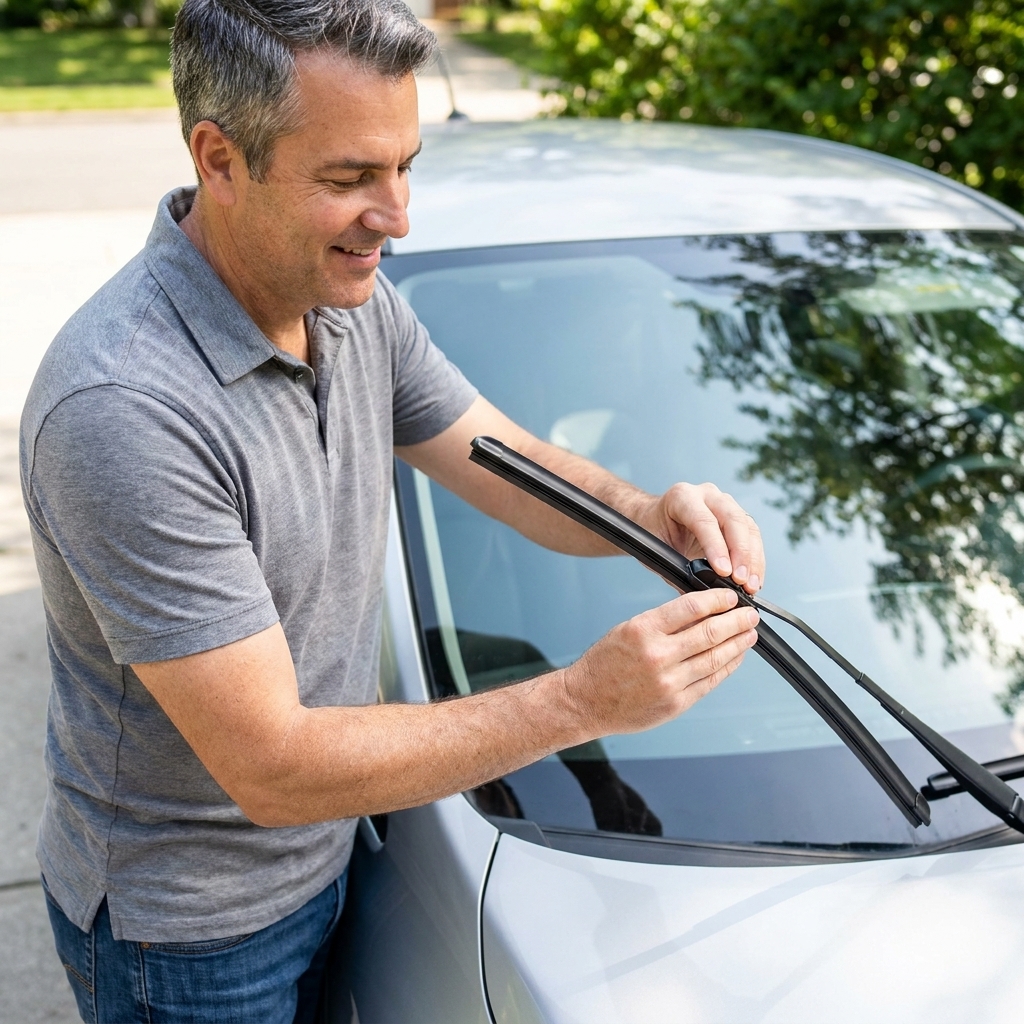
2) Swap wiper blades
Wipers are safety equipment. Streaking, skipping, or chattering in the rain is your sign to replace them. Most modern blades are tool-free, and the install is a two-minute job once you understand the connector style.
- Typical tools: None.
- What to watch for: Do not let the bare wiper arm snap against the windshield. Put a towel on the glass while you work.
- Pro tip: Clean the windshield and wipe the rubber edge with a damp microfiber. Sometimes “bad wipers” are just dirty glass.
3) Replace the battery (and clean the terminals)
A weak battery causes slow cranks, flickering lights, and “it won’t start” mornings at the worst time. On modern cars, low voltage can also trigger weird, random warning messages. Replacing a battery is usually straightforward, as long as you do it safely and install the correct type.
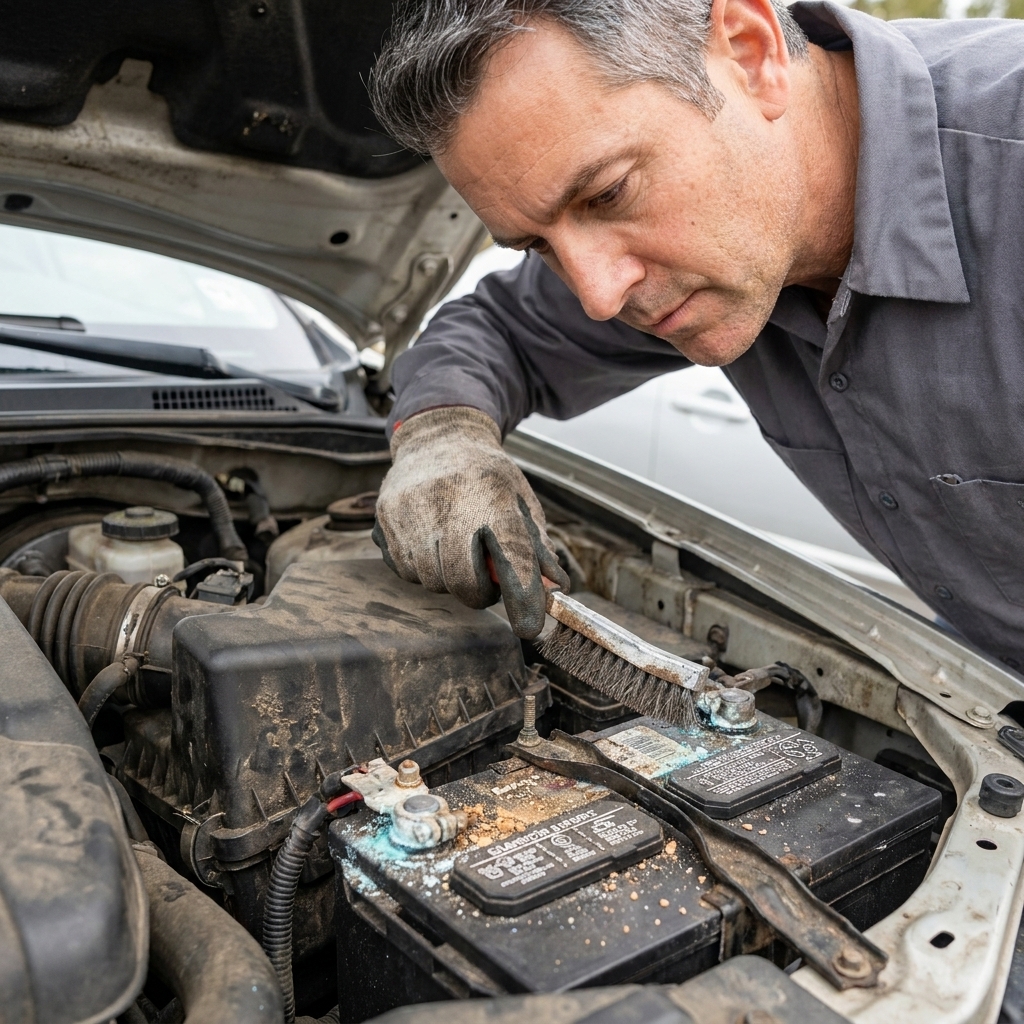
- Typical tools: Wrench or socket (often 10 mm), battery terminal brush.
- Order matters: Disconnect negative (-) first, then positive (+). Reconnect in reverse: positive first, then negative.
- What to watch for: Some cars need battery registration. A memory saver is optional, but without one you might lose radio presets or need to reinitialize things like auto-up windows, steering angle, or idle learn depending on the vehicle.
- Parts note: Match the correct group size and cold cranking amps. If your vehicle came with AGM (common with start-stop), replace it with the correct AGM type.
- Terminal corrosion: White or blue fuzz should be cleaned off. Use a terminal brush and appropriate cleaner, and keep it off paint.
4) Change spark plugs (on accessible engines)
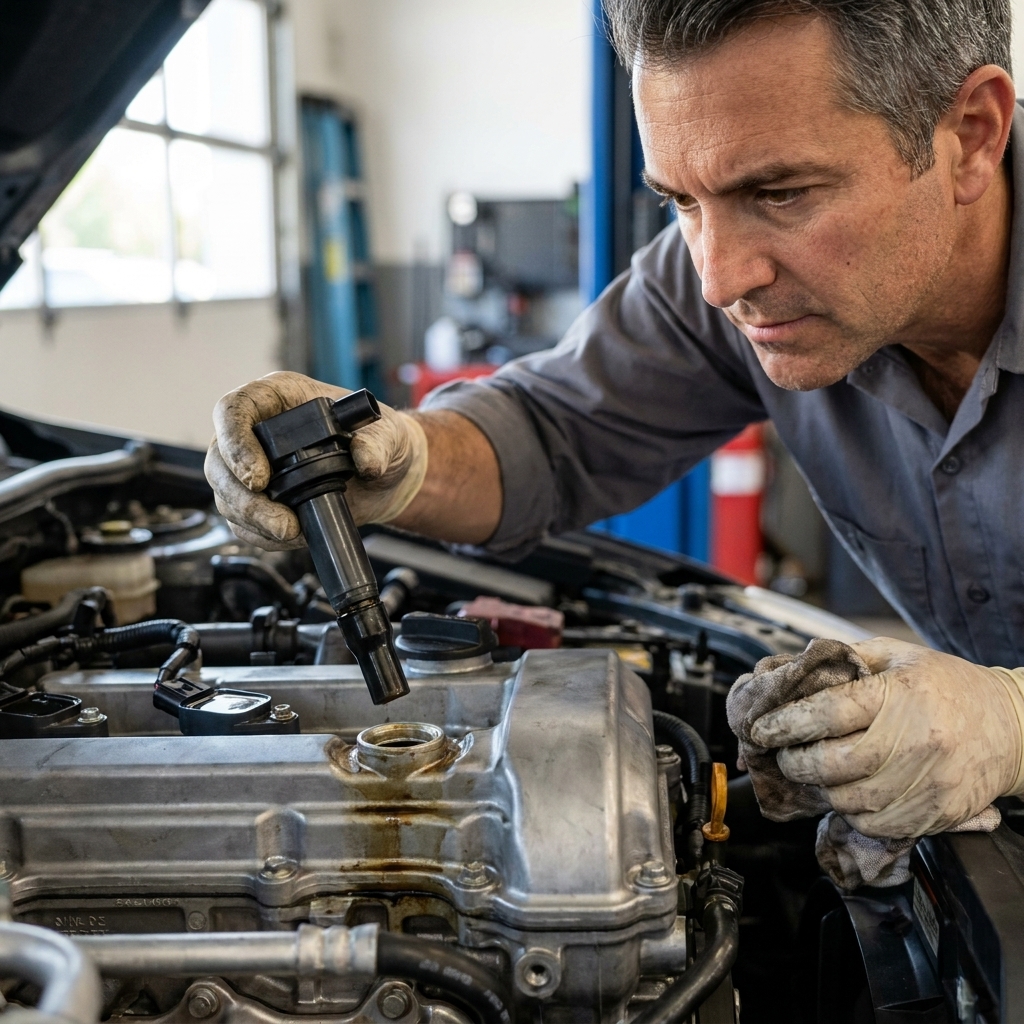
On many 4-cylinder engines with coil-on-plug setups, spark plugs are very doable. On others, they are buried under intake plumbing or require removing the upper manifold. The key is knowing which one you have before you start tearing into it.
- Typical tools: Spark plug socket, extension, ratchet, torque wrench, dielectric grease (small amount on coil boot if recommended).
- Big rule: Start plugs by hand to avoid cross-threading. Cross-threading an aluminum cylinder head can turn a “tune-up” into a nightmare.
- Spec check: Confirm the correct part number and the manufacturer spec for your engine. Many modern fine-wire iridium and platinum plugs should not be re-gapped by hand unless the manufacturer specifically says it is OK.
- When to pause: If you feel heavy resistance while threading, stop and back out.
5) Replace brake pads and rotors (if you follow the rules)
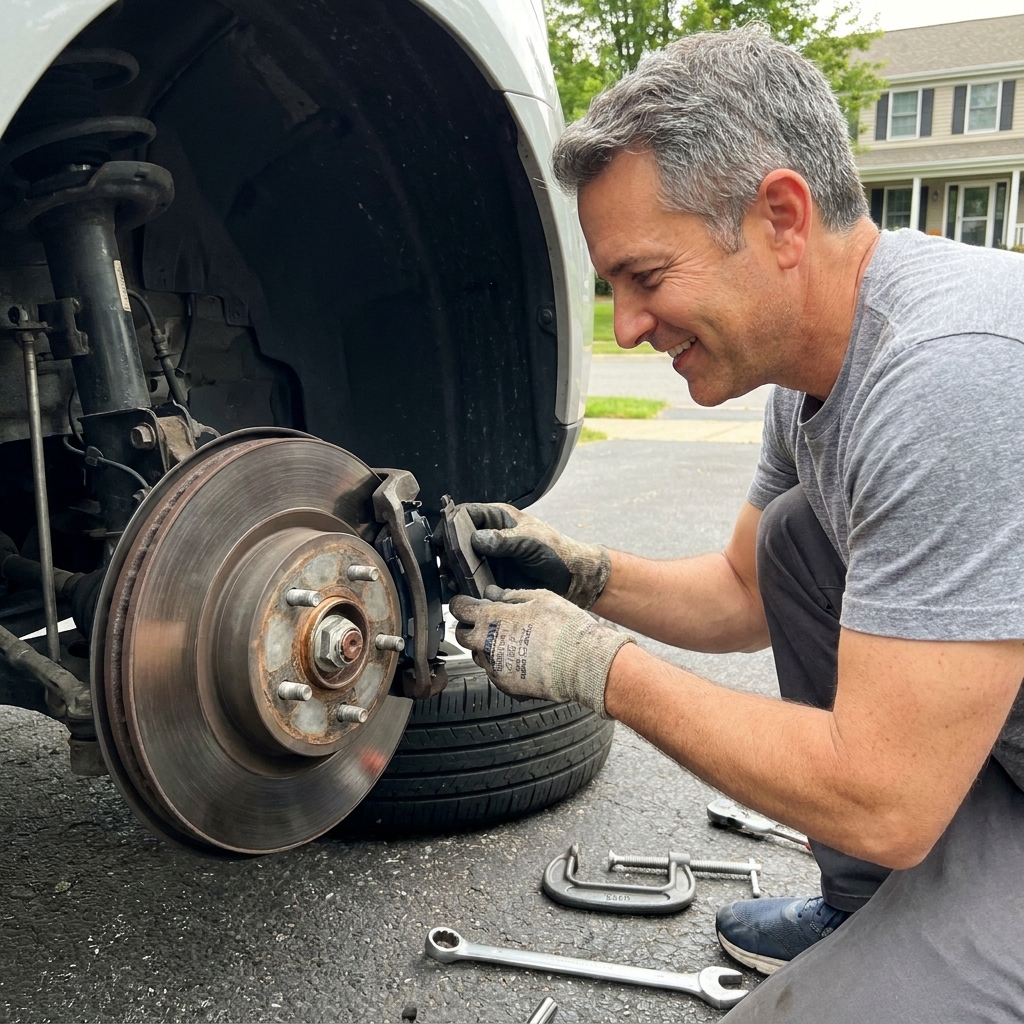
Brakes are a line I do not cross casually, but pads and rotors are within reach for careful DIYers with the right tools and mindset. If you do this job, do it like your family rides in the car, because they do.
- Typical tools: Jack stands, lug wrench, socket set, torque wrench, brake caliper piston tool, brake cleaner, wire brush, a bungee cord or caliper hanger.
- Do not hang the caliper by the hose: Support it.
- Torque matters: Lug nuts, caliper bracket bolts, and wheel torque should match spec.
- Parts quality matters: Cheap pads and rotors can mean noise, dust, vibration, and early warping. Buy decent parts, and make sure they match your trim level and brake package.
- Before you move the car: Pump the brake pedal until it feels firm, check brake fluid level, and do a slow test in a safe area first.
- Bed-in procedure: Many pad manufacturers recommend a specific break-in. Follow it to avoid noise and uneven transfer.
- When not to DIY: If your car has electronic parking brakes and you are not sure how to put them in service mode, or if you see leaking brake fluid.
5 repairs you should leave to mechanics
These are the jobs that regularly arrive at the shop in boxes, on tow trucks, or with “I watched a video” regret. It is not that you cannot learn them. It is that the stakes are high, and the tooling and experience requirements are real.
1) Timing belt or timing chain work
Timing components keep the engine’s internals synchronized. Get it wrong and you can bend valves, damage pistons, or wipe out an engine. Even when you do everything right, a missed torque spec, oil leak, or misrouted belt can cause failure later.
- Why it’s risky: Precise timing alignment, special locking tools, and strict torque procedures.
- Common “while you’re in there” traps: Water pump, tensioners, idlers, seals. Skipping them can mean doing the whole job twice.
2) Internal transmission repairs (and most rebuilds)
Transmission work is clean-room level compared to most car repairs. Tolerances are tight, parts stacks are complex, and one wrong assembly step can cook a unit quickly. Even a “simple” valve body issue can spiral.
- Why it’s risky: Specialized tools, scan tool calibration, and the need for spotless assembly practices.
- DIY-friendly exception: Some vehicles allow a basic drain-and-fill service, but always confirm the correct fluid and procedure.
3) Airbag, seatbelt pretensioner, and SRS diagnostics
SRS systems are designed to fire explosives in milliseconds. That is not a system to poke at with a test light and hope. Improper repairs can lead to accidental deployment or a system that fails in a crash.
- Why it’s risky: Safety-critical, strict handling rules, OEM-level diagnostics often required.
- Best move: If the airbag light is on, get it scanned with a proper tool and repaired by a qualified tech.
4) High-voltage hybrid and EV repairs
I’m fascinated by EV tech, but I respect it even more than I enjoy it. High-voltage battery packs and orange cables can injure or kill if mishandled. Shops that service these vehicles follow lockout procedures, wear rated gloves, and use properly insulated tools.
- Why it’s risky: Lethal voltage, arc flash risk, specialized training and protective equipment.
- DIY-friendly EV tasks: Wipers, cabin filters, 12-volt battery (on many models), tires, and basic interior work.
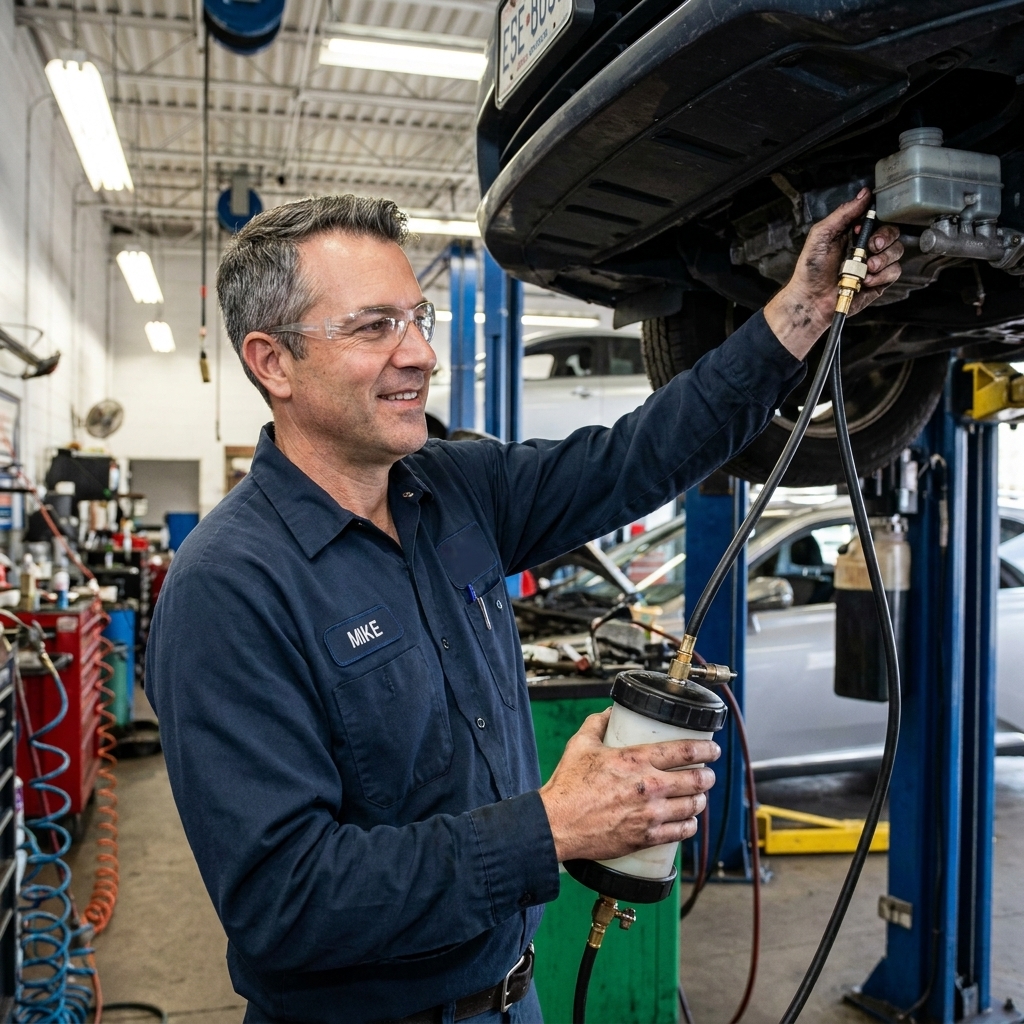
5) Brake hydraulics and ABS module bleeding (especially with scan tools required)
Pads and rotors are one thing. Opening the hydraulic system is another. If you introduce air, contaminate fluid, strip a bleeder, or fail to cycle the ABS pump correctly, you can end up with a soft pedal or no brakes when you need them.
- Why it’s risky: Safety-critical system, proper bleeding technique, and on many vehicles a scan tool is required to run ABS bleed routines.
- When to stop immediately: Any brake fluid leak, sinking pedal, or brake warning light after a repair.
How to decide: DIY or shop?
Ask yourself these five questions
- What happens if I mess this up? If the answer is “I could lose steering or braking,” stop.
- Do I have the correct tools? Not “something close,” the correct ones. Especially torque wrench, jack stands, and the right sockets.
- Can I verify the repair? For example, after brakes: firm pedal, no leaks, proper bedding, and a cautious test drive.
- Do I have time for setbacks? If you need the car Monday morning, do not start a risky job Sunday night.
- Is this job known to be tricky on my specific model? Some cars hide a “simple” part behind hours of disassembly.
A good compromise: diagnose yourself, then decide
You can often save money by doing the easy verification steps first: check fluid levels, look for obvious leaks, scan the OBD-II codes, and confirm basics like battery voltage and tire pressure. Then you can choose DIY or shop work with a lot more confidence.
One more thing I see constantly: DIY jobs failing because of bargain-bin parts. The right part, installed correctly, beats a cheap part installed perfectly.
Common DIY jobs I did not list
Yes, you can do your own oil changes and bulb swaps. I did not include them in my top five because oil changes can get messy fast (and you still need a safe plan for used oil disposal), and modern headlight assemblies can turn “replace a bulb” into “remove the bumper.” If your car makes those jobs easy, go for it. If it doesn’t, do not feel bad paying a shop.
DIY mistake I see most often
Overtightening. I’ve extracted snapped bolts, repaired stripped threads, and replaced warped brake rotors because someone went full gorilla with a ratchet. Torque specs exist for a reason, and a torque wrench is cheaper than fixing broken hardware.
If you only buy one “grown-up” tool for DIY work, make it a torque wrench and actually use it.
Quick FAQ
Will doing my own repairs void my warranty?
In the U.S., routine maintenance you perform yourself does not automatically void a warranty, but you should keep receipts and document what you did. Outside the U.S., local laws and warranty terms vary. Either way, if a failure is caused by improper work or incorrect parts, that repair might not be covered.
What’s the best first DIY job if I’m nervous?
Cabin air filter, engine air filter, and wiper blades. Low risk, low tool requirement, immediate payoff.
When should I stop and call a mechanic mid-job?
If you break a fastener you cannot safely extract, see a fluid leak you cannot identify, smell fuel, or realize the car cannot be reassembled and driven the same day, it is time to pause and get professional help.