Straightforward negotiation tactics, real-world scripts, and common pricing traps to avoid when buying a car from a dealership.
Trading in a car feels simple until you see the number on the offer sheet. The good news is that trade-in value is not a mystery. Dealers look at condition, market demand, reconditioning cost, title status, mileage, and how easy your car will be to retail or wholesale. Your job is to make their unknowns as small and as cheap as possible.
Here is the step-by-step playbook I would use if you pulled into my old shop and said, “Marcus, I want top dollar for this thing.”

Step 1: Get baseline numbers
Before you spend a dollar on detailing or repairs, figure out what your car is worth in the real world. You are looking for a tight value range, not one magic number.
Do these three checks
- Trade-in estimate: Look up your car by VIN if possible (trim and options matter). Use at least two sources so you can compare ranges.
- Private-party listings: Search local listings for your year, trim, mileage, and condition. Private-party prices are usually higher than trade-in, but they tell you how desirable your vehicle is.
- Instant cash offers: If available in your area, get one or two real offers. Even if you do not take them, they are useful leverage.
Pro tip: Be honest about condition when you plug in your details. Calling a worn interior “very good” might feel nice, but it sets you up for disappointment when the appraisal comes back.
Step 2: Fix the right things
Not every repair pays you back. Dealers may have in-house options, different labor rates, and better parts pricing than a walk-in customer, but that is not universal. Your goal is to reduce obvious red flags and expensive unknowns, not to restore the car.
Usually worth doing
- Replace burned-out bulbs (headlights, brake lights, plate lights). Cheap, and it signals basic care.
- New wiper blades if they chatter or smear.
- Top off fluids (washer fluid, coolant reservoir if appropriate, power steering if applicable). Do not overfill anything.
- Fix easy dash warnings like low tire pressure from a cold snap. A TPMS light can signal neglect to an appraiser even when the cause is minor (or just a finicky sensor).
- Address a weak battery if it struggles to crank. A marginal battery can spook an appraiser during a test drive.
Often not worth it
- Major mechanical work like a transmission rebuild or engine repair right before trade-in. You rarely recoup the cost.
- Full paintwork for cosmetic scratches. Paint and body is expensive and dealers price it with wholesale assumptions.
- New tires just to get “perfect” tread. This can be a money pit. Replace only if tires are unsafe, mismatched, or near the wear bars.
Fix these if they are obvious
If your car has a glaring issue that makes it hard to retail, it will get hammered. Examples: a cracked windshield, an active check engine light, a strong smoke smell, or truly mismatched tires. Those are not “cosmetic.” They are reconditioning line items.
Step 3: Deep clean inside and out
Condition is where you can still manufacture value with elbow grease. A clean car feels newer, smells better, and reduces the dealer’s reconditioning budget. That can help the offer or at least reduce the excuses.
Interior checklist
- Remove everything from the cabin and trunk, including car seats (if possible) and random cargo.
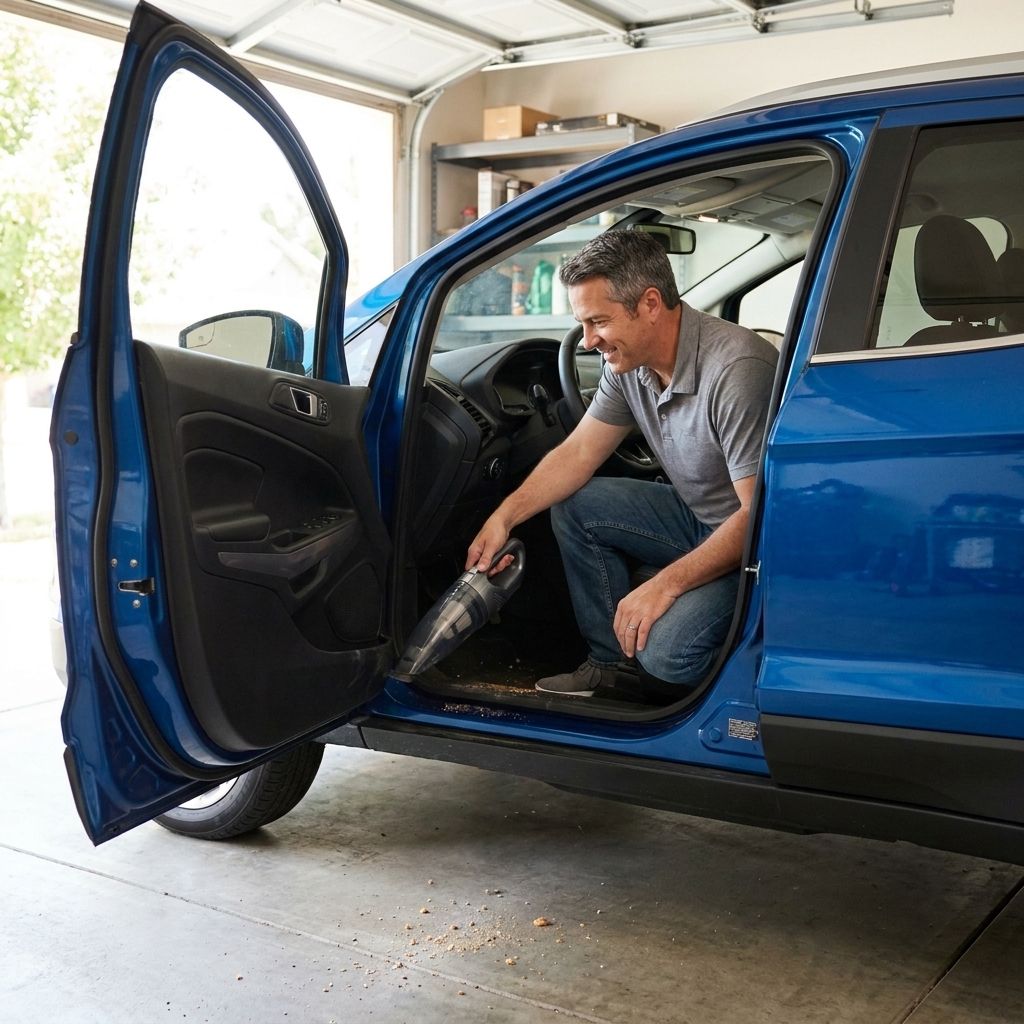
- Vacuum thoroughly under seats, between cushions, and in trunk corners.
- Clean hard surfaces with a mild interior cleaner. Avoid greasy shine products that look like you are hiding cracks.
- Windows and screens cleaned streak-free, inside and out.
- Odor control: Replace the cabin air filter if the car smells musty and you can do it cheaply. If smoke or mildew is present, be realistic: odor is one of the fastest ways to get your value cut.
Exterior checklist
- Hand wash and clean wheels. Brake dust makes cars look neglected.
- Remove bugs from front bumper and windshield.
- Quick wax or spray sealant can add gloss, but skip anything that leaves white residue on trim.
- Clean the door jambs. It is a small thing that screams “well cared for.”
Step 4: Bring the paperwork
Two identical cars can appraise differently when one has a folder of receipts and the other has “I think it was serviced?” Paperwork does not magically erase problems, but it does reduce the gamble.
Bring this to the dealership
- Title (or loan information if you still have a lien)
- Registration and a valid ID
- Maintenance records (oil changes, tires, brakes, major services)
- Both keys and key fobs. Missing keys can cost a dealer hundreds or more on newer vehicles.
- Owner’s manuals if you still have them
- Receipts for recent repairs (battery, windshield, tires, etc.)
If you have an accident history: Do not try to hide it. Instead, show what was repaired and when. A clean, documented repair is easier to price than a mystery.
Step 5: Do a pre-walkaround
You want to see what the appraiser will see, in roughly the same order they will see it.
Five-minute inspection
- Start cold: Does it start cleanly? Any warning lights? Rough idle?
- Check tires: Even wear matters as much as tread depth. Odd wear suggests alignment or suspension issues.
- Look for obvious leaks: Spots on your driveway, oily residue under the engine, wetness around shock absorbers.
- Test simple features: A/C, heat, windows, locks, infotainment, backup camera, sunroof.
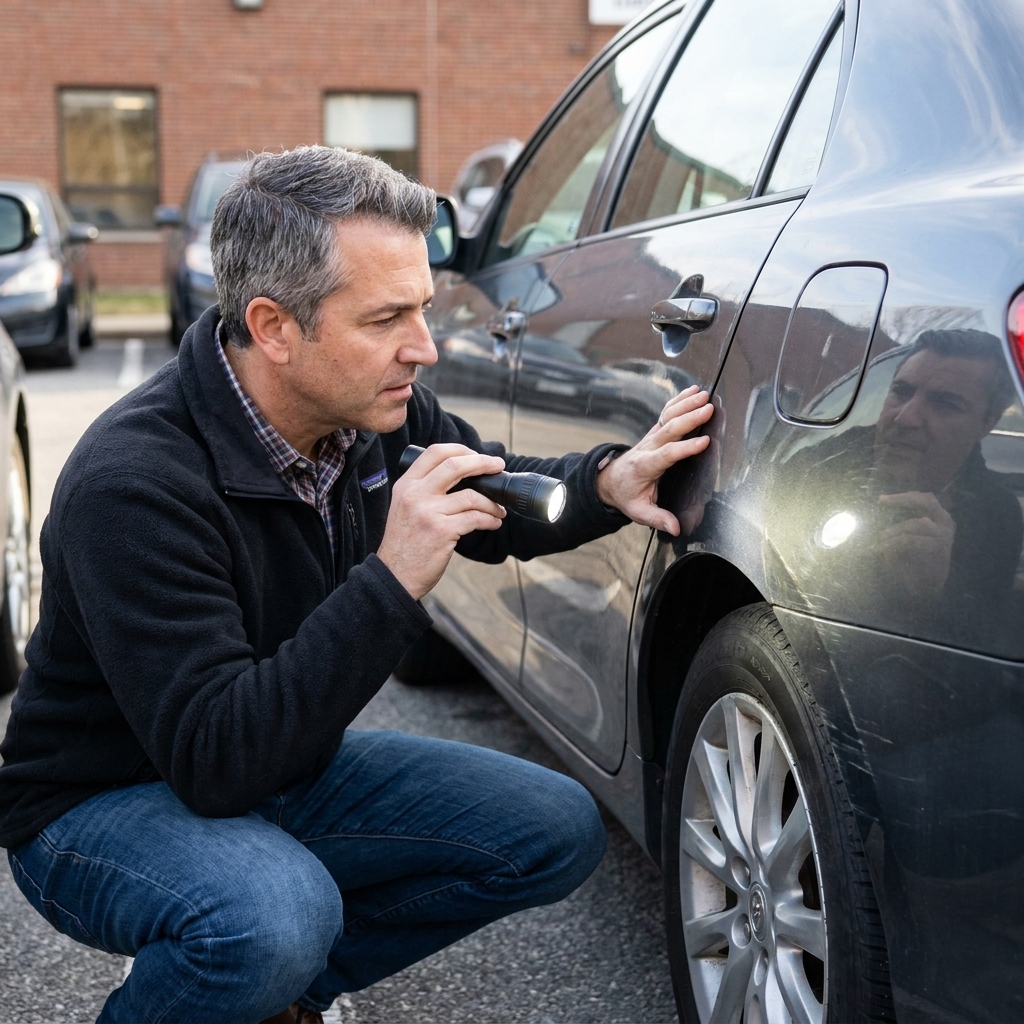
- Scan for curb rash and dings: Wheel damage and parking-lot dents are common value reducers.
If you own an inexpensive OBD-II scanner, check for stored codes. Also note that clearing codes right before an appraisal is a bad idea. Readiness monitors can show recent resets, and if the underlying issue is still there, the light can come back during a test drive or after a quick scan.
Quick protection move: Take a set of timestamped photos before you go (all four corners, wheels, dash with mileage, interior, and any existing damage). If there is ever a disagreement about what was there and when, you have receipts.
Step 6: Time it smart
Timing will not turn a base model into a collector car, but it can move the needle.
- Trade before a mileage threshold: Values can step down at big round numbers, especially around 100,000 miles. Other breakpoints vary by vehicle and market.
- Seasonality matters: 4WD and AWD vehicles often do better heading into fall and winter. Convertibles tend to look better to buyers in spring and summer.
- Do not wait for one more repair if the car is already aging into higher-cost territory. Once a vehicle starts stacking needs (tires, brakes, suspension, leaks), trade-in offers can drop quickly.
Step 7: Get multiple appraisals
Trade-in offers are part math, part risk tolerance, part inventory needs. Two dealers can look at the same car and see different outcomes.
A simple strategy that works
- Get 2 to 3 written appraisal numbers from different places (franchise dealer, used-car superstore, local competitor).
- Compare the structure, not just the number. Some stores lean on a stronger trade number while holding firm on the purchase price.
- Negotiate the car you are buying separately from the trade-in. You want clarity on each line item.
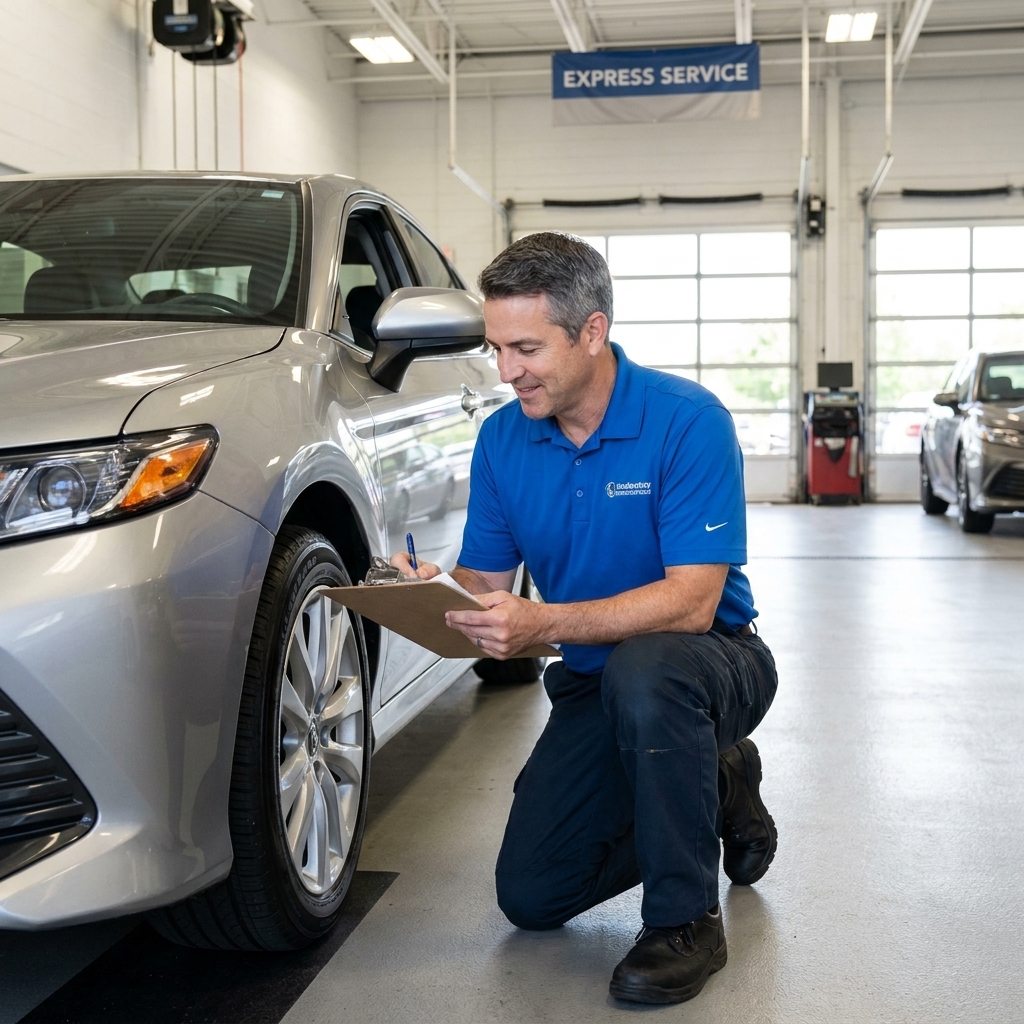
Step 8: Know the dealer math
This is the part that makes the process feel less personal. The dealer is estimating what they can sell the car for, then subtracting costs and a profit margin.
What typically gets subtracted
- Reconditioning: detailing, tires, brakes, windshield, paintless dent repair, wheel repair
- Mechanical risk: anything that could become a comeback issue
- Auction fallback value: if they think it will not retail well, they price it like a wholesale car
- Market days supply: if cars like yours are sitting unsold, offers tighten
- Store-specific costs: transport, title processing, and conditioning policies vary by dealer
When your vehicle is clean, documented, and obviously maintained, you reduce reconditioning and risk. That is the whole game.
Step 9: Negotiate with real levers
Negotiating trade-in is less about “winning” and more about giving the dealer a reason to move.
Levers I have seen work
- Show comparable listings for your exact trim, mileage, and condition. Be realistic. A pristine private-party listing price is not a trade-in value, but it can support demand.
- Present your records and point out recent big-ticket maintenance, like tires or brakes, if it was done properly and recently.
- Ask what is hurting the offer. If they say “tires are low,” you can decide whether to accept the deduction or replace tires if it pencils out.
- Be ready to walk. The strongest negotiation tool is another appraisal in your pocket.
Avoid this trap: Focusing only on monthly payment can hide a weak trade-in number inside the financing. Push to see the sale price, trade value, fees, and rate clearly.
Special situations
Trade-in tax credit
One big math item most people miss: in many U.S. states, the trade-in value reduces the taxable price of the car you are buying. That tax credit can narrow the gap between a trade-in and a private sale. Before you decide, compare: (private sale price minus the extra sales tax you would pay without a trade) versus (trade-in offer). State rules vary, so check your DMV or dealer paperwork to confirm how it works where you live.
Trading in a car you still owe money on
If you are upside down, meaning you owe more than the trade is worth, that negative equity gets rolled into the new deal unless you pay it off separately. You can still trade, but you should understand the new loan balance before you sign anything.
Trading in a car with a check engine light
Sometimes it is a loose gas cap. Sometimes it is a catalytic converter. Either way, a warning light turns your car into a question mark, and question marks cost money. If you can get a diagnostic from a reputable shop, bring the printout. Even if you do not fix it, you reduce uncertainty. And ethically and legally, disclose what you know. Do not play games with warning lights or quick resets.
Aftermarket parts and mods
Big mods can narrow the buyer pool and complicate valuation: lifts, loud exhausts, wraps, big stereos, tinted lights, and non-OEM wheels. If you still have the factory parts, it can help to put the vehicle back to stock (or at least bring the OEM parts with you) so the dealer has options.
Trading in a car with cosmetic damage
Small dings and light scratches are normal. One large dent, peeling clear coat, or a cracked bumper cover is different. If the damage is very visible, get a paintless dent repair quote or a body shop estimate. You may not fix it, but you will know whether the dealer’s deduction is fair.
Trade-in checklist
- Pull 2 to 3 value estimates and 1 to 2 real offers
- Take timestamped photos of current condition
- Clean out car completely
- Wash exterior, clean wheels, clean glass, wipe jambs
- Vacuum, wipe interior, reduce odors if possible
- Replace cheap items: bulbs, wipers, key fob battery if needed
- Check tires for wear and pressure
- Gather records, title or payoff info, both keys
- Remove obvious aftermarket accessories if they hurt appeal, keep OEM parts if you have them
- Schedule multiple appraisals in the same week
- Negotiate purchase price and trade value as separate numbers
FAQ
Should I detail my car before trading it in?
Yes, at least a thorough DIY clean. A professional detail can help if the car is genuinely dirty or smelly, but you do not need a showroom-level correction. The goal is to remove signs of neglect, not chase perfection.
Do dealers lowball trade-ins on purpose?
Sometimes the first number is conservative because the dealer is protecting themselves against hidden issues and reconditioning costs. Your best defense is competing appraisals, maintenance records, and a car that presents well.
Is it better to trade in or sell privately?
Private sale often brings more money, but it costs time, effort, and risk. Trade-in is convenience. Also consider taxes: in some states, trading can lower your sales tax bill on the next purchase, which changes the comparison.
Will a dealership match another offer?
Many will at least try, especially if the deal is close and you are buying a vehicle from them. Bring the written offer and be polite but firm.
If you take nothing else from this guide, take this: make your car easy to appraise. Clean it, document it, fix the cheap red flags, and get more than one offer. That is how you turn a stressful trade-in into a number you can live with.