Straightforward negotiation tactics, real-world scripts, and common pricing traps to avoid when buying a car from a dealership.
You find the car, negotiate the price, and think you are done. Then the out-the-door number lands on the desk and suddenly it is thousands higher. I have watched this play out in dealership finance offices and I have seen the same sticker shock when customers come back to the shop asking why their budget got torched.
The truth is simple: the purchase price is only the start. Taxes, fees, registration, and insurance changes can add up fast, and some costs keep showing up long after you drive home. Let’s break down the most common hidden costs, what is normal, what is negotiable, and how to estimate your real total before you sign.

Start with the out-the-door price
If you remember one phrase, make it out-the-door (OTD). OTD is the total the dealer says you need to pay to take delivery, including the vehicle price plus dealer-collected taxes and required fees.
One important caveat: depending on your state and how the transaction is handled, some costs may be paid outside the dealership or after purchase. Insurance is almost always separate, and items like property or excise tax, EV registration surcharges, or out-of-state tax true-ups may hit later.
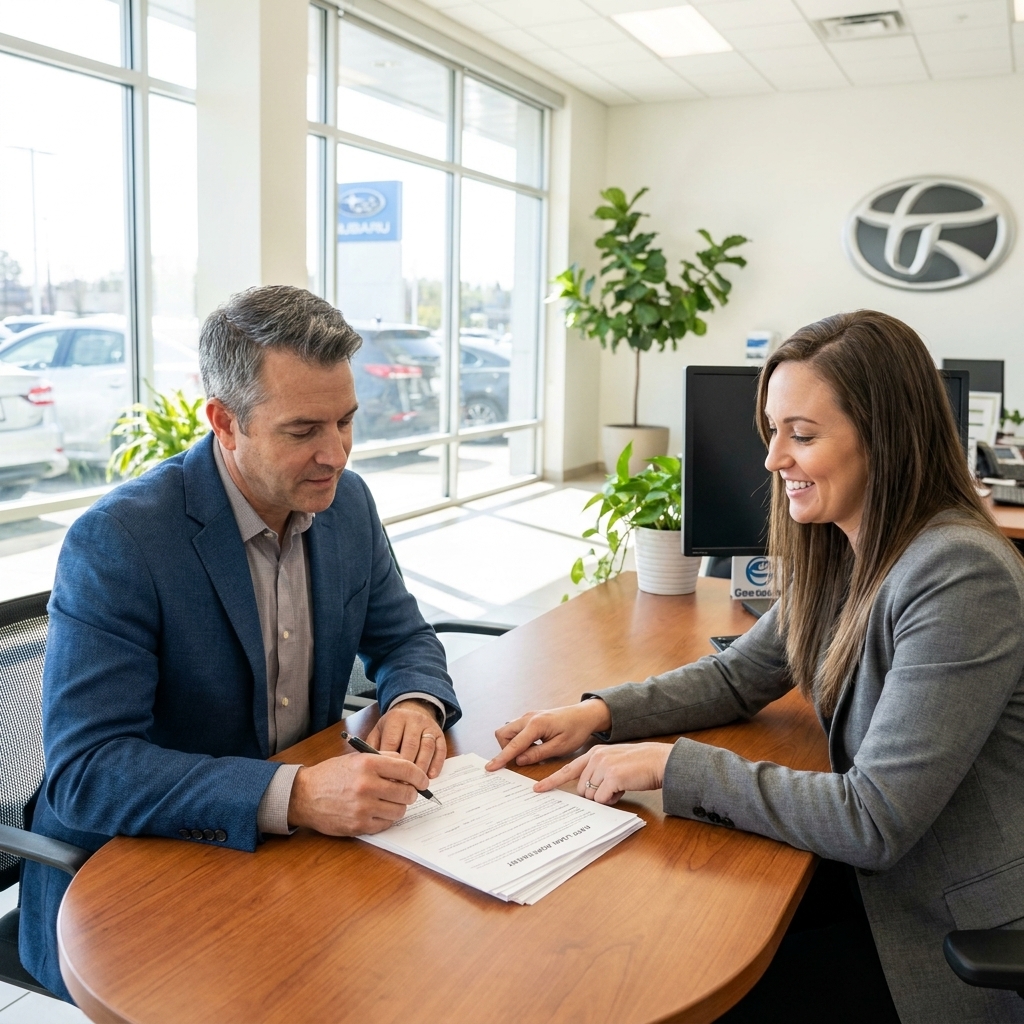
When a salesperson quotes a monthly payment, ask for the OTD breakdown in writing. A clean quote should show:
- Vehicle selling price (including any market adjustment)
- Sales tax (if the dealer collects it)
- Title and registration fees
- Dealer documentation fee
- Any dealer add-ons (paint protection, security etching, accessories)
- Any rebates or down payment applied
OTD is the best single number for comparing offers, but cross-state deals can still get tricky. Tax sourcing rules, reciprocity agreements, and whether the dealer can collect taxes for your home state can change the final math, so verify the rules for your registration address.
Sales tax
Sales tax is often the single largest line item outside the vehicle price. Depending on where you live, you might pay:
- State sales tax (sometimes with different rules for vehicles)
- Local city or county tax
- Special district taxes in some areas
A few “gotchas” I see regularly:
- Trade-in credit: Many states reduce the taxable amount when you trade in a vehicle. Some do not. That difference alone can be hundreds or thousands.
- Private party vs dealership: Tax rules can differ based on where you buy.
- Where you register: If you buy in one state and register in another, you often pay tax based on your home registration rules, but not always. Some buyers pay tax in the purchase state and then apply a credit or settle the difference at home. If you are crossing state lines, confirm with your DMV or tax office before you assume anything.
Quick math: A $30,000 car with a 7% tax rate adds $2,100 before you even talk about fees.
Dealer fees and add-ons
Documentation fee
Doc fees are charged for processing paperwork. In the real world, it is also a profit lever. The key points:
- Doc fees range widely by state and dealership policy.
- Some states cap them, others do not.
- They are often presented as “non-negotiable,” but the deal is negotiable. If the doc fee is high, push for a lower selling price to offset it.
Destination or freight charge
New vehicles typically have a manufacturer destination charge. This is usually legitimate and consistent across dealers for the same model, but it still affects your OTD total. If you are comparing listings, make sure you know whether destination is included in the advertised price.
Market adjustment
On some new or high-demand models, you may see an added line item like “market adjustment” or “ADM.” It is not a government fee. It is a price increase, and you should treat it exactly like one when you compare offers. If one dealer has a big adjustment and another does not, you just found your easiest way to save money.
Dealer-installed add-ons
This is where I see buyers lose the most money without realizing it. Common add-ons include:
- Paint and fabric protection packages
- Security etching
- Nitrogen-filled tires
- Wheel and tire packages
- Accessory bundles (floor mats, splash guards, tint)
Some add-ons are optional, some are positioned as mandatory. Either way, treat them like part of the price.
Example that happens all the time: A $1,995 protection package does not just add $1,995. In many places it also gets taxed, so a 7% tax rate turns it into about $2,135. Then you are paying interest on it too if it is rolled into the loan. This is why “just one package” quietly becomes a long-term cost.
If you do not want the add-ons, ask for them removed or negotiate the selling price to compensate. If the dealer will not budge, that is useful information about whether you should keep shopping.
If you want a simple rule in the finance office, separate required items from optional ones. Title and registration are real. A random “protection” fee that cannot be explained clearly is a red flag.

Title and registration
Every car you buy has to be titled and registered, and most states collect fees for:
- Title fee
- Registration fee (often annual or biannual)
- License plates (new plate, transfer plate, specialty plates)
- Local fees that can include road, county, or emissions program funding
Here is the hidden part: in many places, registration is based on the vehicle’s value, weight, age, or even fuel type. That means a “good deal” on a newer, higher-value vehicle can still come with a bigger annual bill than you are used to. Some states also add EV or hybrid registration surcharges to replace gasoline tax revenue.
Tip from the wrenching side: If you are cross-shopping vehicles with very different values (say, a $22,000 used sedan and a $38,000 new SUV), check registration costs before you decide. It is a recurring cost, not a one-time sting.
Inspection and emissions
Depending on your state, you may need:
- Safety inspection
- Emissions testing
- VIN inspection (common for out-of-state purchases)
The test fee itself is usually manageable. The bigger risk is what happens if the car does not pass.
For used cars especially, an emissions failure can mean unexpected repairs, and not always cheap ones. Catalytic converters, evap leaks, and certain sensor issues can quickly jump from “minor annoyance” to “there goes the weekend budget.”
Financing costs
Most buyers focus on APR, which is smart, but financing has other cost traps.
Interest over the loan term
Even a decent rate can cost real money when the loan is long. Longer terms lower the payment, but typically increase total interest paid and keep you upside down longer.
Loan fees and contract terms
Watch for:
- Loan origination fees (more common with some lenders)
- Dealer-arranged financing markups
- Prepayment penalties or restrictions (less common on many mainstream auto loans, but they still exist, especially with certain lenders)
Negative equity
If you owe more on your trade than it is worth, the difference is negative equity. Many dealers will roll that amount into the new loan. It makes the amount financed larger, increases the interest you pay, and can keep you upside down for longer. On paper it feels like it “disappeared,” but it is still there, just moved into the new contract.
GAP insurance
GAP covers the difference between what you owe and what the car is worth if it is totaled. It can be a lifesaver if you:
- Put little money down
- Roll negative equity into the new loan
- Finance for 72 to 84 months
But pricing and coverage vary. Many insurers offer loan/lease payoff coverage that can be competitive with a dealer product, but it is not guaranteed to be cheaper or identical. Compare price and coverage limits, eligibility rules, and what triggers a payout.
Extended warranties and protection plans
Some are legitimate, many are overpriced, and coverage details matter more than the pitch. If you are considering one:
- Ask for a copy of the contract and read what is excluded
- Confirm deductible amounts and whether it is per visit
- Verify if you can use independent shops or only certain dealers
- Get the price in writing and compare with manufacturer-backed options
Insurance
Insurance is not just a box to check for the lender. It is a monthly cost that can change dramatically when you switch vehicles. I have had customers buy a newer car, then call me frustrated because their payment is fine but their insurance jumped $80 a month.
Why premiums go up
- Higher replacement cost: Newer cars cost more to repair and replace.
- Repair complexity: Sensors, cameras, LED headlights, and radar can raise repair bills.
- Trim level and power: Sport trims and turbo engines often cost more to insure.
- Theft risk: Some models are targeted more than others.
- Coverage requirements: If you finance, you will likely need comprehensive and collision with deductibles set by the lender.
Insurance add-ons you might want
- New car replacement coverage (varies by insurer)
- Rental reimbursement
- Roadside assistance
- Glass coverage (especially helpful on vehicles with expensive windshields and calibration needs)
What to do before you buy
Get insurance quotes on the exact vehicle you are considering before signing. Use the VIN if possible. Do not rely on a guess based on “it is about the same size as my old one.”

Costs that show up later
Some costs hit after the honeymoon period:
- Property or excise tax in certain states and counties
- Annual registration renewals, which can rise with vehicle value
- Toll tag setup and vehicle-based toll rates in some regions and systems
- Parking and city permit costs if you move to a different commuting pattern
This is why I like to think of a car as a monthly expense bundle, not a one-time purchase.
Hidden-cost checklist
When you are estimating your true budget, account for:
- Sales tax (state plus local, if applicable)
- Doc fee
- Title, registration, plates (and recurring renewals)
- Inspection and emissions (and any potential repairs)
- Dealer add-ons you actually want, not what they push
- Down payment and any trade-in payoff difference (negative equity)
- Interest cost across the full loan term
- Insurance premium change
- First year maintenance (tires, brakes, fluid services depending on the car)
If you want a gut check, I often tell friends and family to budget an extra 10% to 20% on top of the selling price for dealer-collected taxes and mandatory fees, then add insurance on top of that. In low-tax areas it can be under 10%. In high-tax, high-fee, or high-registration-cost areas it can run past 20%. The point is not the exact percentage, it is building the habit of budgeting for the full stack.
Protect your deal
Negotiate using OTD
Make the dealer compete on the full number, not the payment and not the selling price alone.
Get a buyer’s order
Read every line. If you do not recognize a fee or product, stop and ask what it is, whether it is required by the state, and whether it can be removed.
Quote insurance early
Run the VIN and confirm coverages and deductibles so the monthly cost is real, not guessed.
Separate the decisions
In plain terms: negotiate the car price first, financing second, add-ons last. Bundling them together is how people end up paying for things they did not plan on.
FAQ
Are dealer doc fees negotiable?
The fee itself is often presented as fixed, but the overall deal is negotiable. If the doc fee is high, push for a lower selling price or walk to another dealer.
Do I pay sales tax on a used car?
In most states, yes. The rate and how it is calculated can vary, especially if you have a trade-in credit.
Why did my insurance go up with a safer car?
Safety tech can reduce injury risk, but it can also make repairs more expensive. A minor bumper tap on a car with radar and cameras can cost a lot more than the same hit on an older vehicle.
Is GAP insurance worth it?
It is often worth considering if you put little down, have a long loan term, or roll negative equity into the new loan. Compare pricing and coverage through your insurer as well as the dealer.
If you want to buy with confidence, build your budget from the OTD number and a verified insurance quote, then decide if the monthly total still feels comfortable. That one habit will protect you from most of the “hidden cost” headaches I have seen over the years.