A beginner-friendly guide to car loans, APR, terms, down payments, and pre-approval so you can shop with confidence and avoid expensive surprises.
If you asked me this a few years ago, I could usually point you toward a clean 2- to 4-year-old car and call it a day. In today’s market, it’s not that simple. Prices, incentives, and interest rates have shifted enough that “new vs. used” is now a real spreadsheet fight, not a rule of thumb.
This guide breaks it down like I would in the shop parking lot: what you actually pay out the door, what you actually lose to depreciation, what a warranty is worth in real dollars, and how financing can flip the winner.

The real cost is the curve
When you buy a car, you don’t just pay a purchase price. You also buy into a depreciation curve, meaning how quickly the car loses value over time. For many drivers, depreciation is often the biggest cost of ownership, especially in the first few years. That said, it’s not universal. If you drive a ton of miles, fuel can dominate. In some markets insurance can bite harder than people expect. And some EVs can depreciate in weird ways.
Typical depreciation pattern
- Year 0 to 1: biggest drop, often the steepest “instant loss” period
- Years 2 to 4: still declining, but the slope typically calms down
- Year 5 and beyond: depreciation often slows further, then condition and maintenance history matter more than model year
Market weirdness can bend the curve for certain models, but the shape usually stays the same: the newer it is, the more you risk paying for value that evaporates early.
Why that matters right now
Even if lightly used prices have softened compared to the peak, many late-model used cars are still expensive relative to new when you factor in:
- Higher used interest rates in many cases
- Less remaining factory warranty
- Used cars often being sold with add-ons or higher dealer fees
So you have to compare total cost, not just sticker price.
New car math
Buying new can be the best financial choice when the deal is strong and you keep the car long enough to spread the depreciation hit over many years. New also cuts down “unknown history” risk, which is a bigger deal than most people think.
Financial advantages of buying new
- Better financing offers (sometimes dramatically better): Automaker promotional APR can beat typical used rates by a lot, which lowers your total interest paid.
- Full warranty runway: You get the entire bumper-to-bumper warranty and the full powertrain warranty, which has real dollar value.
- Lower out-of-pocket repair risk early on: Under normal driving, most unexpected failures in the first few years are typically warranty problems, not your money. You still pay for maintenance and wear items, and some people do get unlucky with early tech glitches, but the warranty changes the math.
- Incentives and rebates: Depending on model and region, rebates can offset part of the first-year depreciation sting.
Financial downsides of buying new
- Front-loaded depreciation: If you trade out in 2 to 3 years, you often eat the steepest part of the curve.
- Higher taxes and insurance in many cases: Taxes are tied to purchase price in many states, and insurance tends to cost more on a higher-value car.
- Add-ons are easier to overspend on: Extended warranties, protection packages, and paint coatings can pile on fast.
Mechanic’s take: New is financially strongest when you plan to keep the car 6+ years, you qualify for a strong APR, and you pick a model with solid resale value.
Lightly used math
Lightly used usually means something like a 1 to 4-year-old car with reasonable miles. Traditionally, that’s the sweet spot: you avoid the biggest depreciation and still get modern safety tech and decent reliability.
Financial advantages of lightly used
- Lower purchase price: Even a modest discount off new can reduce taxes and lower monthly payments.
- Slower depreciation from here: If you buy after the steepest drop, the next few years can be less punishing.
- You may still have factory warranty left: The value depends on age, mileage, and what warranty transfers.
Financial traps with lightly used
- Higher interest rates can erase the discount: A cheaper car at a higher APR can cost the same or more overall.
- Shorter warranty runway: A 3-year-old car might have little or no bumper-to-bumper coverage left, meaning you’re self-insuring repairs sooner.
- Condition and prior use matter: Prior accidents, poor maintenance, heavy towing, rideshare use, or flood exposure can turn a “deal” into a money pit.
- Modern cars are expensive when they break: Sensors, ADAS calibrations, infotainment modules, and LED headlamps can get pricey fast depending on brand and parts availability.
Interest rates change everything
In a high-rate environment, the APR you get matters almost as much as the price. I’ve watched people “save” $2,000 buying used, then hand it right back in interest.
What to compare
Don’t stop at the monthly payment. You want the full picture.
- Out-the-door price: purchase price plus taxes, fees, and any add-ons
- Total financed amount: out-the-door price minus down payment (plus any trade payoff if you roll it in)
- APR: new promo rates can be far lower than used
- Loan term: stretching to 72 or 84 months can hide cost and increase negative equity risk
- Total interest paid: ask for this number in writing
A quick example with real numbers
Let’s compare a new car that’s a little more expensive, but gets a much better APR. Numbers vary by credit, lender, and region, but this shows how the math flips.
- New car: $32,000 financed at 2.9% for 60 months
- Used car: $29,000 financed at 8.9% for 60 months
Estimated results:
- New: about $2,400 total interest, about $34,400 total paid
- Used: about $7,000 total interest, about $36,000 total paid
Even though the used car starts $3,000 cheaper, the higher rate can make it cost more over the life of the loan. This is why I always tell people to get rate quotes first and then compare totals.
Rule I use (my rule, not a law of physics): If the lightly used car is not at least 10 to 15 percent cheaper than new after incentives, fees, and financing, it’s time to take new seriously. Taxes, registration rules, and insurance can move that threshold, so treat it as a starting point.
Warranty is risk transfer
Warranty isn’t just peace of mind. It’s a transfer of risk. On newer vehicles loaded with electronics, that risk can get expensive fast.
New car warranty value
- More predictable costs: Most unexpected issues are covered early on
- Easier budgeting: You can plan for maintenance instead of bracing for repairs
- Stronger resale in early years: A car with remaining factory warranty often sells easier and for more
Used car warranty reality check
- Remaining warranty may be limited: mileage caps matter
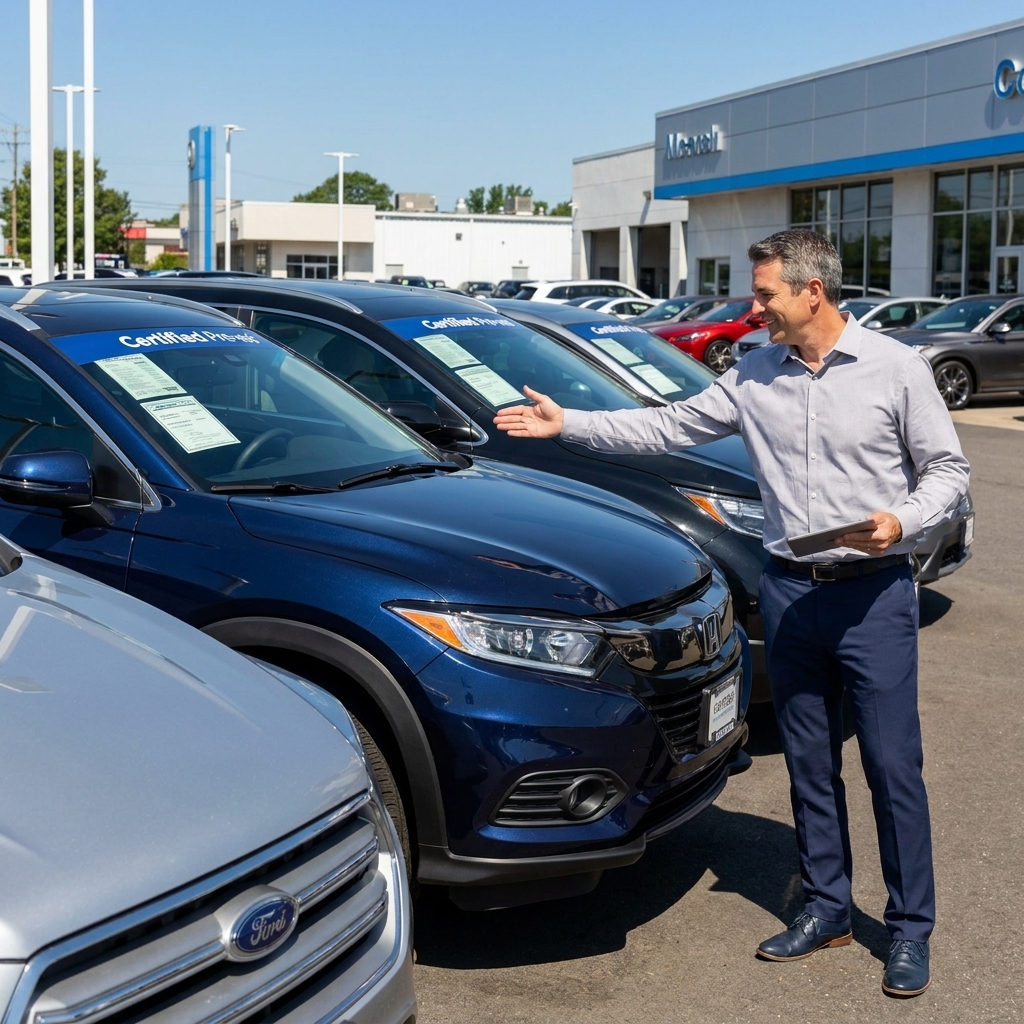
- CPO can add value: Manufacturer Certified Pre-Owned usually adds coverage and requires an inspection and reconditioning process, but program details vary by brand and dealer. Read what’s actually covered and what was actually reconditioned.
- Third-party warranties vary wildly: Some are fine, many are frustrating. Read the exclusions and labor rate limits before you sign.
Mechanic’s tip: If you’re buying used and the factory bumper-to-bumper warranty is basically gone, budget a repair reserve. For many mainstream models, I like $75 to $150 a month depending on the vehicle, your miles, and local labor rates. Some cars need more, some need less.
Depreciation vs repair risk
This is the core trade:
- New buyers tend to pay more depreciation upfront, but face less out-of-pocket repair risk early.
- Used buyers tend to pay less depreciation upfront, but take on more repair risk sooner.
Neither is “wrong.” The better choice depends on your timeline and your tolerance for surprise expenses.
If you trade often
If you switch cars every 2 to 4 years, new depreciation can be brutal unless you get a strong deal and buy a high-resale model. A lightly used or CPO vehicle can make more financial sense here, but only if the price gap is meaningful and the car is clean.
If you keep cars a long time
If you’re the kind of driver who keeps a car 8 to 12 years, new becomes more attractive. You spread the early depreciation over a long ownership window, and you enjoy the warranty period instead of paying someone else for it.
How to shop lightly used
In my book, “lightly used” is not just a low odometer reading. It’s a vehicle with a boring history.
My used car checklist
- Service records: oil changes on schedule, not guesses
- Clean title: no salvage, no rebuilt, no funny business
- Pre-purchase inspection: always, even for a late-model car
- Tires and brakes checked: worn tires can be a quick $800 to $1,600 hit depending on size, brand, and region
- Scan for codes: a proper scan tool can catch pending faults before they become dashboard lights
- Check for open recalls: free fixes are still time and hassle, but you want them addressed
Hidden costs people miss
Insurance
Newer and higher-value vehicles can cost more to insure. Get quotes before you commit, especially if you’re moving into a model with expensive headlights, sensors, or high theft rates.
Taxes and fees
Sales tax is often based on the purchase price in many states, but rules vary widely, including trade-in credits and registration fees. Also watch for doc fees and add-ons that blur the difference between new and used.
Maintenance timing
Maintenance schedules are similar between new and used, but used cars may be closer to expensive milestones like tires, brakes, or 60,000-mile services. If the seller just “did the oil,” that doesn’t mean you’re not about to buy four tires.
Gap risk
If you finance with a small down payment, roll negative equity from a trade, or stretch the loan to 72 to 84 months, you can end up owing more than the car is worth. That’s when gap insurance becomes worth discussing, especially on a new car or any deal with a thin down payment.
Opportunity cost
If you put a huge down payment into a car, that money is no longer available for other goals. The “cheapest” car payment is not always the best financial move if it drains your emergency fund.
So what’s the best buy?
Here’s my straight answer: it depends, but the decision is easier if you follow a few rules that hold up in the real world.
New is usually the better financial choice if:
- You qualify for a strong promotional APR or meaningful incentives
- You plan to keep the car at least 6 years
- You want the lowest chance of surprise out-of-pocket repair bills in the next 3 to 5 years
- The used version is priced too close to new to justify the risk
Lightly used is usually the better financial choice if:
- The discount is substantial after fees, taxes, and financing are included
- You can verify history and get a pre-purchase inspection
- You’re buying a model known for reliability and affordable parts
- You’re comfortable budgeting for repairs sooner, or you’re getting a strong CPO warranty
The tie-breaker I use
If the “lightly used” car is close enough in total cost that you find yourself trying to talk yourself into it, buy new or buy older. The middle ground only works when the numbers and the history are both clearly in your favor.
EV and hybrid notes
Electrified cars can be a great value, but the decision rules shift a bit.
Battery and warranty
Hybrids and EVs usually have longer battery-related warranties than the basic bumper-to-bumper coverage, but terms vary by manufacturer and state. Know what’s left when buying used, and confirm the in-service date so you know when coverage started.
Tax credits and incentives
Some buyers can qualify for tax credits or incentives on new or used EVs. Eligibility can depend on the vehicle, the transaction type, buyer income, and where the car was built. Because rules and availability change, the safe move is to price your deal both ways: with the credit, and without it.
Charging access
If home charging is easy for you, an EV can be a strong long-term play. If you will rely on public charging all the time, your real-world costs and hassle factor can look very different. That’s not a deal breaker, but it needs to be part of the “total cost” conversation.
Quick FAQ
Is Certified Pre-Owned worth it?
Often, yes, if the added cost is reasonable and the CPO warranty is a true manufacturer-backed program. CPO can be the sweet spot for buyers who want used pricing with a more new-like risk profile. Just remember that coverage details and reconditioning standards vary by brand and dealer, so read the actual warranty terms.
Should I buy a 1-year-old car to avoid depreciation?
Sometimes, but not automatically. In many cases, a 1-year-old car is priced so close to new that you’re giving up warranty and potentially paying a higher APR for minimal savings. Compare out-the-door quotes both ways.
What loan term is safest financially?
Generally, the shortest term you can afford without wrecking your emergency fund. Long terms increase the chance you’ll owe more than the car is worth, especially in the first few years.
What’s the smartest move if I’m not sure?
Get pre-approved at your bank or credit union, price the same model both new and used using out-the-door numbers, then compare total cost with the exact APR and term you qualify for. If you’re buying used, pay for a pre-purchase inspection. It’s the cheapest “insurance” you can buy.