A beginner-friendly guide to car loans, APR, terms, down payments, and pre-approval so you can shop with confidence and avoid expensive surprises.
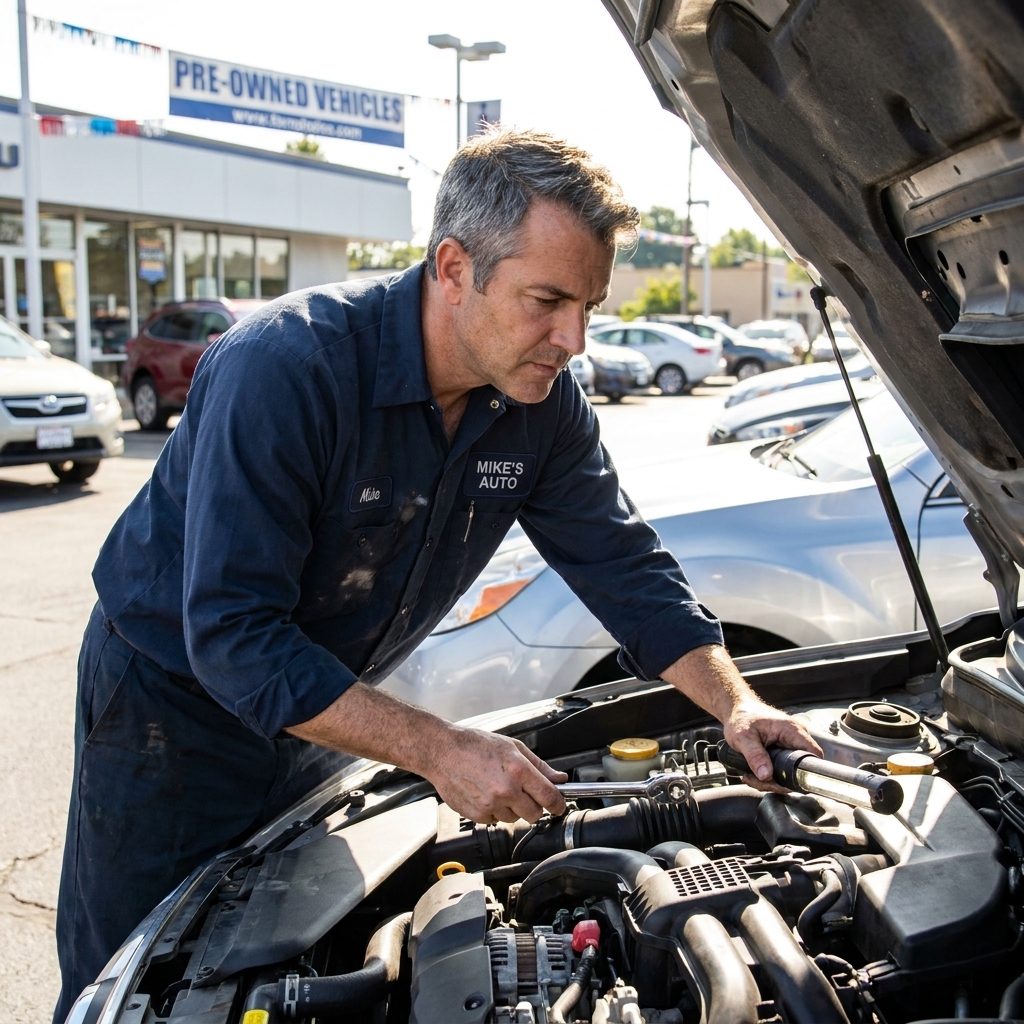
I have turned wrenches in shops where customers felt pressured, confused, and drained before they even signed the paperwork. Buying a car does not have to feel like that. The secret is simple: you control the pace, you separate the deal into smaller pieces, and you make the dealership compete for your business.
This guide walks you through the same approach I use when friends ask me to go with them to buy a car. It is not about being aggressive. It is about being prepared, calm, and hard to confuse.
Know what you are negotiating
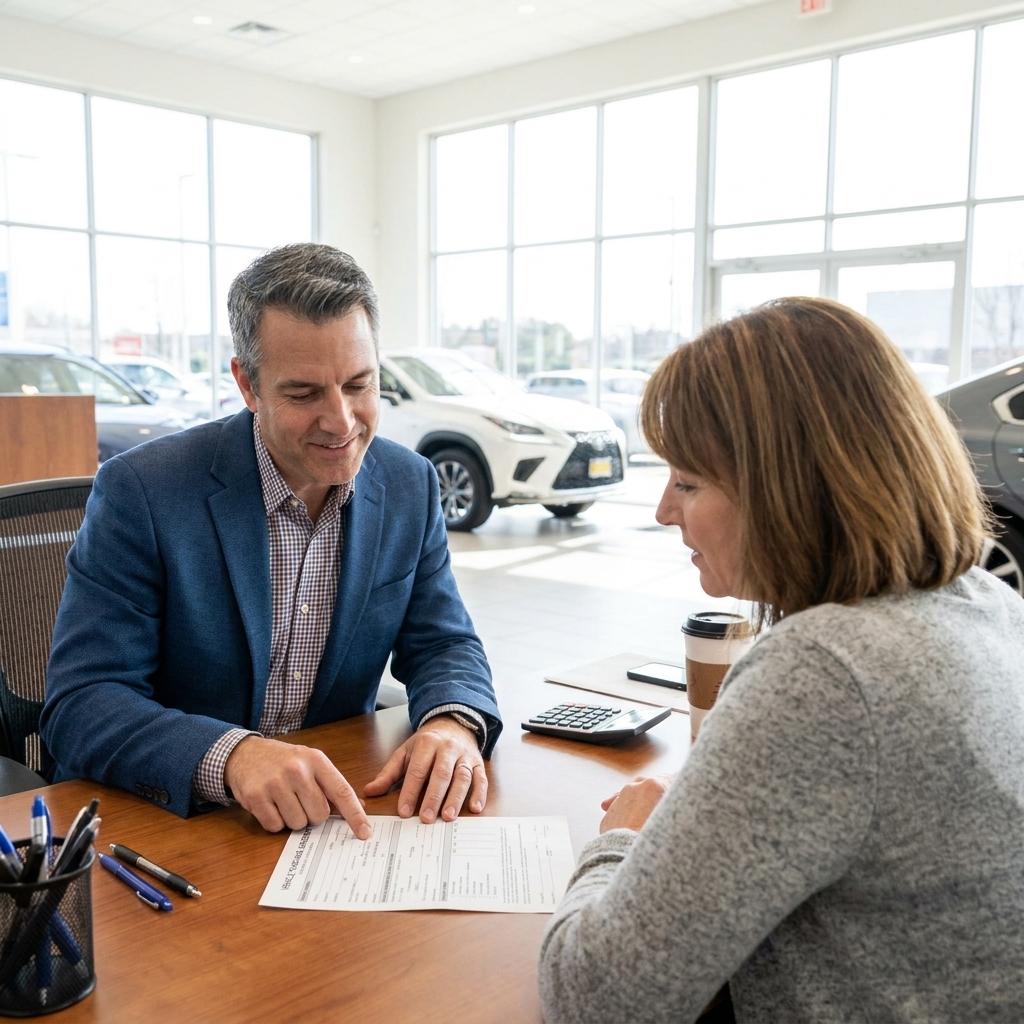
Dealers can move numbers around in multiple places. If you only focus on the monthly payment, you can accidentally overpay and not realize it until later. These are the main parts of a deal:
- Out-the-door price (OTD): The total you pay including vehicle price, dealer fees, taxes, registration, and any add-ons you accept. This is the number that matters most.
- Trade-in value: What they give you for your current car. This is a separate negotiation, even if they try to blend it in.
- Financing: APR, loan term, and any lender fees. A longer term can make a bad deal look affordable.
- Add-ons: Extended warranties, paint protection, VIN etching, tire and wheel coverage, maintenance plans. Some are useful, many are overpriced.
Your mission: negotiate the OTD price and fees first, then the trade, then the financing, and treat add-ons as optional line items you can decline.
Before you step on the lot
A little preparation can save you thousands, and it also keeps you calm when the conversation starts moving fast.
1) Research real market pricing
For new cars, look up MSRP, current incentives, and realistic transaction prices in your area. For used cars, pull comparable listings (comps) for the same year, trim, mileage, and drivetrain, ideally within 100 miles. Save a few examples on your phone.
What you are building is leverage: proof that you can buy a similar car elsewhere for less.
2) Get pre-approved financing
Walk in with a pre-approval from a credit union or bank. You can still let the dealer try to beat it, but now you have a baseline. Without that baseline, it is easy to get steered into a higher APR with a “great payment.”
3) Decide your walk-away numbers
Write these down before you go:
- Maximum OTD price you will pay.
- Minimum trade-in value you will accept, if you are trading.
- Maximum APR and maximum loan term you will accept.
If the deal crosses your line, you leave. That is not drama, it is discipline.
4) Bring a simple checklist
- Driver’s license and proof of insurance
- Pre-approval letter or terms
- Your saved comparable listings
- A note in your phone with your walk-away numbers
- If trading: title or payoff info, spare key, service records if you have them
The negotiation plan
Step 1: Ask for the OTD price in writing
Do this early so fees do not get “found” at the end.
What to say: “I am ready to buy today if the numbers make sense. Can you give me the out-the-door price including all dealer fees and add-ons, line by line?”
If they refuse or keep talking in monthly payments, repeat the request. Calmly. Every time.
Step 2: Make your offer and back it up
Do not ask, “What is your best price?” That is a trap. Make a specific offer based on your research.
What to say: “I have found two similar cars priced at $X and $Y. If you can do $X out-the-door, I will sign today.”
Then stop talking. Silence helps because it prevents you from volunteering concessions, and it gives the other side space to respond.
Step 3: Negotiate one variable at a time
Salespeople will try to move the conversation around so you lose track. Keep it clean.
- First: vehicle price and dealer fees
- Second: trade-in (if applicable)
- Third: financing terms
- Last: add-ons in the finance office
If they say, “We can do that payment,” bring it back: “I am not talking payments yet. What is the out-the-door price?”
Step 4: Use time and competition
Dealerships want you emotionally committed to one car in one building. Your best leverage is showing you are willing to buy somewhere else.
Practical move: get quotes from two or three dealers by email or text first. This is easiest with new cars (same trim, same incentives). With used cars, focus on the exact VIN you want and use comparable listings as your leverage, because the “same car” at another dealer often is not actually the same.

Common pricing traps
“Let’s focus on the monthly payment”
Monthly payment is not inherently bad, but it can be used to obscure total cost. A payment can look better if the term gets stretched, the APR changes, more money goes down, or fees and add-ons get rolled into the loan.
Response: “I will discuss financing after we agree on the out-the-door price.”
Mandatory add-ons that are not really mandatory
You will see things like nitrogen-filled tires, paint protection, interior protection, VIN etching, security systems, and “appearance packages.” Some dealers pre-install them and claim they cannot remove them. Sometimes they truly will not remove them. Even then, the price is often negotiable. If they will not discount and you do not want it, be ready to choose a different car.
Response: “I am not paying for that add-on. Remove it from the price, or I will purchase a different vehicle without it.”
High doc fees and mystery fees
Doc fees vary by state and dealer. You may not be able to erase them, but you can negotiate the selling price down to offset them.
Response: “If the doc fee stays, we need to adjust the vehicle price so the out-the-door number hits $X.”
Four-square worksheets
The “four-square” is designed to blur purchase price, trade value, down payment, and monthly payment into one foggy box. If you see it, slow down and ask for a full itemized OTD breakdown instead.
Response: “Can you write this as an itemized out-the-door quote with fees and taxes listed?”
“Someone else is coming to buy it today”
Sometimes it is true. Often it is pressure. Either way, you do not negotiate well when you are rushed.
Response: “If it sells, it sells. I am buying based on the numbers. Let me know if you can do $X out the door.”
New vs. used negotiation
Negotiating a new car
- Use incentives wisely: Rebates, loyalty offers, military, college grad programs can move the needle. Confirm what you actually qualify for.
- Ask about dealer-installed accessories: If you do not want them, negotiate the price down or choose a unit without them.
- Be flexible on color or trim: If you can accept a few options differences, you open up more inventory, and more inventory means more leverage.
Negotiating a used car
- Condition is your leverage: Tires near wear bars, cracked windshield, overdue brakes, mismatched paint, warning lights, or missing keys all cost real money.
- Ask for the vehicle history report: Not as a scare tactic, but as confirmation. Accidents, multiple owners, rental history, and mileage gaps should affect price.
- Request an independent pre-purchase inspection (PPI): If they refuse a PPI, that is usually a strong red flag. Some stores will allow an onsite third-party inspection but not offsite. Either way, if you cannot get a real inspection you trust, treat that as a reason to walk.
Trade-ins: keep it separate
Dealers love to blend trade numbers into the monthly payment. Do not let them.
Do these three things
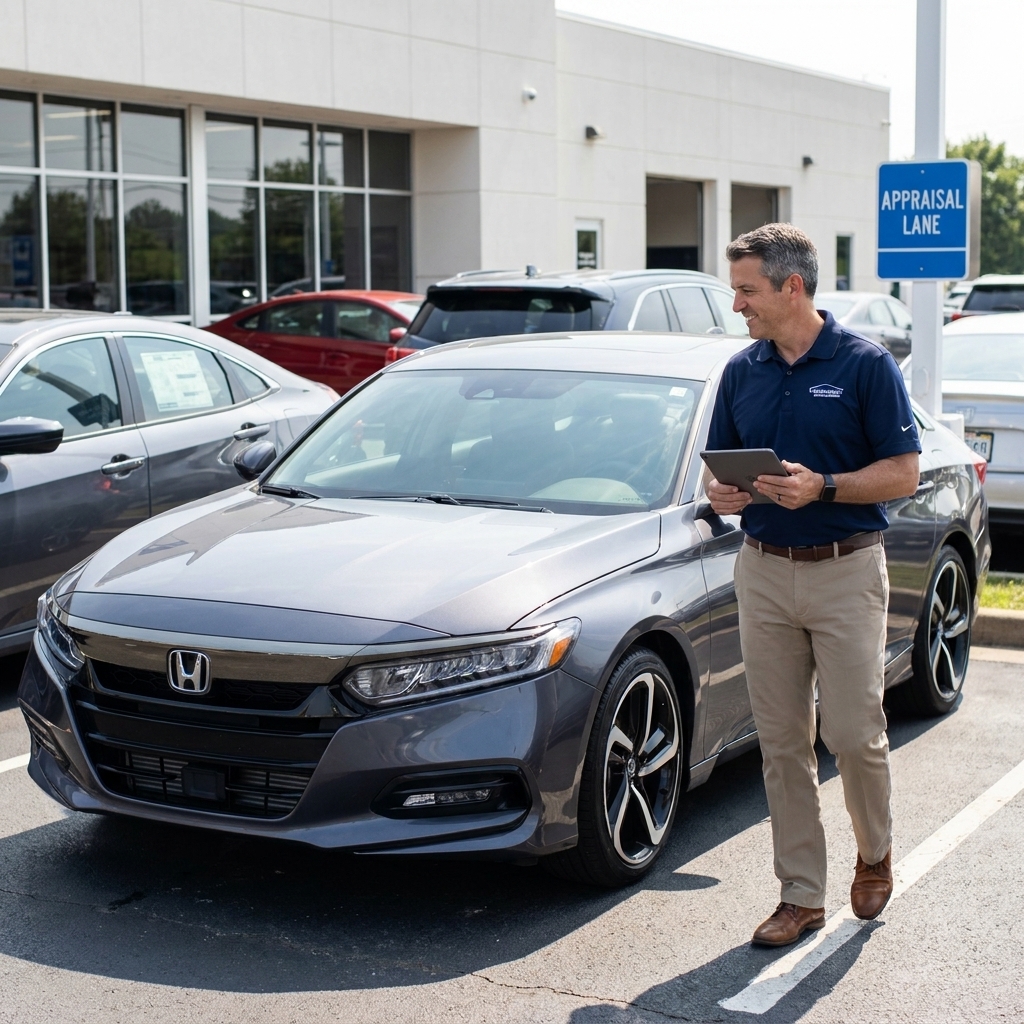
- Know your realistic trade range: Look up trade-in estimates and compare to recent private-party listings. Your car’s condition matters, so be honest.
- Get at least one outside quote: A quick offer from a local used-car buyer or online instant offer service gives you a floor.
- Do not mention your trade until you have a selling price: You want the dealership focused on one number at a time.
What to say: “Let’s finalize the out-the-door price on the car first. Then we can talk about my trade.”
Taxes, DMV, and OTD reality
OTD includes taxes and registration, but the exact number can vary by location and your situation. Most dealers can estimate taxes and DMV fees pretty closely, but the final amount can change based on the DMV’s calculation, plate transfers, local surtaxes, EV fees, and timing.
If you are buying out of state, registering in a different state, or you are counting on a trade tax credit (where applicable), expect more variables. That is normal. You just want it clearly explained.
What to ask for: “Which fees are exact, and which are estimates?”
If something is an estimate, you want it labeled as an estimate on the buyer’s order. Also ask how over-collections and under-collections are handled. Often, if you overpay on state fees, you get a refund later, but rules and timing vary.
Finance office
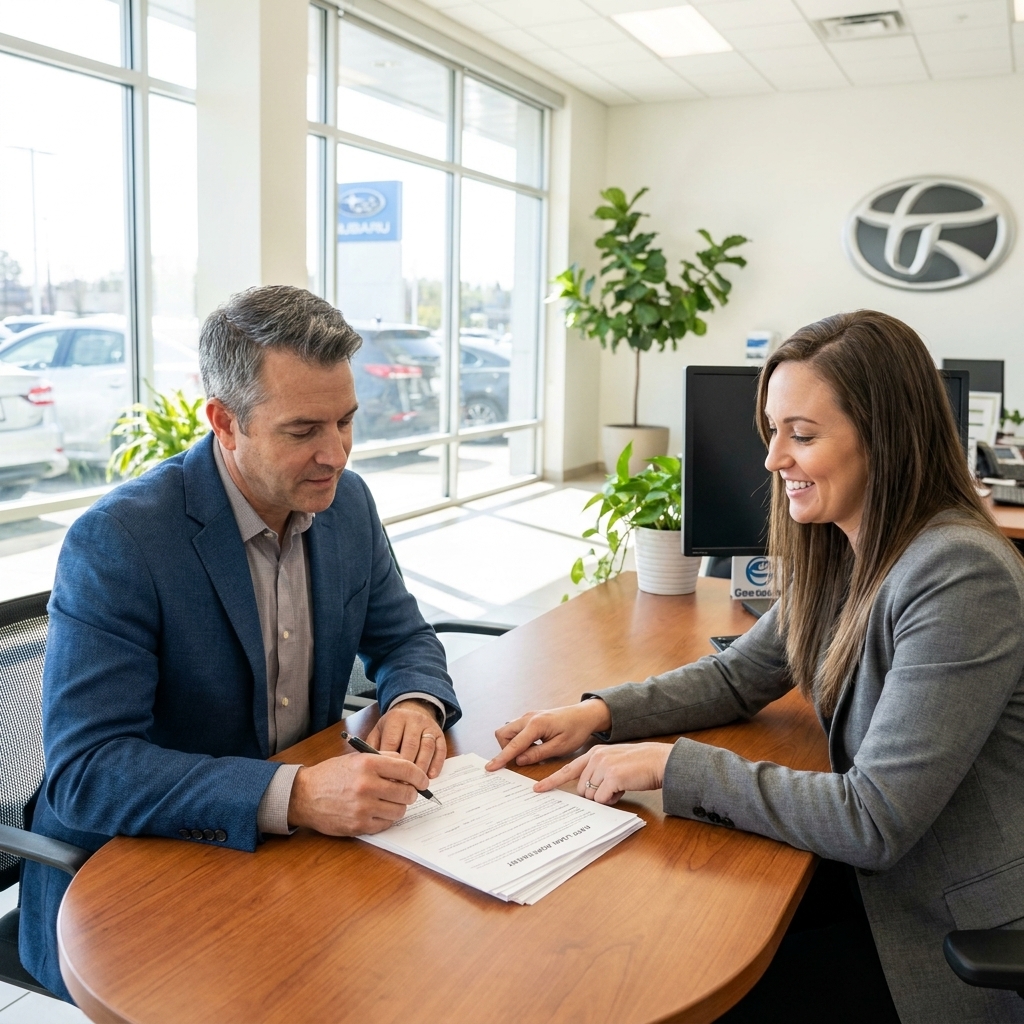
Even after you agree on price, the finance and insurance office is where many buyers get hit with expensive extras or worse terms than expected.
Keep the deal intact
- Match the paperwork to the deal: Verify selling price, fees, tax, down payment, trade credit, APR, and term match what you agreed to.
- Know what governs: The buyer’s order is a summary. The final purchase agreement and, if you finance, the retail installment sales contract are what control the deal. Make sure they all match before you sign.
- Watch for “payment packing”: That is when add-ons are rolled into your payment without being clearly explained.
- Only buy add-ons you understand: If you cannot explain what it covers, how to use it, and what it costs, do not buy it.
Add-ons that can be worth it, sometimes
- Manufacturer-backed extended warranty on certain models with expensive tech, if you plan to keep the car long-term and the price is reasonable.
- Gap insurance if you are putting little money down and the loan balance could exceed the car’s value. Often cheaper through your insurer or lender.
- Tire and wheel coverage if you live where potholes are brutal and you are buying low-profile tires. Read the exclusions.
If you want any product, negotiate it. Just like the car.
Email quotes and deposits
Negotiating by email or text works well, especially if you dislike in-person pressure. Ask for an itemized OTD quote and make sure it includes the VIN (for used cars) and any installed add-ons.
If a dealer asks for a deposit to hold a vehicle, get the terms in writing. Specifically:
- Is the deposit refundable, and under what conditions?
- How long will the vehicle be held?
- Is the quote subject to prior sale?
A fair store will answer those questions clearly.
Credit pulls
You can often negotiate most of the deal before filling out a credit application. If you are not ready for your credit to be run, say so.
What to say: “I am happy to do a credit application after we agree on the out-the-door price. Will you be doing a hard pull or a soft pull?”
If the dealer needs a credit application to confirm a specific APR, that is reasonable. You just want the timing to be on purpose, not automatic.
Scripts you can use
- To slow things down: “I do not make decisions fast on big purchases. I am going to review the numbers line by line.”
- To reset to OTD: “What is the out-the-door price including every fee and add-on?”
- To counter-offer: “I can do $X out the door today. If that does not work, no hard feelings.”
- To handle add-ons: “I am declining that. Please remove it and reprint the quote.”
- To walk away cleanly: “I appreciate your time. We are not close enough on price, so I am going to keep shopping.”
Test drive checklist
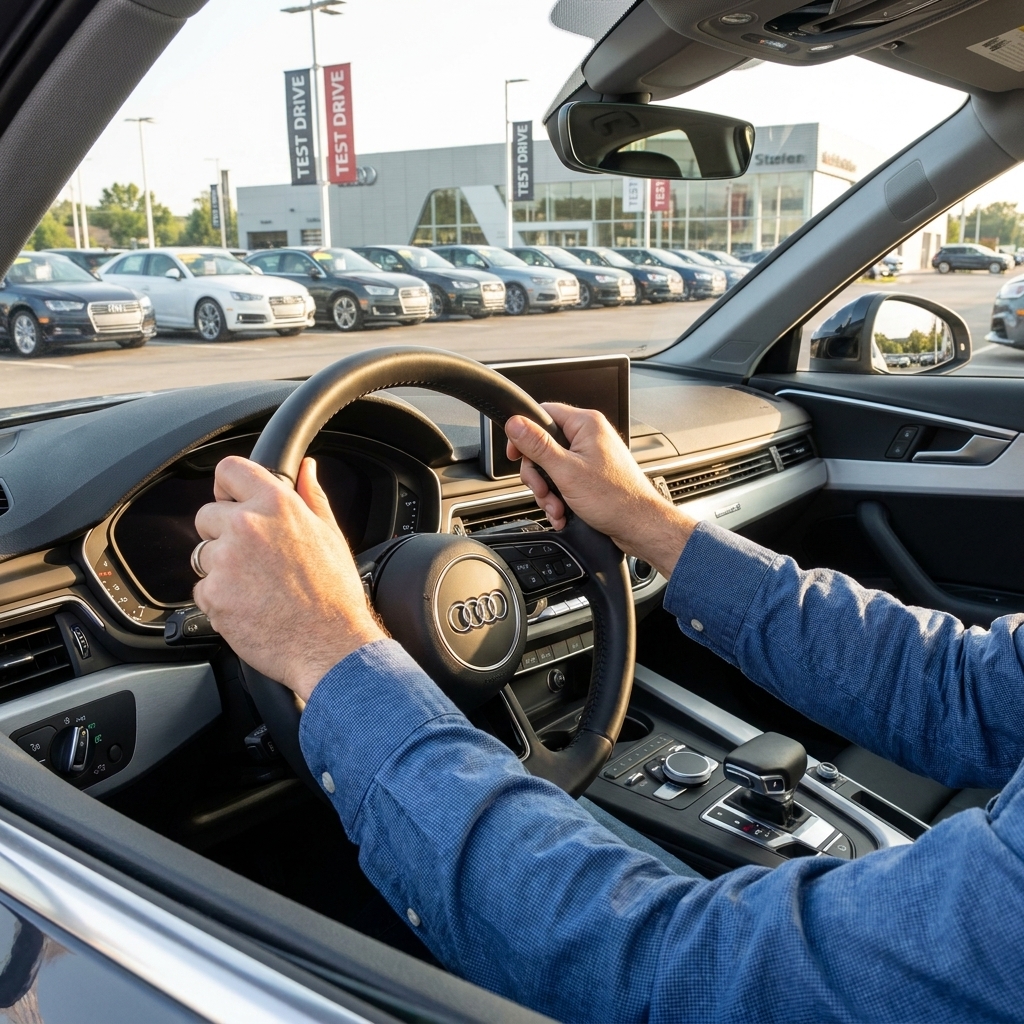
Negotiation gets easier when you can point to concrete issues. During the test drive, check:
- Cold start behavior, rough idle, warning lights
- Brake feel and any pulsation
- Steering pull, vibration at highway speeds
- Transmission shift quality and unusual noises
- HVAC performance, especially AC
- All power features: windows, mirrors, cameras, sensors
For used cars, look at tire tread, brake rotor condition, and any obvious leaks under the car. If something is off, either ask them to fix it in writing as a condition of sale, or negotiate the price down to cover the repair.

When walking away is best
Here are my personal walk-away triggers:
- They refuse to give an out-the-door quote.
- They will not let you read the paperwork calmly.
- The price changes when you sit down in finance.
- You cannot get an inspection you trust on a used car.
- They use intimidation, guilt, or “today only” pressure repeatedly.
You do not owe anyone your signature. The most powerful negotiation tool is being willing to leave.
FAQ
Should I negotiate by email first?
Yes, especially if you dislike in-person pressure. Ask for an itemized out-the-door quote (with the VIN listed). Once you have a written number, it is much easier to compare dealers and keep the conversation honest.
What day is best to negotiate?
End of month can help because stores track monthly targets. But the bigger advantage is shopping when you have time and patience, not when you are rushed.
How much can I realistically negotiate off a car?
It depends on demand, inventory, trim, and your local market. On used cars, condition and comparable listings matter most. On new cars, incentives and dealer discounting swing a lot. Focus less on a magic number and more on an OTD price that matches your research.
Is it better to say I am paying cash?
Do not lead with it. Some dealers can make more money arranging financing, and some manufacturer incentives also depend on financing. Either way, keep the negotiation centered on the out-the-door price first. You can disclose payment method later.
Can I negotiate dealer fees?
Sometimes you cannot remove them, but you can almost always negotiate the overall out-the-door number. If the fee stays, the selling price needs to drop.
The bottom line
Good negotiation is not about being the loudest person in the showroom. It is about being the clearest. Get the out-the-door price in writing, separate the trade and financing, and do not pay for extras you did not ask for.
If you keep your cool and stay willing to walk, you will be amazed how quickly the “best we can do” number starts moving.