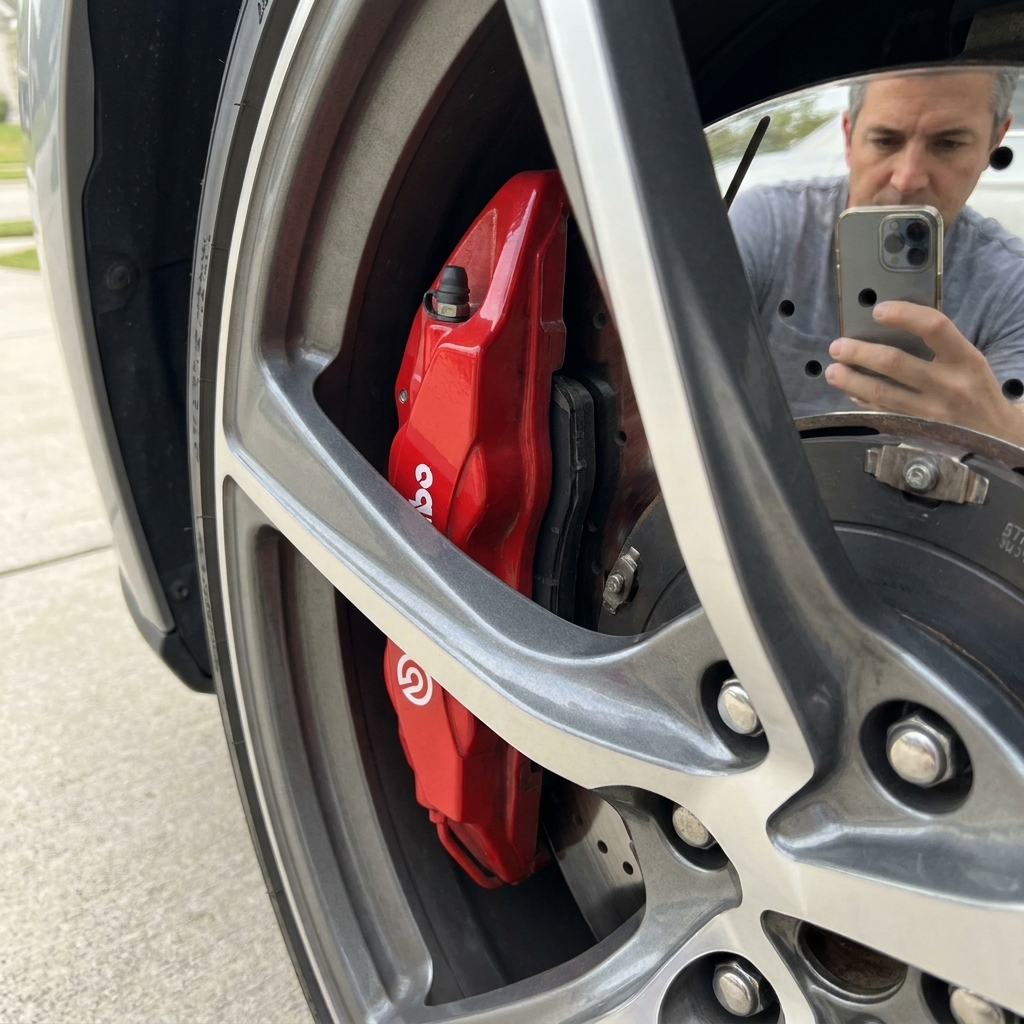
Use this hands-on test-drive checklist to evaluate comfort, steering, brakes, transmission behavior, visibility, tech, tire condition, and red flags before y...
Buying a used car should feel like a win, not a gamble. The trick is to inspect it the same way a good shop would, slow and systematic. I have watched perfectly nice-looking cars hide flood damage, accident repairs, or a transmission that is one test drive away from quitting. This checklist is built to help you spot the expensive stuff before you fall in love with the paint color.
This will not replace a lift inspection by a professional, but it can catch a lot of costly problems in a driveway or parking lot.
Bring: a small flashlight, a paper towel, a magnet (optional), a tire tread gauge (best) or a penny, and an OBD-II scanner if you have one. Try to inspect the car cold, before it has been warmed up.
Quick triage
Before you crawl around on the ground, do a fast pass. If the car fails these basics, you can save yourself an hour.
- Title status: Ask if the title is clean, salvage, rebuilt, lemon buyback, or flood branded. If the seller hesitates or will not show it, walk away.
- VIN match: Confirm the VIN on the dash matches the VIN on the driver door sticker and the title. Mismatches are a hard no.
- Liens: Look for a lienholder listed on the title. If there is a lien, do not hand over money casually. Use a proper payoff process and confirm release paperwork before you take the car.
- Cold start availability: If the seller insists on starting it before you arrive, treat it as a red flag. Cold starts reveal weak batteries, timing chain rattle, and smoke.
- Seller behavior: Rushed, pushy, or refusing a pre-purchase inspection often means the deal is riskier than it looks. Sometimes people are just busy, but you should protect yourself either way.
Paperwork and history
A clean body can still be a bad buy if the paperwork is messy. Your goal is to confirm ownership, maintenance, and whether the mileage makes sense.
Documents to ask for
- Title in the seller’s name (avoid title jumping).
- Maintenance records (oil changes, brakes, tires, major services).
- Receipts for recent work that explains any new parts.
- Both keys and key fobs. Replacing smart keys can be expensive.
Run the basics
- Vehicle history report: Useful, not perfect. Treat it as one data point, not a verdict.
- Recall check: Look up open recalls by VIN. Unfixed recalls are not always a deal breaker, but you want to know what is pending.
- Odometer sanity check: Compare mileage to service stickers, maintenance records, and general wear. A “50k-mile” car with a shredded driver seat bolster and polished-smooth steering wheel deserves questions.
Pro tip: If the seller says “it just needs a sensor,” ask why they did not fix it. Sensors are cheap compared to what they sometimes indicate.
Exterior
Most people glance at paint and call it good. You are looking for evidence of crashes, rust, poor repairs, and water intrusion.

Walk-around checklist
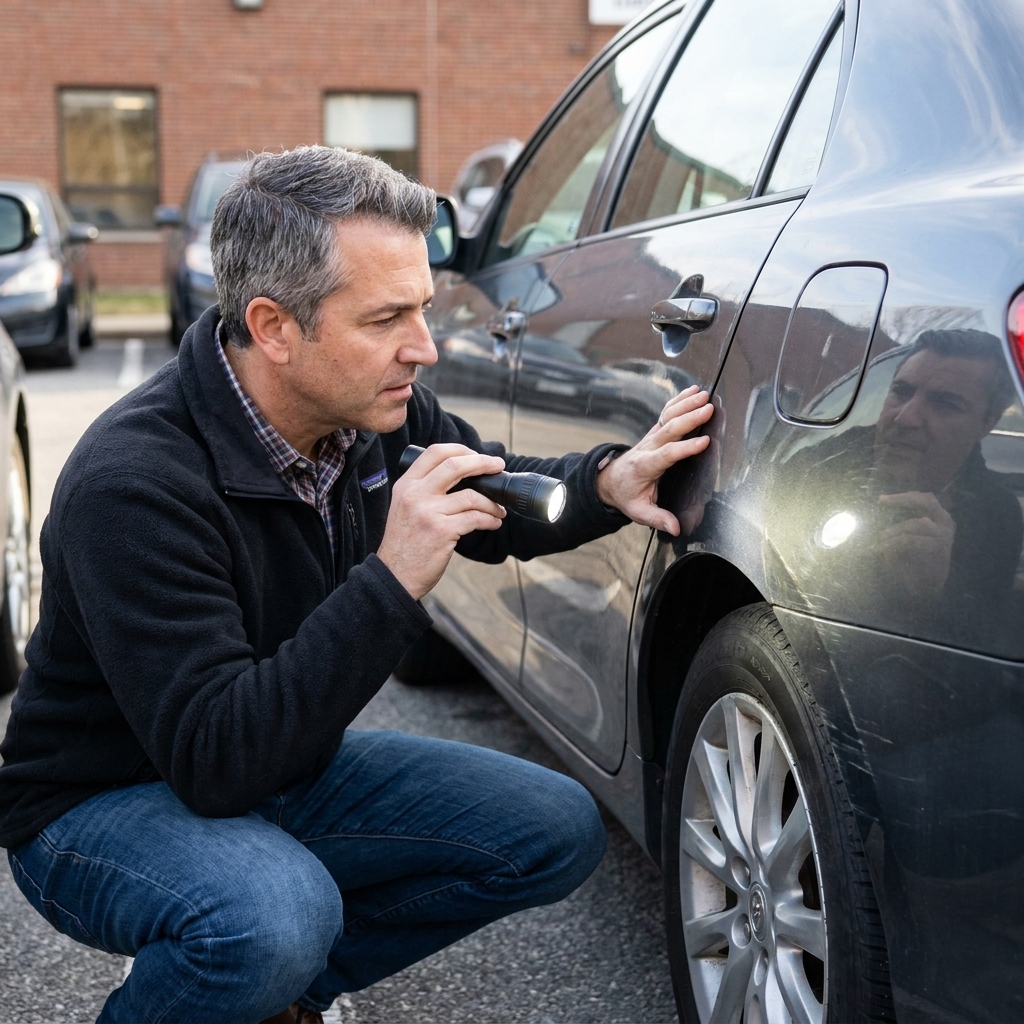
- Panel gaps: Uneven hood, door, or trunk gaps can suggest accident repair or structural issues.
- Paint mismatch: Look at the car from multiple angles. A slightly different shade on one panel often means repainting.
- Overspray: Check rubber seals, wheel well liners, and inside door jambs for paint mist. That is a classic quick-bodywork clue.
- Rust hot spots: Wheel arches, rocker panels, lower door edges, the trunk seam, and under the fuel door. Surface rust is common in salt states, but bubbling paint usually means rot underneath.
- Glass condition: Chips, cracks, and hazy headlights. A windshield crack can be a negotiating point or a reason to walk if it is in the driver’s view.
- Lights: Confirm headlamps, brake lights, turn signals, reverse lights, and hazard lights work.
Tires and wheels
- Tread depth: Uneven wear can signal alignment problems, worn suspension parts, or past crash damage. If you are using the penny test, you want at least enough tread to cover Lincoln’s head. A tread gauge is more reliable.
- Age: Check the DOT date code on the sidewall. Many shops recommend replacing tires around 6 years, and most tires are due by 10 years at the latest depending on condition and storage.
- Matching set: Mismatched brands or sizes can mean the owner cut corners or there was a blowout story you have not heard.
- Wheel damage: Bends and cracks happen. Heavy curb rash can hint at rough city driving and neglected maintenance.
Interior
The interior tells you how the car was treated. It also reveals hidden problems like leaks, flood exposure, and electrical gremlins.
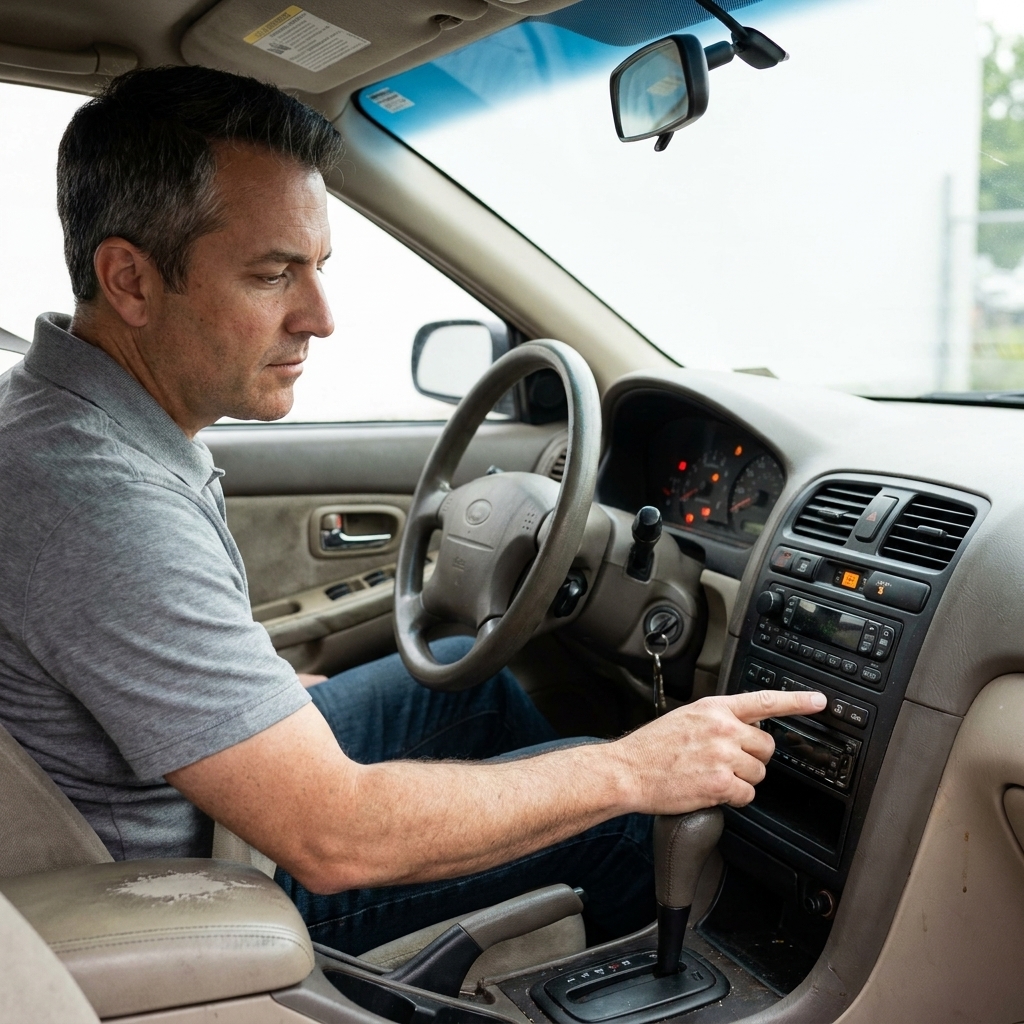
Cabin checklist
- Smell test: Musty odor, heavy air freshener, or mildew can indicate water intrusion.
- Carpet and padding: Feel for dampness under floor mats, especially in the trunk and rear footwells.
- Seat wear vs mileage: Excessive wear can suggest higher mileage than shown.
- Seatbelts: Pull each belt all the way out and let it retract. Make sure it latches cleanly and locks when you tug it sharply. Neglected belts can hint at a car that has not been cared for, and belt issues can be a safety deal breaker.
- All windows and locks: Test every switch. Slow windows often mean failing regulators.
- HVAC: Make sure heat gets hot and AC gets cold. Listen for blower motor squeal and check that air changes between vents.
- Dash lights: With key on and engine off, most warning lights should illuminate briefly as a self-check, then go out after starting. If the check engine light does not behave as expected for that car, it could be normal for that model, or it could indicate cluster/bulb tampering. Verify with an OBD scan.
- Airbag clues: Confirm the airbag light turns on briefly, then turns off. Also look for mismatched steering wheel or dash trim, or seams that look re-glued, which can suggest prior airbag deployment and repair.
- Infotainment and cameras: Test Bluetooth, backup camera, parking sensors, and navigation if equipped.
- Sunroof: Open and close it fully. Check the headliner around it for staining.
Trunk and cargo area
- Spare tire and tools: Confirm they are present and not waterlogged.
- Lift the trunk floor: Look for ripples, fresh paint, rust, or mud that could indicate rear impact or flooding.
Under the hood
You do not need to be a tech to do a solid under-hood check. You are looking for obvious neglect, active leaks, and signs of overheating.
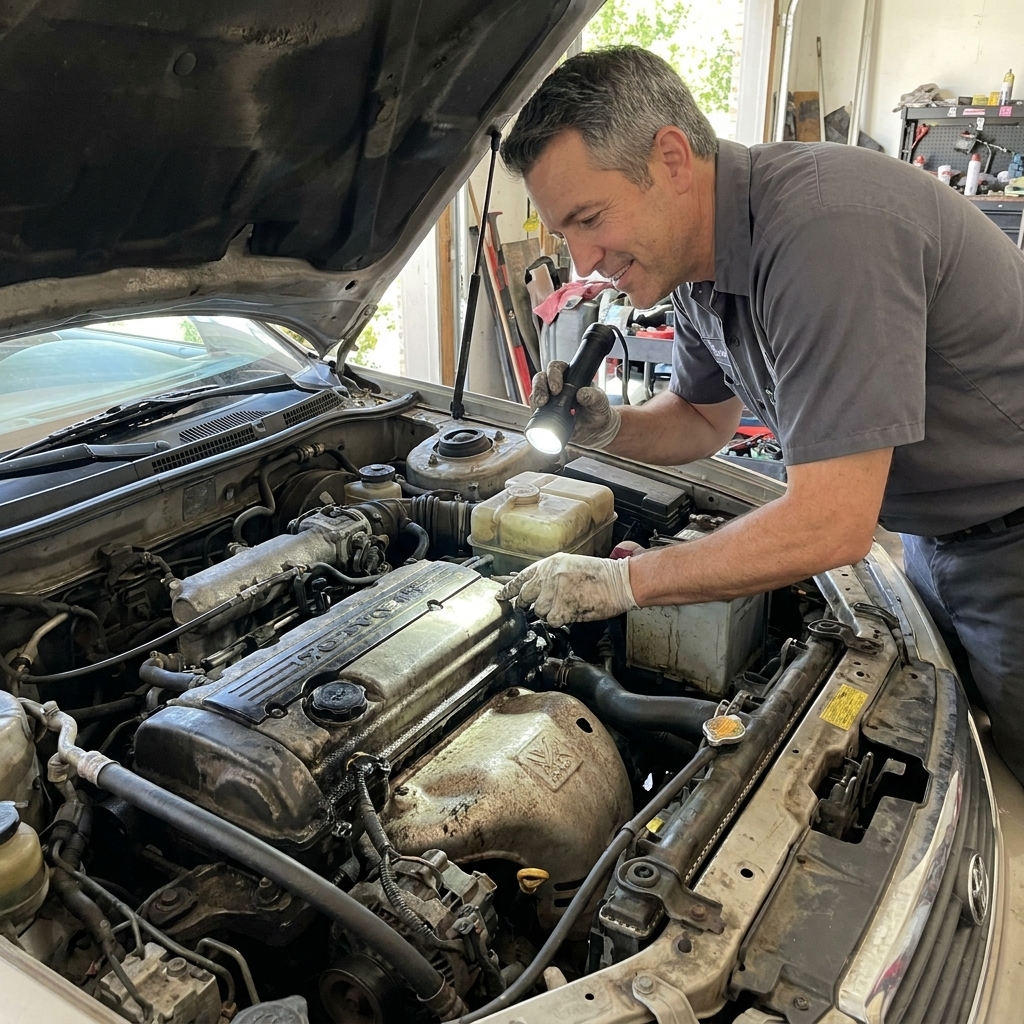
Basic checks
- Oil level and condition: Pull the dipstick. Low oil is a bad sign. Milky oil can indicate coolant contamination.
- Coolant: Check the coolant reservoir level and look for oily residue. Do not open a hot radiator cap.
- Transmission fluid: If accessible by dipstick, check level and smell. Burnt odor and very dark fluid can indicate trouble. Many modern cars have sealed transmissions, so you may not be able to check it.
- Brake fluid: Low fluid can mean worn pads or a leak. Very dark fluid suggests it has not been serviced in a long time.
- Belts and hoses: Look for cracking, fraying, or wet spots.
- Battery: Corrosion on terminals is common, but heavy buildup or a loose battery is a maintenance red flag.
- Leaks: Look around the valve cover, timing cover area, power steering components (if equipped), and under the engine for fresh oil or coolant.
Overheating clues
- Coolant stains around the radiator, hoses, or reservoir.
- White crust near hose connections.
- Rapid pressure build: From truly cold, a cooling system that gets rock-hard fast (within a minute or two) can be one clue of combustion gases in the cooling system. It is not a standalone diagnosis, but it is a reason to dig deeper.
- Oil cap sludge combined with coolant loss can be a head gasket warning, especially if there is also lingering white smoke.
Under the car
If you can safely look underneath, you can learn a lot in 60 seconds. Use a flashlight and never put yourself in a risky spot. If the ground is uneven or the car is unstable, skip it and rely on a professional inspection.
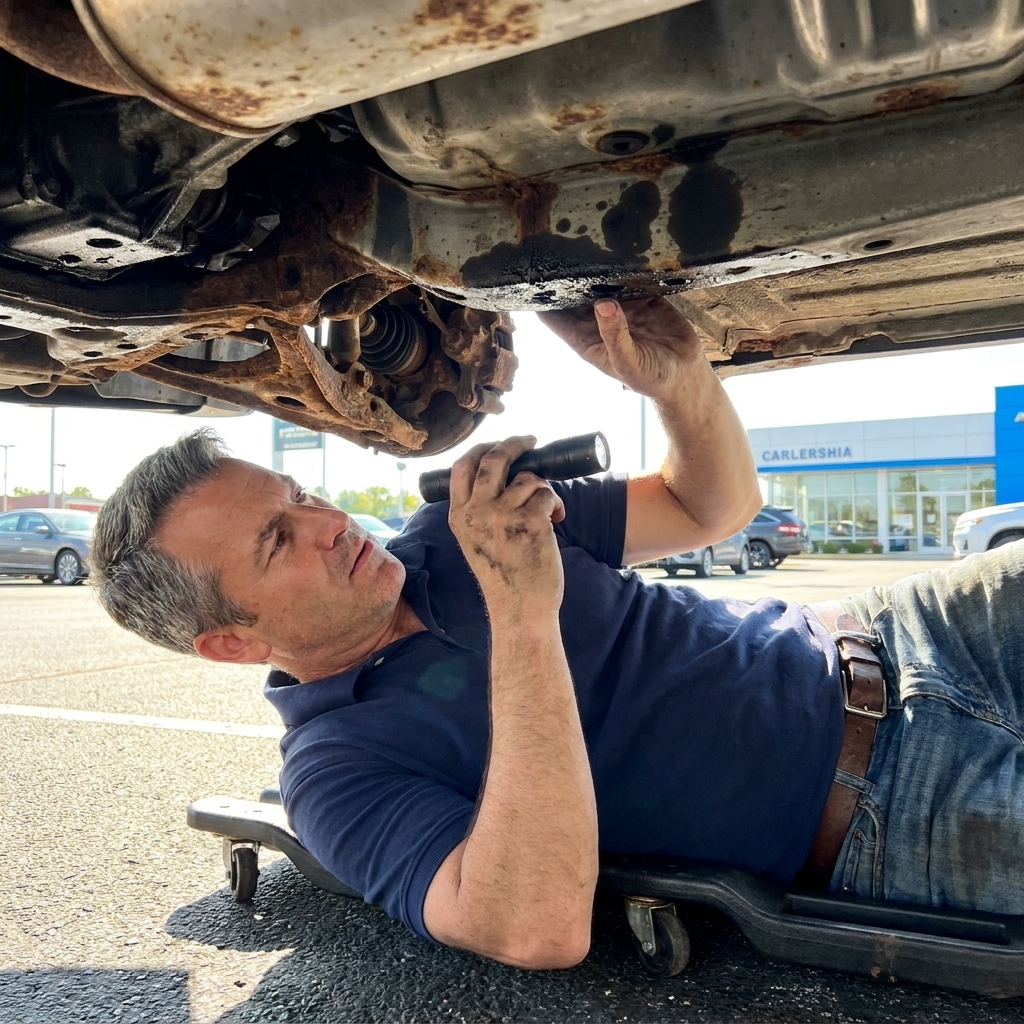
- Rust: Surface rust on suspension arms is normal in many climates. Flaky, scaling rust on structural areas like frame rails, subframes, or rocker pinch welds is serious.
- Fluid leaks: Look for wetness on the oil pan, transmission, differential, and around axle seals.
- Exhaust: Check for heavy rust holes, rattling heat shields, and patched sections.
- Catalytic converter: Look for fresh welds, missing heat shields, or a section of pipe that looks newer than everything around it. A loud, raspy exhaust note can also hint at converter theft or tampering. This can be expensive to fix and can create registration headaches.
- Suspension: Torn CV boots, leaking shocks or struts, and cracked bushings are all common wear items, but they affect price.
Cold start test
A cold start is where a lot of cars tell on themselves. Ask the seller not to start it before you arrive, then pay attention to the first 30 seconds.
- Start-up behavior: It should fire quickly and settle into a stable idle. Extended cranking can be fuel, ignition, or battery issues.
- Dashboard check: Confirm warning lights behave normally for that vehicle: on briefly at key-on, then off after starting (except things like seatbelt reminders). If something looks off, verify with an OBD scan.
- Exhaust smoke:
- Blue smoke: Oil burning (often rings, valve seals, turbo).
- White smoke that lingers: Possible coolant burning.
- Black smoke: Running rich, could be fuel system or sensor issues.
- Noises: Light ticking can be normal on some engines, but loud knocking, heavy chain rattle, or squealing belts deserve a hard pass or a deep discount with a shop inspection.
- Idle feel: Rough idle can be ignition, vacuum leaks, mounts, or worse.
Test drive
Turn off the radio and drive with intention. Your job is to evaluate engine performance, transmission behavior, braking, steering, and suspension.
Before moving
- Steering wheel straightness: On a flat road, the wheel should not be noticeably off-center.
- Brake pedal feel: Firm, not sinking. A spongy pedal can mean air in the system or fluid issues.
- Parking brake: Test it holds the car on a slight incline if safe.
Acceleration and engine
- Normal pull: It should accelerate smoothly without hesitation.
- Misfires: Shaking under load can mean ignition or fueling problems.
- Temperature gauge: It should rise steadily to normal and stay there.
Transmission behavior
- Automatic shifting: Shifts should be smooth and consistent. Harsh bangs, flares (revving between gears), or delayed engagement into Drive or Reverse are red flags.
- CVT: Some drone is normal, but shuddering, slipping, or warning lights are not.
- Manual: Clutch engagement should be predictable. Grinding, popping out of gear, or a very high clutch bite point can mean wear.
Steering and suspension
- Braking: Do a few normal stops. Pulsation often points to rotor issues (thickness variation or pad deposits) and may require resurfacing or replacement. Pulling to one side can be tires, alignment, calipers, or suspension.
- Road noise: Humming that changes with speed may be a wheel bearing.
- Clunks over bumps: Often sway bar links, struts, or bushings.
- Vibration: Steering wheel shake at speed can be tire balance, bent wheels, or suspension wear.
Parking lot checks
- Full-lock turns: At low speed, turn the wheel fully both directions and listen. Clicking can indicate CV joint issues.
- Reverse behavior: Make sure it engages quickly and backs smoothly.
OBD-II scan
If you have a basic OBD-II scanner, plug it in after the test drive. You are not just looking for current trouble codes.
- Stored and pending codes: Pending codes can point to a problem that has not triggered a light yet.
- Readiness monitors: If many monitors show “not ready,” the seller may have recently cleared codes to hide a check engine light. Note that one or two “not ready” monitors can be normal after a battery disconnect or recent repair, depending on the car and how it was driven.
Walk-away red flags
- Seller will not allow an independent pre-purchase inspection.
- Title issues, VIN mismatches, or “lost title” stories.
- Unresolved lien situations where the seller cannot show a clear path to release.
- Signs of flood damage: musty smell, water lines, corrosion under seats, muddy spare tire well.
- Overheating on the test drive, coolant smell, or temperature gauge climbing.
- Harsh transmission symptoms: slipping, delayed engagement, banging shifts.
- Structural rust or evidence of major frame repair.
- Multiple warning lights illuminated, especially airbag, ABS, or stability control.
Use what you found
Most used cars will have something wrong. The key is separating normal wear from expensive surprises.
Negotiation items
- Worn tires, brakes nearing end of life
- Small windshield chip
- Suspension wear like sway bar links
- Cosmetic issues like curb rash or minor dents
Inspect deeper
- Any fluid mixing signs (milky oil, oily coolant)
- Intermittent warning lights
- Oil leaks on modern turbo engines
- Any transmission hesitation or shudder
- Evidence of repainting with questionable panel alignment
If you are on the fence, spend the money on a pre-purchase inspection (PPI) at a trusted independent shop. It is the cheapest insurance you can buy in the used car world.
Checklist
Use this as a quick tick list while you walk the car.
Paperwork
- Clean title in seller name
- No unresolved lien or a verified payoff plan
- VIN matches dash, door sticker, title
- Maintenance records and receipts
- Recall status checked
Exterior
- Even panel gaps and consistent paint
- No overspray in jambs or seals
- Rust checked at arches, rockers, underbody
- All lights and signals work
- Tires: tread, even wear, age, matching size
Interior
- No musty smell or damp carpet
- Seatbelts latch and retract properly
- All windows, locks, mirrors, seat controls work
- Heat and AC work properly
- Dash warning lights behave normally
- Backup camera and sensors function
Under hood
- Oil level ok, no milky residue
- Coolant level ok, no oily film
- Brake fluid level ok
- No major leaks, belts and hoses look healthy
Test drive
- Cold start is clean, no lingering smoke
- Smooth acceleration, no misfires
- Transmission shifts normally
- Brakes stop straight, no major pulsation
- No clunks, hums, or vibration at speed
Optional scan
- No concerning stored or pending codes
- Readiness monitors look reasonable for the situation
FAQ
Should I always get a pre-purchase inspection?
If you are spending real money, yes. Even if you know cars, a shop lift and a second set of eyes catch things you will miss in a driveway.
How long should a used car inspection take?
Plan on 45 to 90 minutes including a test drive. If the seller is only offering a 10-minute spin, that is not enough time to evaluate the car.
What mileage is too high?
High mileage is not automatically bad. A well-maintained 150,000-mile car can be a better buy than a neglected 80,000-mile one. Condition and maintenance history matter more than the number.
What is the most expensive thing to miss?
Transmission issues and overheating problems are usually at the top. Both can turn into a multi-thousand-dollar repair fast.