A practical, step-by-step plan for handling a check engine light, including when to pull over, how to use an OBD2 scanner, and what common codes mean.
The check engine light has a special talent for turning a normal commute into a worst-case-scenario spiral. Here’s the good news: on most 1996-and-newer passenger cars and light trucks sold in the U.S., your vehicle is required to speak a common language called OBD2. With a simple scanner, you can listen in, pull a trouble code, and walk into a shop with real information instead of anxiety.
I’ll show you what OBD2 is, how to read codes the right way, what the most common codes usually mean, and what you should (and should not) do before you spend a dime at a repair counter.
What OBD2 is and what it monitors
OBD2 stands for On-Board Diagnostics, second generation. Think of it as your car’s self-check system. Dozens of sensors feed data to computers (modules) that run the engine and emissions systems. When something falls outside the expected range, the car stores a diagnostic trouble code (DTC) and may turn on the malfunction indicator lamp (MIL), which most of us just call the check engine light.
A key point: the check engine light is primarily an emissions-related warning. Sometimes it also overlaps with drivability, especially with misfires and fuel control problems. It can come on for issues that feel severe (misfires) or issues that feel tiny (a loose gas cap).
OBD2 does not name the broken part
A trouble code is a starting point, not a verdict. Example: a code that mentions an oxygen sensor often means the sensor is reporting a problem, not necessarily being the problem. Exhaust leaks, misfires, fuel pressure issues, and wiring faults can all trigger sensor-related codes.
Check engine light behavior
- Solid check engine light: A fault is stored and emissions may be elevated. The car may drive normally or feel a little off. You generally have time to scan it and plan a repair.
- Flashing check engine light: Treat this as urgent. Most commonly it indicates an active misfire that can damage the catalytic converter quickly. Reduce load, avoid hard acceleration, and if it continues flashing, stop driving and get it checked or towed.
If you also have low oil pressure, overheating, or a red battery warning with drivability symptoms, prioritize those warnings over the check engine light.
OBD2 port location and safe plug-in
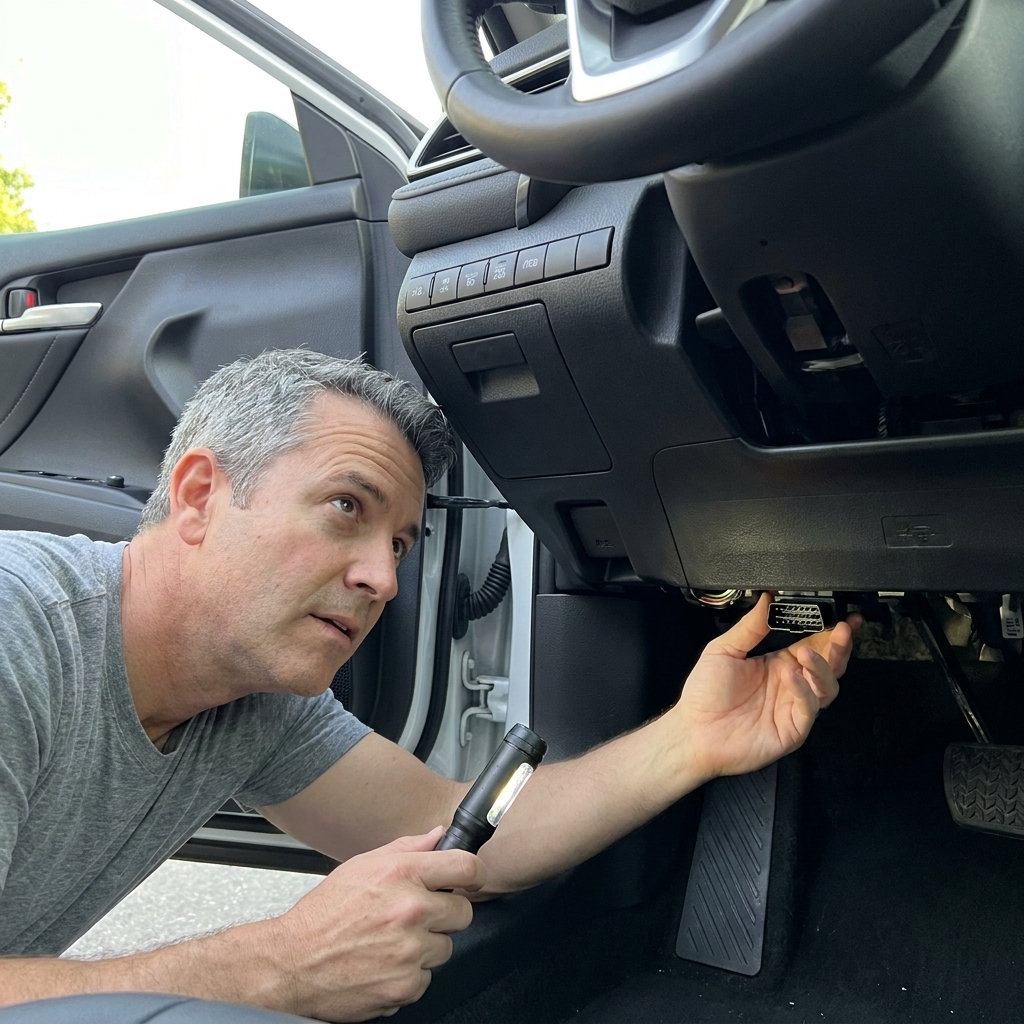
The OBD2 port is usually under the dashboard on the driver’s side, often near the steering column or above the pedals. It’s a 16-pin trapezoid-shaped connector.
Quick, safe steps
- Park safely, set the parking brake, and turn off accessories.
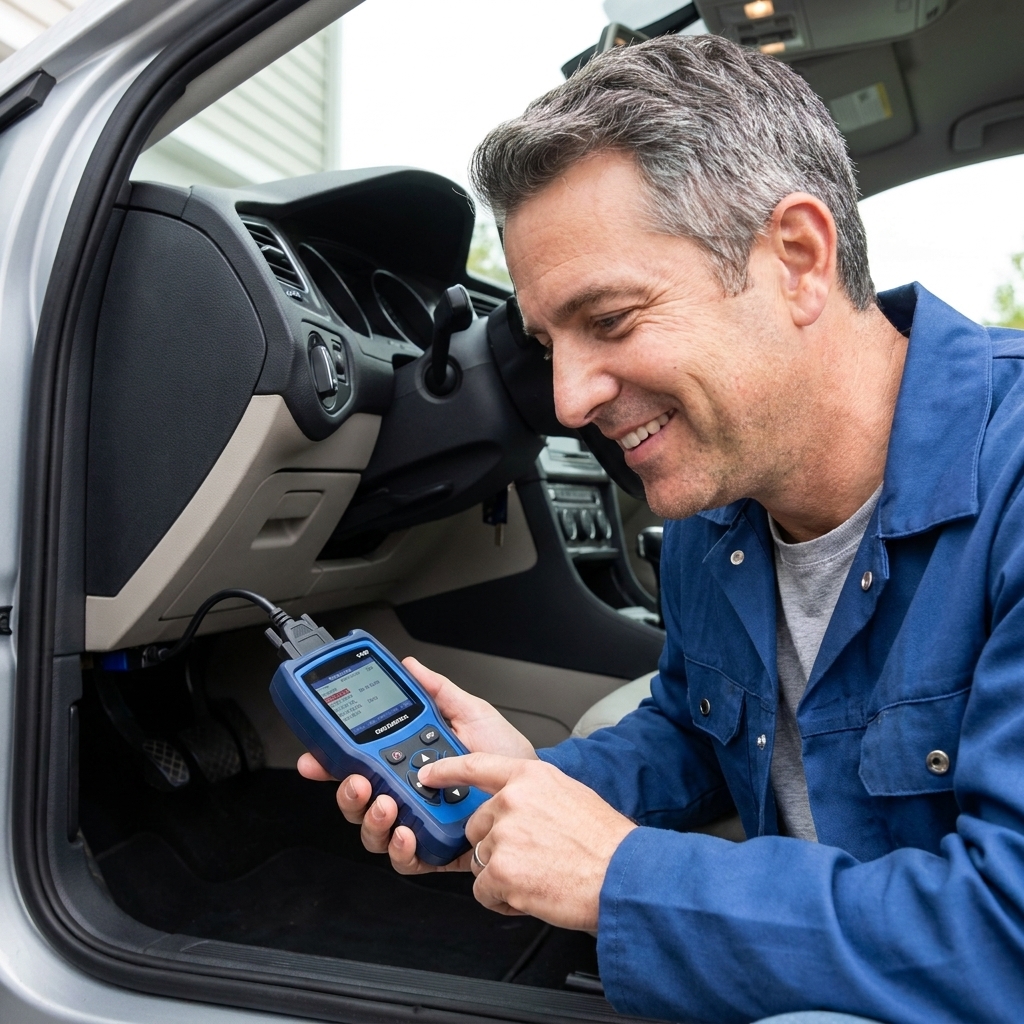
- Plug the scanner into the port. It should fit one way only. Do not force it.
- Turn the key to ON (or press the start button without pressing the brake) so the dash lights come on.
- Follow the scanner prompts to Read Codes.
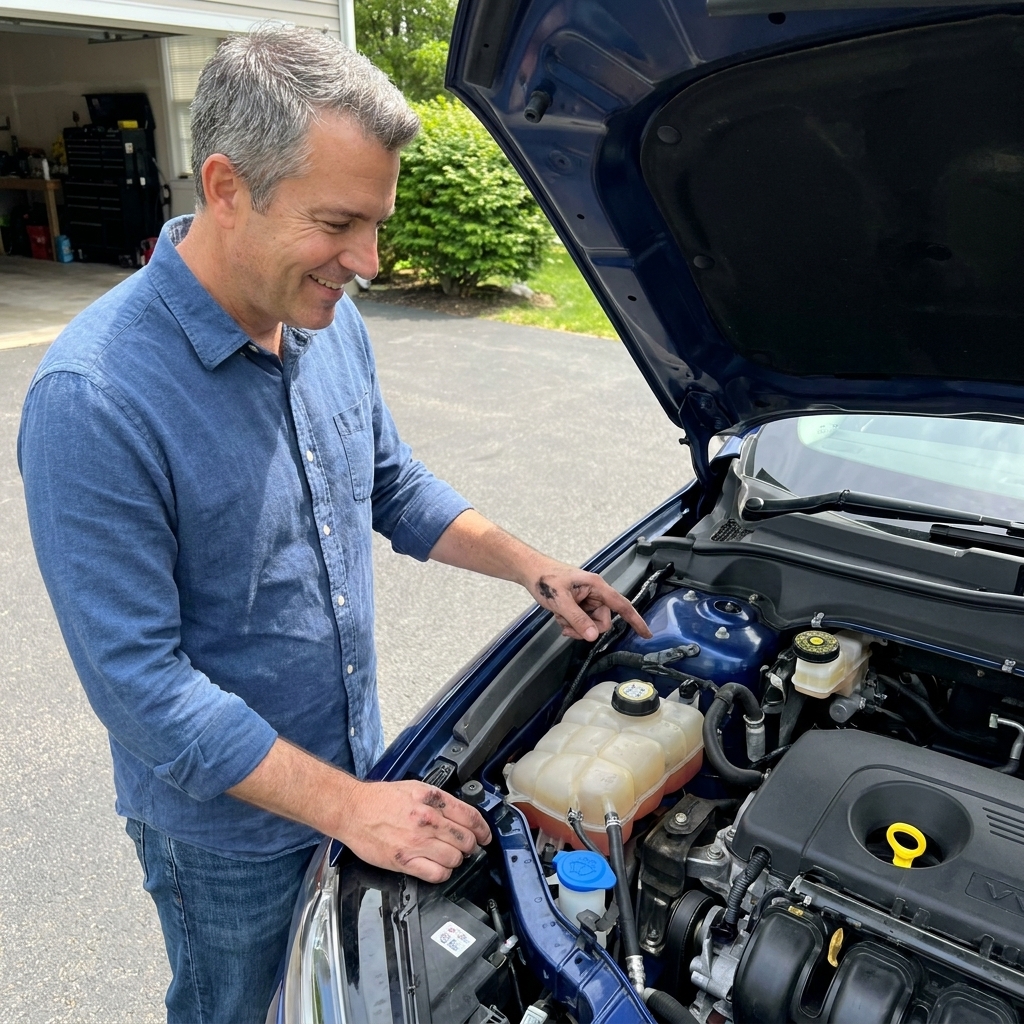
Basic safety note: avoid touching a hot engine or exhaust, and never reach into moving belts or fans. If you need to inspect anything underhood, do it with the engine off and cooled down.
How to read an OBD2 code
A typical OBD2 code looks like P0301. Here’s how to decode the structure.
- First letter: Powertrain (engine and transmission), Body (airbags, seats, HVAC), Chassis (ABS, steering), U network/communication (modules talking to each other).
- First digit: 0 or 2 = generic (standardized across brands), 1 or 3 = manufacturer-specific (brand-specific meaning).
- Remaining digits: Identify the subsystem and the specific fault.
Most check engine light issues are P-codes, because the MIL is emissions-related.
Code status: pending, confirmed, permanent
Good scanners do not just show a code, they show status. That status tells you how confident the car is that the problem is real.
- Pending: The car noticed something odd, but it has not happened enough times to confirm. Useful for intermittent issues.
- Confirmed (stored): The fault happened enough that the car logged it as real and often turned on the light.
- Permanent: The car typically will not erase this just because you cleared codes. It clears only after the system runs its self-tests and passes under the right enabling conditions, which can take multiple drive cycles depending on the vehicle and the problem.
If a seller tells you “the light is off,” you still want to check for pending and permanent codes before you trust it.
Freeze frame data
When a confirmed code sets, the car often saves freeze frame data, a snapshot of conditions at the moment the fault was detected. Depending on the vehicle, this may include:
- Engine RPM and vehicle speed
- Coolant temperature
- Fuel trims
- Calculated engine load
- Intake air temperature
This is gold for diagnosis. A lean code that occurs only on cold start points you toward different causes than a lean code that occurs at highway cruise.
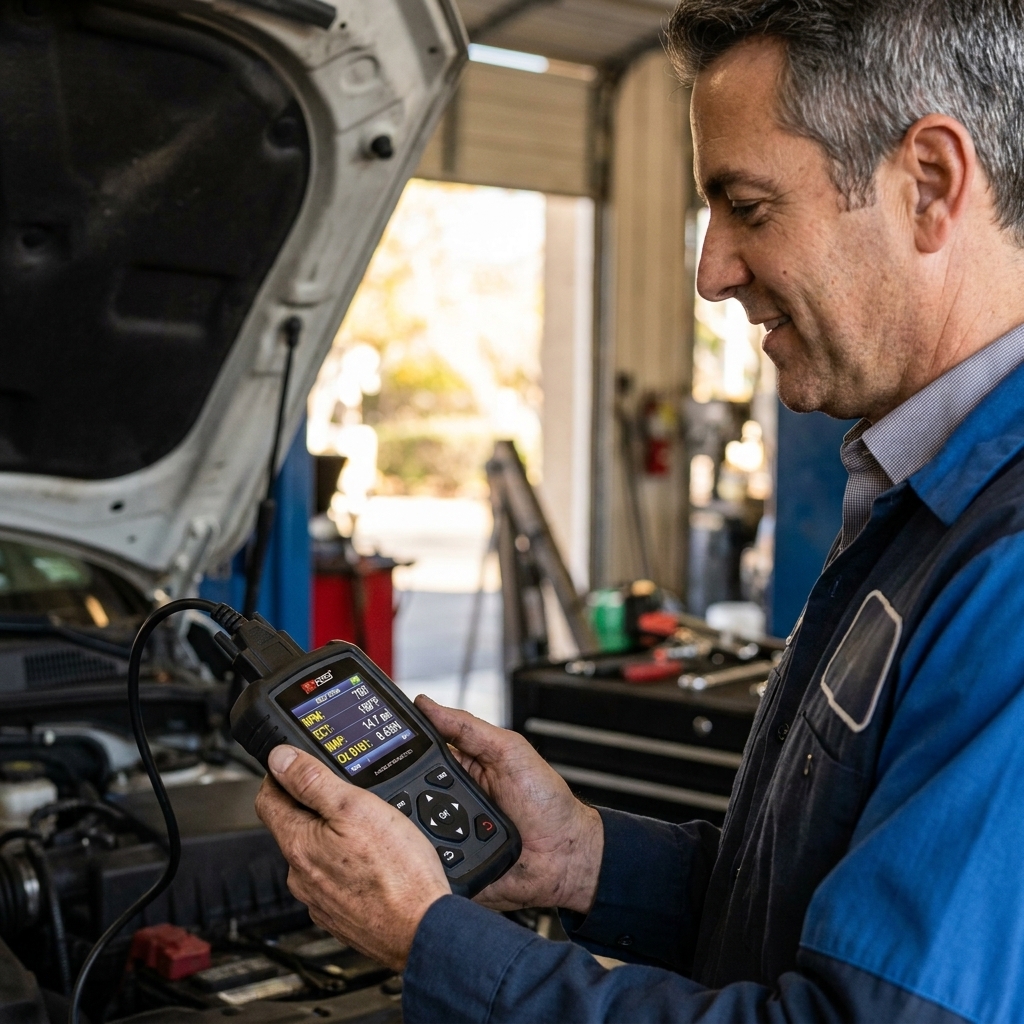
Readiness monitors in plain English
Your car runs a set of self-checks called readiness monitors (sometimes shown as I/M readiness). These monitors verify that key emissions systems have been tested and passed. After you clear codes or disconnect the battery, many monitors reset to “not ready” until the car completes the right drive conditions again.
This matters because many states will fail an emissions inspection if too many monitors are not ready, even if the check engine light is off. There is no universal timeline. Some cars set monitors quickly, others need specific cold starts, steady highway cruising, and stop-and-go patterns before everything flips to ready.
Common OBD2 codes and what they mean
Below are some of the most common codes I see in real shops. I’m listing the usual suspects, not promises. Your exact cause depends on the car, engine, and symptoms.
P0420: Catalyst system efficiency below threshold (Bank 1)
What you’ll notice: Often nothing other than the light. Occasionally you may notice a sulfur smell. If you have a real loss of power, suspect another issue (like a misfire or a restricted catalyst), not just an efficiency code.
Common causes:
- Worn catalytic converter
- Exhaust leak upstream of the converter
- Lazy oxygen sensor(s) or sensor heater issues
- Misfires or rich running that damaged the converter
Smart first checks: Look and listen for exhaust leaks. If you have misfire codes, fix those first. Replacing O2 sensors without testing is a classic money-waster.
P0300, P0301 to P0308: Random misfire or cylinder-specific misfire
What you’ll notice: Rough idle, shaking, hesitation, blinking check engine light in severe cases.
Common causes:
- Worn spark plugs, failed ignition coil(s), damaged plug wire(s) on older setups
- Injector issue on the affected cylinder
- Vacuum leak or intake gasket leak (often causes multiple-cylinder misfires)
- Low compression (mechanical engine issue)
Smart first checks: If the light is flashing, stop pushing it. Check when plugs were last replaced. If you’re comfortable, inspect coils for oil contamination and obvious damage, and look for loose intake tubes.
P0171 (Bank 1 lean) and P0174 (Bank 2 lean)
What you’ll notice: Idle may surge, cold start may be rough, sometimes a whistle from a vacuum leak.
Common causes:
- Vacuum leak (cracked hose, intake boot, PCV system leak)
- Dirty MAF (mass airflow) sensor
- Weak fuel pump or restricted fuel filter (where serviceable)
- Exhaust leak affecting oxygen sensor readings
Smart first checks: Inspect hoses and intake tubing for cracks and loose clamps. Make sure the oil cap and dipstick are seated. A proper smoke test is often the fastest path to the real leak.
P0455, P0442, P0456: EVAP system leak (gross/large, small, very small)
What you’ll notice: Usually nothing. Sometimes a fuel smell.
Common causes:
- Loose, incorrect, or damaged gas cap
- Cracked EVAP hoses
- Failed purge valve or vent valve
- Leaking charcoal canister
Smart first checks: Tighten the gas cap until it clicks and inspect the seal for cracks. If the cap is old or will not click, replacing it is cheap. If the code returns, you likely need leak testing.
P0128: Coolant thermostat temperature below regulating temperature
What you’ll notice: Heater not as warm as it should be, temperature gauge runs low, worse fuel economy.
Common causes:
- Thermostat stuck open
- Coolant level low (sometimes due to a slow leak)
- Faulty coolant temperature sensor (less common)
Smart first checks: Check coolant level only when the engine is stone cold. If it’s low, find out why before you just top it off.
P0401: EGR flow insufficient
What you’ll notice: May be subtle. Some cars have pinging, rough idle, or failing emissions tests.
Common causes:
- Carbon buildup clogging EGR passages
- Faulty EGR valve or EGR control solenoid
- Vacuum supply issues on older systems
Smart first checks: This often requires component testing and sometimes cleaning passages. It’s fixable, but do not just throw an EGR valve at it without verifying flow and control.
P0101: Mass airflow (MAF) sensor range/performance
What you’ll notice: Hesitation, poor throttle response, sometimes stalling.
Common causes:
- Dirty MAF sensor
- Air leak between MAF and throttle body (intake boot crack)
- Aftermarket oiled air filter contaminating the sensor
Smart first checks: Inspect the air intake ducting for splits and loose clamps. If cleaning the MAF, use proper MAF cleaner, not brake clean.
Clearing codes: when it helps and when it hurts
Most scanners have a “Clear Codes” button. It’s tempting. Here’s my mechanic’s take.
When clearing codes is reasonable
- You corrected something obvious (like tightening a loose gas cap) and want to see if the code returns.
- You’re troubleshooting and need to confirm which code comes back first after a repair.
When clearing codes can backfire
- Before an emissions test: Clearing codes resets readiness monitors, and you may fail because the car has not completed its self-tests yet.
- When the light is flashing or the engine runs badly: Clearing does not fix the problem, and you can risk catalytic converter damage if you keep driving.
- When you need proof for a shop: Clearing wipes freeze frame data and can make diagnosis harder and more expensive.
What to write down before you call a mechanic
If you want to avoid the “we need more time to diagnose” loop, bring useful details. It saves you money and helps the shop nail it faster.
- The exact code(s) (example: P0302, not “misfire code”)
- Code status (pending vs confirmed vs permanent)
- Freeze frame highlights: coolant temp, RPM, speed
- What changed recently: battery replaced, gas cap lost, work performed
- Symptoms: rough idle, fuel smell, poor MPG, starts hard when hot
- Conditions: only on cold starts, only at highway speed, only in rain
Choosing an OBD2 scanner
You do not need a $1,000 shop tool for basic check engine light work. But not all cheap scanners are equal.
Basic code reader
- Best for: Reading and clearing generic P-codes
- Limitations: Often no live data, limited freeze frame detail, weak definitions
Bluetooth dongle plus a good app
- Best for: Better code definitions, live data, graphs, and logs
- Limitations: Quality varies widely. The bargain dongles are often unreliable clones. Stick with reputable brands and apps, and pay attention to permissions if the app requests location or contacts.
Mid-range handheld scan tool
- Best for: Live data, readiness monitors, enhanced diagnostics on many vehicles
- Limitations: Brand coverage differs, updates may cost extra
My must-have features for most drivers: freeze frame access, live data, readiness monitor status, and clear code definitions that do not just repeat the code back to you.
OBD2 myths that get drivers in trouble
Myth: “The code says I need an oxygen sensor.”
Codes rarely convict a part. They point you toward a system. An O2 sensor code can be wiring, exhaust leaks, fuel trims, or engine running issues upstream.
Myth: “Auto parts stores will diagnose it for free.”
Many stores will pull codes for free, which is helpful. But a code pull is not a diagnosis. Use it as information, then decide whether you can do basic checks or need a shop.
Myth: “If I clear it and it stays off, I’m fine.”
Sometimes you are. Sometimes the monitor has not run yet, or the problem only happens under specific conditions. If it returns, you need the root cause, not a reset.
Quick FAQ
Can I drive with the check engine light on?
If it’s solid and the car feels normal, usually yes for a short period, but you should scan it soon. If it’s flashing, avoid driving and get it checked immediately to prevent catalytic converter damage.
Will disconnecting the battery clear the check engine light?
On many cars it can clear stored codes, but it also wipes readiness monitors and can cause idle relearn issues. It may also reset the clock and radio presets. It’s not a fix. Use a scanner so you can read the codes and capture freeze frame first.
Why did my check engine light turn off by itself?
If the condition stops happening for enough drive cycles, the light can turn off while a history code remains. That’s common with intermittent EVAP leaks or occasional misfires. The underlying issue can still be present.
What does “Bank 1” mean?
On V-style engines (V6, V8), “Bank 1” is the side of the engine with cylinder #1. Inline engines usually only have Bank 1.
The bottom line
Your car is not trying to be mysterious. With OBD2, it’s leaving you clues. Pull the codes, note the status and freeze frame, and do a couple of sane visual checks before you buy parts. When it’s time to visit a shop, you’ll show up informed, calm, and a lot harder to upsell.
For the fastest path to a real fix, bring the code list, code status, freeze frame highlights, and your exact symptoms to a qualified technician. That combination saves diagnostic time and helps you avoid replacing parts that were only reporting the problem.