A mechanic-writer’s clear breakdown of synthetic and conventional oil, including pros, cons, myths, severe service, and how to choose the best oil for long...
Most breakdowns I’ve seen over the years didn’t start with some mysterious mechanical curse. They started with something simple, like low coolant, old brake fluid, or an engine running a couple quarts low on oil. The good news is you don’t need a lift or a toolbox the size of a fridge to stay ahead of it. You just need five minutes, a rag, and the right fluid.
Below are the six essential car fluids you should check regularly, where to find them, how to read the level, and the safest way to top each one off without causing expensive problems.
Before you pop caps
- Park on level ground and set the parking brake. Levels can read wrong on a slope.
- Let the engine cool for coolant checks and top-offs. Hot cooling systems are pressurized and can spray.
- Use the owner’s manual to confirm fluid type and locations. Caps are usually labeled, but manuals prevent costly mix-ups.
- Keep fluids clean. Dirt in a reservoir can become real problems inside pumps and valves.
- Don’t overfill. “More” is not “better” with car fluids.
My rule: if a sealed system fluid (coolant, brake, power steering, transmission) is low enough that you’re adding it more than once between oil changes, there’s probably a leak or a wear issue worth checking out. (Washer fluid is the exception, and some engines do consume oil.)
Disposal note: Don’t dump leftover fluids. Take them to a recycling center or a local hazardous waste drop-off.
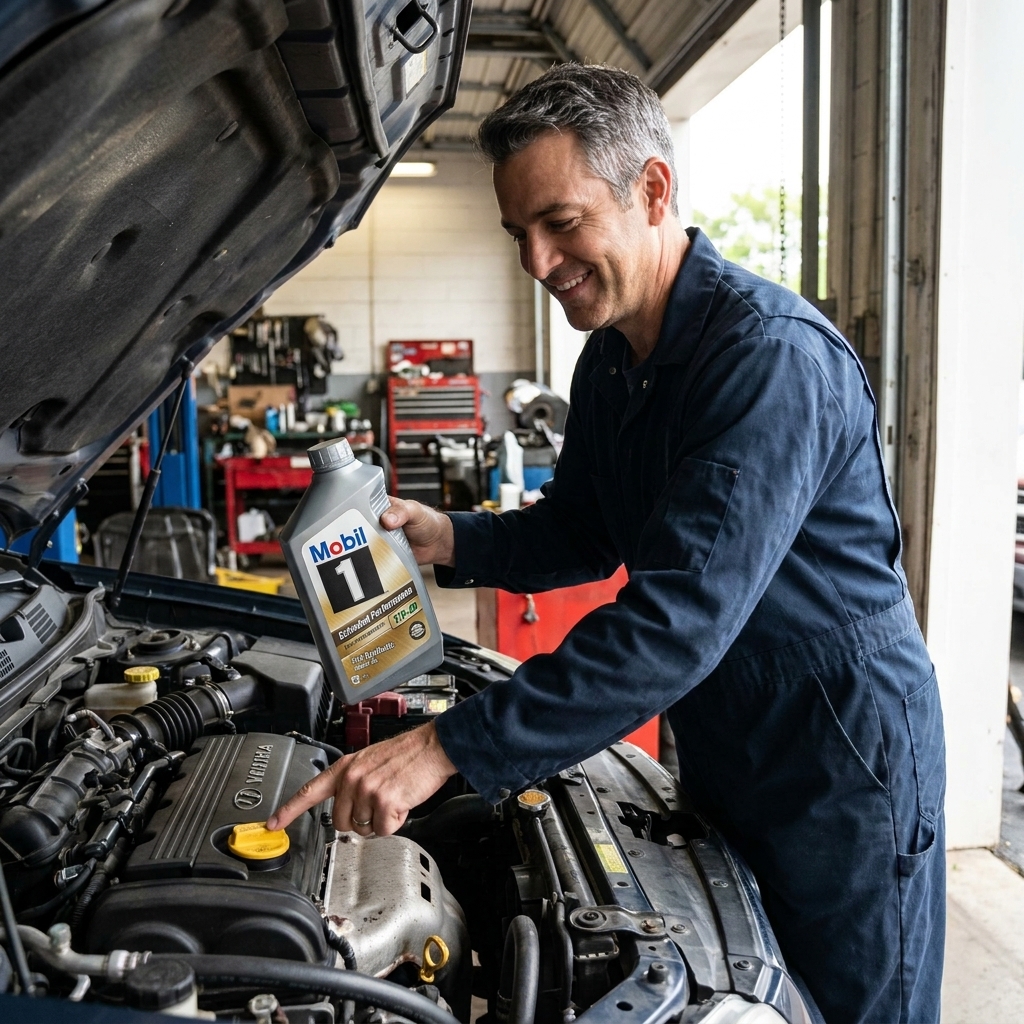
1) Engine oil
What it does: Lubricates and cools engine internals. Low oil is one of the fastest ways to turn a healthy engine into an expensive noise.
Where to find it
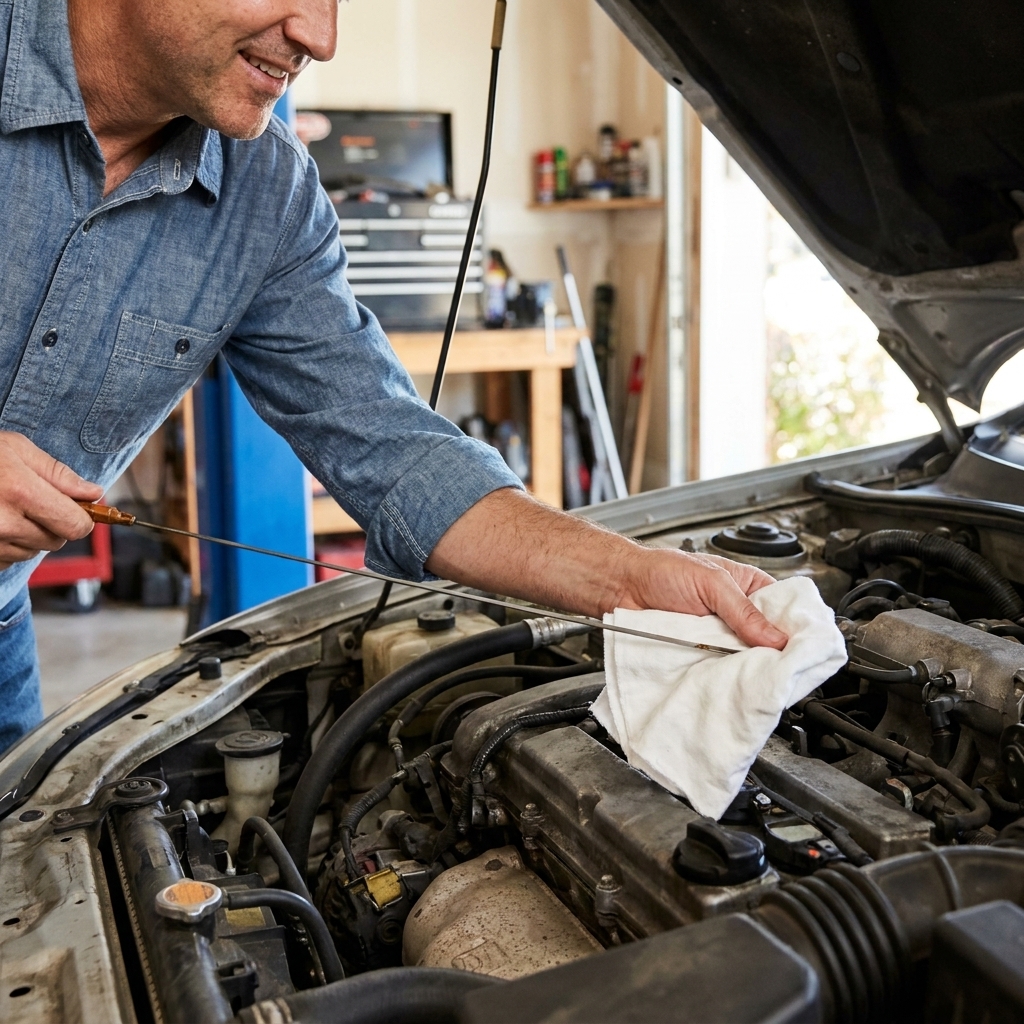
Look for the oil dipstick (often a yellow or orange handle) and the oil fill cap on top of the engine (usually marked with an oil can icon).
How to check oil level
- Many cars read best with the engine off and warm but not hot, after it sits 5 to 10 minutes so oil drains back to the pan.
- But follow your manual. Some manufacturers specify checking cold, or checking within a shorter window after shutdown.
- Pull the dipstick, wipe it clean, reinsert fully, then pull again.
- Read where the oil film lands between MIN and MAX (or the two holes/hash marks).
How to top it off
- Remove the oil fill cap.
- Add oil in small amounts. A good starting point is 1/2 quart, then recheck.
- Stop at or just below the MAX mark. Overfilling can cause foaming, leaks, and oil burning that can shorten catalytic converter life.
Which oil? Match the viscosity and spec listed on the oil cap or in your manual (examples: 0W-20, 5W-30). If you’re not sure, don’t guess. The wrong oil can cause noisy operation, poor fuel economy, or warranty headaches on newer cars.
Red flag: Milky oil on the dipstick can indicate coolant contamination. That’s a “stop and diagnose” situation, not a “top it off and drive” situation.
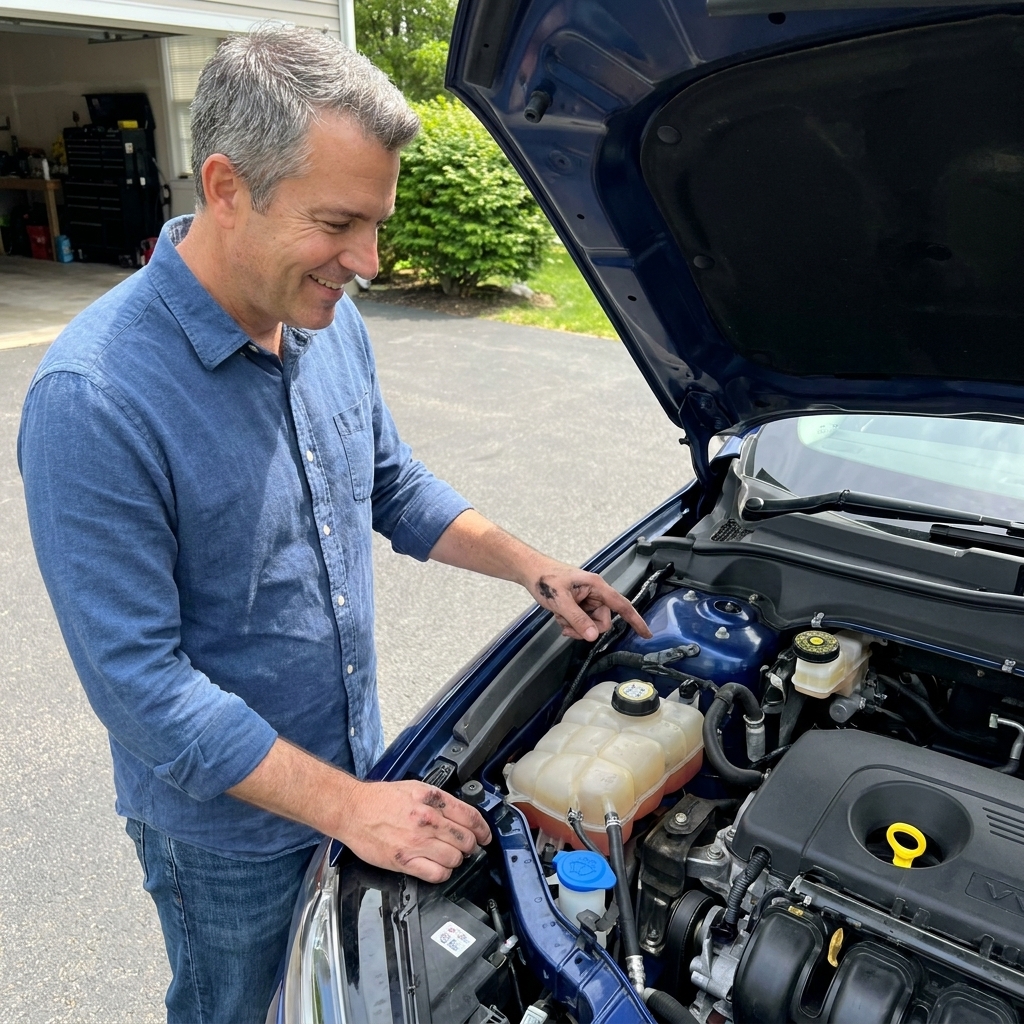
2) Engine coolant (antifreeze)
What it does: Regulates engine temperature, prevents freezing and corrosion. Low coolant can lead to overheating, and overheating can warp parts quickly.
Where to find it
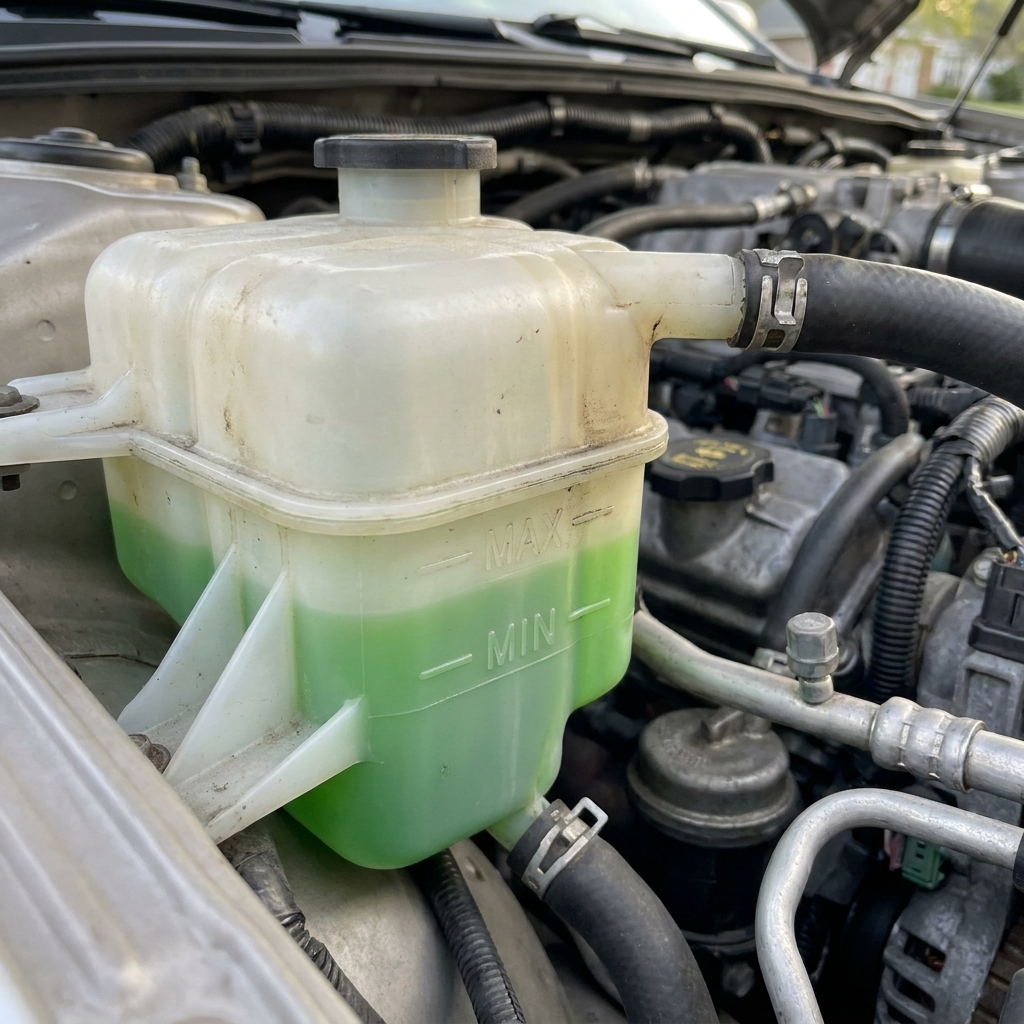
Most cars have a translucent coolant overflow reservoir with MIN and MAX lines. The cap may say “Coolant” or have a temperature warning icon.
How to check coolant level
- Check when the engine is cold.
- Look at the level against the reservoir markings.
- If it’s below MIN, you can top off the overflow reservoir.
How to top it off
- Only open the reservoir cap when the engine is cool.
- Add the correct coolant mix to bring it to just under the MAX line.
- Use the correct type: many modern vehicles require specific formulations (for example, Asian phosphate HOAT, Dex-Cool style OAT, European G12/G13 types). Mixing types can reduce corrosion protection and, in some combinations, lead to deposits or gelling.
Do you need distilled water? If you’re mixing concentrate, use distilled water and follow the ratio recommended (commonly 50/50). If you buy premixed coolant, do not add water.
Radiator cap reminder: Unless your manual specifically tells you to check the radiator directly, stick to the overflow reservoir. Only remove a radiator cap when the system is fully cold and depressurized.
Red flag: If you top off coolant and it drops again, you likely have a leak. Look for sweet smell, wet spots, crusty residue near hoses, radiator end tanks, or the water pump area.
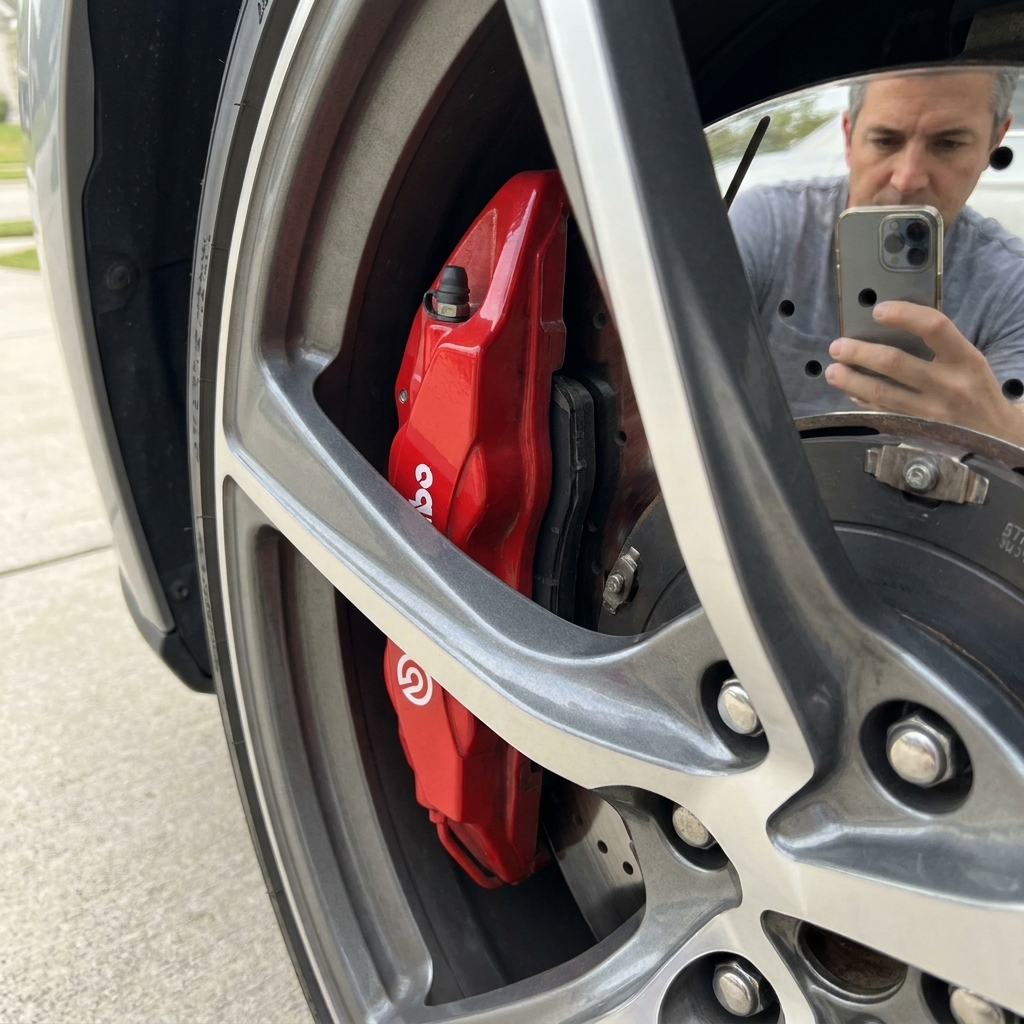
3) Brake fluid
What it does: Transfers force from your brake pedal to the brakes. It is hygroscopic, meaning it absorbs moisture over time, which lowers its boiling point, reduces braking performance under heat, and can corrode parts internally.
Where to find it
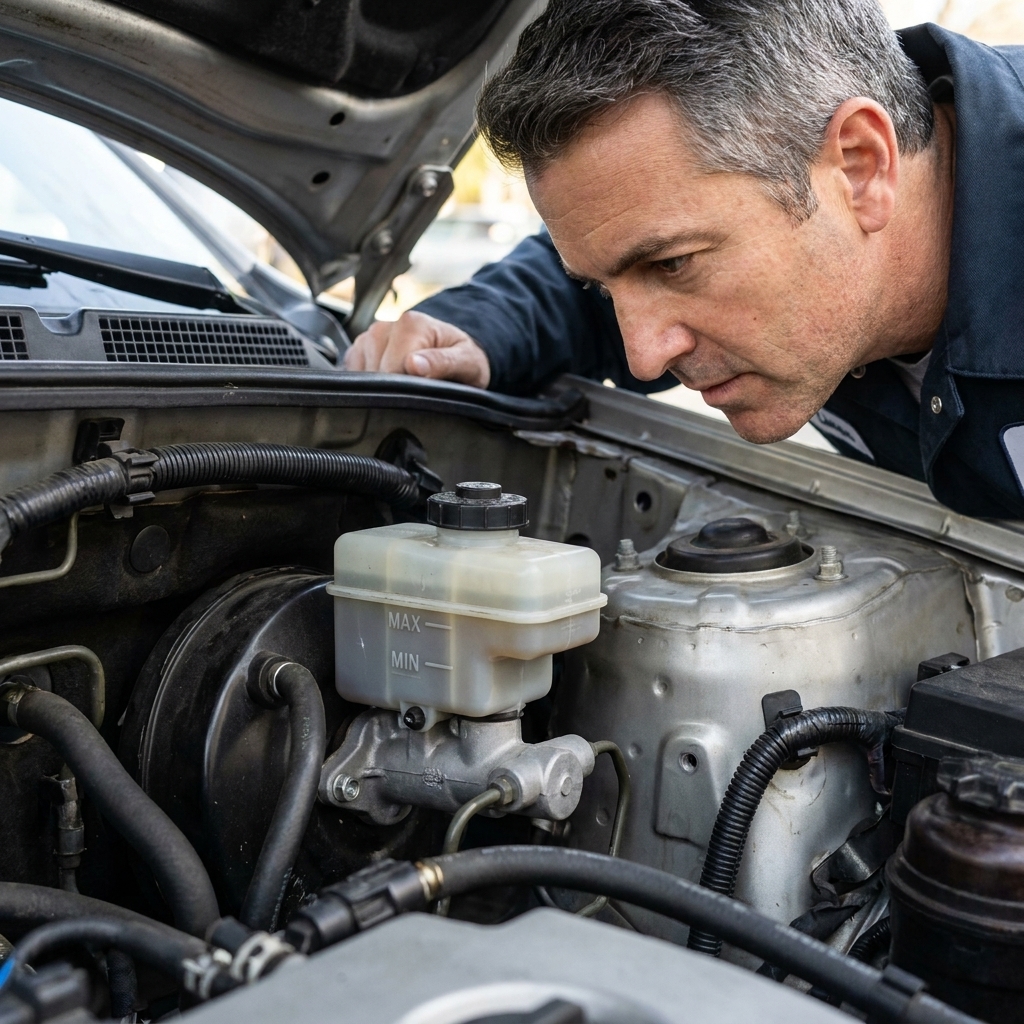
The brake fluid reservoir sits on top of the brake master cylinder, usually at the back of the engine bay near the driver’s side firewall. The cap often says DOT 3, DOT 4, or similar.
How to check brake fluid
- Most reservoirs are translucent with MIN and MAX marks.
- Fluid should generally be between those marks.
- Color matters: new fluid is usually clear to light amber. Very dark fluid suggests it’s overdue for service.
How to top it off safely
- Clean the cap area first so dirt does not fall in.
- Use only the DOT rating specified on the cap or in the manual.
- Use fluid from a sealed container. An old, previously opened bottle can absorb moisture.
- Add a little at a time, stopping below the MAX line.
Important: If brake fluid is low, don’t assume it “just needs topping off.” The two common causes are brake pad wear (fluid level drops as caliper pistons extend) or a leak. If the brake pedal feels spongy, the warning light is on, or you see wetness at a wheel or under the master cylinder, get it inspected before driving.
Manual-transmission note: Some cars with a hydraulic clutch use brake fluid too, either from a shared reservoir or a separate one. If you drive a manual and notice fluid dropping, include the clutch system in your leak check.
Paint warning: Brake fluid can damage paint. Wipe spills immediately and rinse with water.
4) Transmission fluid
What it does: Lubricates and cools internal transmission components and, in automatics, provides hydraulic pressure for shifting.
First, know what you have
- Some automatics have a dipstick. Many newer vehicles do not.
- CVTs often require a specific CVT fluid and may have special check procedures.
- Manual transmissions typically do not have a dipstick and are checked via a fill plug.
If your transmission does not have a dipstick, don’t wing it. Many are checked at a specific temperature with the vehicle level and running. In that case, checking for leaks and following the service schedule matters more than topping off at home.
AWD and 4WD note: Many AWD and 4WD vehicles also have differential and transfer case fluids. Those are real fluids with real service intervals, but they’re usually not quick DIY checks like oil and washer fluid.
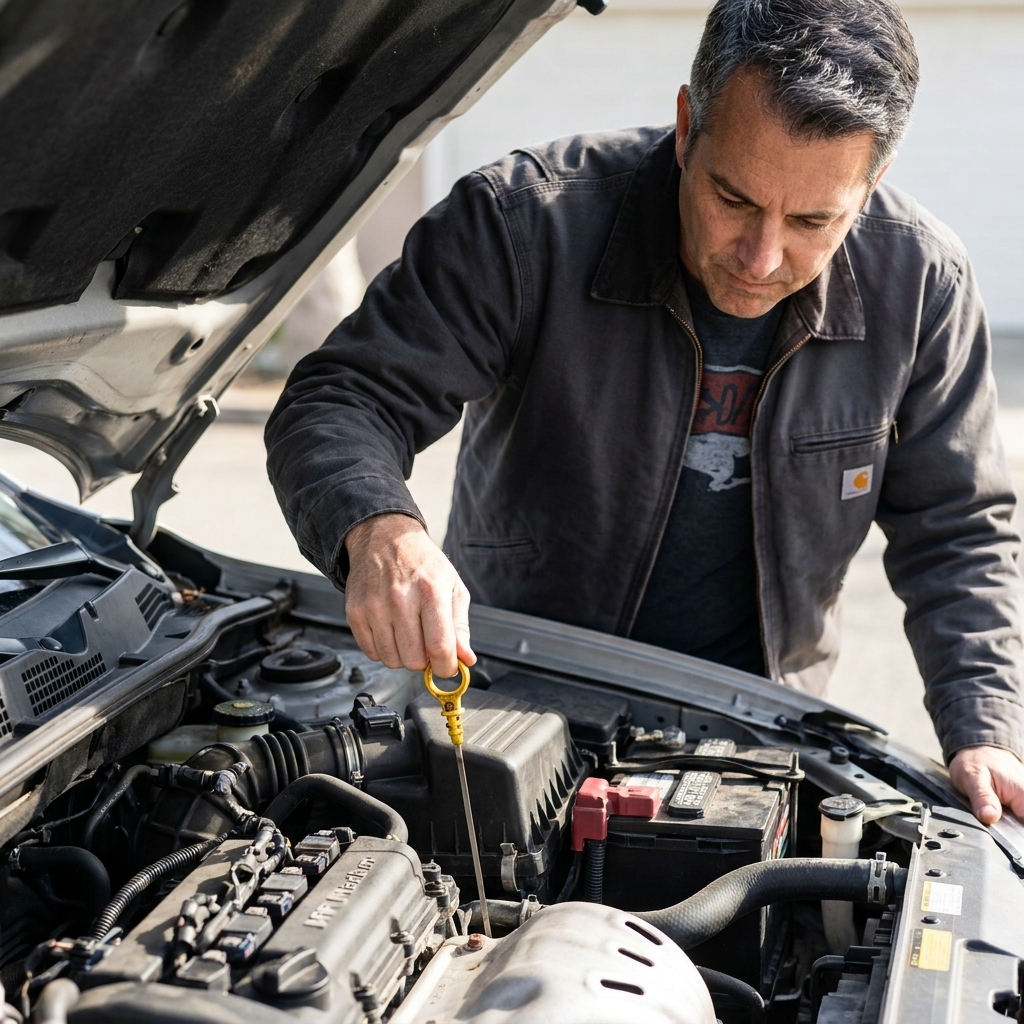
How to check transmission fluid (dipstick-equipped automatics)
Follow your owner’s manual because procedures vary. Common steps:
- Warm the vehicle to operating temperature.
- With the brake applied, shift through all gears, then return to Park.
- Check with the engine idling (many cars) or off (some cars), per the manual.
- Wipe dipstick, reinsert, then read the level in the “HOT” range markings.
How to top it off
- Use only the specified fluid (examples: ATF+4, MERCON LV, DEXRON VI, specific CVT fluid).
- Add small amounts through the dipstick tube using a clean funnel.
- Recheck often. Overfilling can cause foaming and shifting issues.
Red flag: Burnt smell, very dark fluid, delayed engagement, or slipping shifts usually point to a bigger issue than low fluid alone. Don’t keep adding fluid hoping it goes away.
5) Power steering fluid
What it does: Provides hydraulic assist so steering feels light and consistent. Note: many newer cars use electric power steering and have no fluid at all.
Where to find it
If your car uses hydraulic power steering, there will be a reservoir with a cap labeled “Power Steering.” Some have a dipstick built into the cap. Others are translucent with level marks.
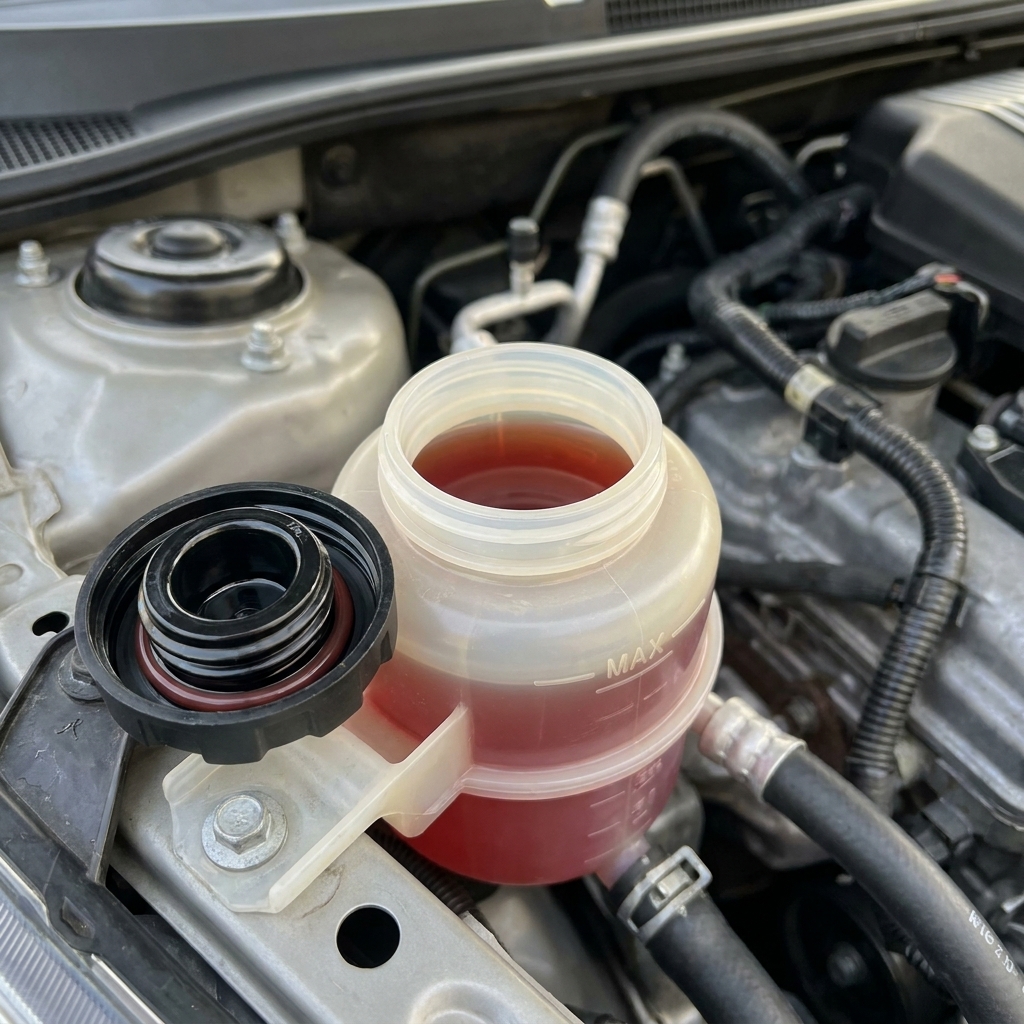
How to check it
- Check the level against COLD and HOT marks, depending on engine temperature.
- If the cap has a dipstick, wipe it, reinsert, then read it like an oil dipstick.
How to top it off
- Use the fluid type specified in the manual.
- Some vehicles use dedicated power steering fluid. Others use ATF. Using the wrong type can cause noise, leaks, or seal damage.
- Add slowly to the correct line and reinstall the cap securely.
Red flag: A low reservoir plus a whining pump when turning usually means a leak. Common leak points are hose crimps, the pump, and the rack. Keep an eye on it and plan a repair, because running it low can cook the pump.
6) Windshield washer fluid
What it does: Clears bugs, road film, and salt spray. It won’t save your engine, but it absolutely saves your visibility.
Where to find it
The washer reservoir cap is usually marked with a windshield and spray icon. The reservoir is often tucked near a fender.
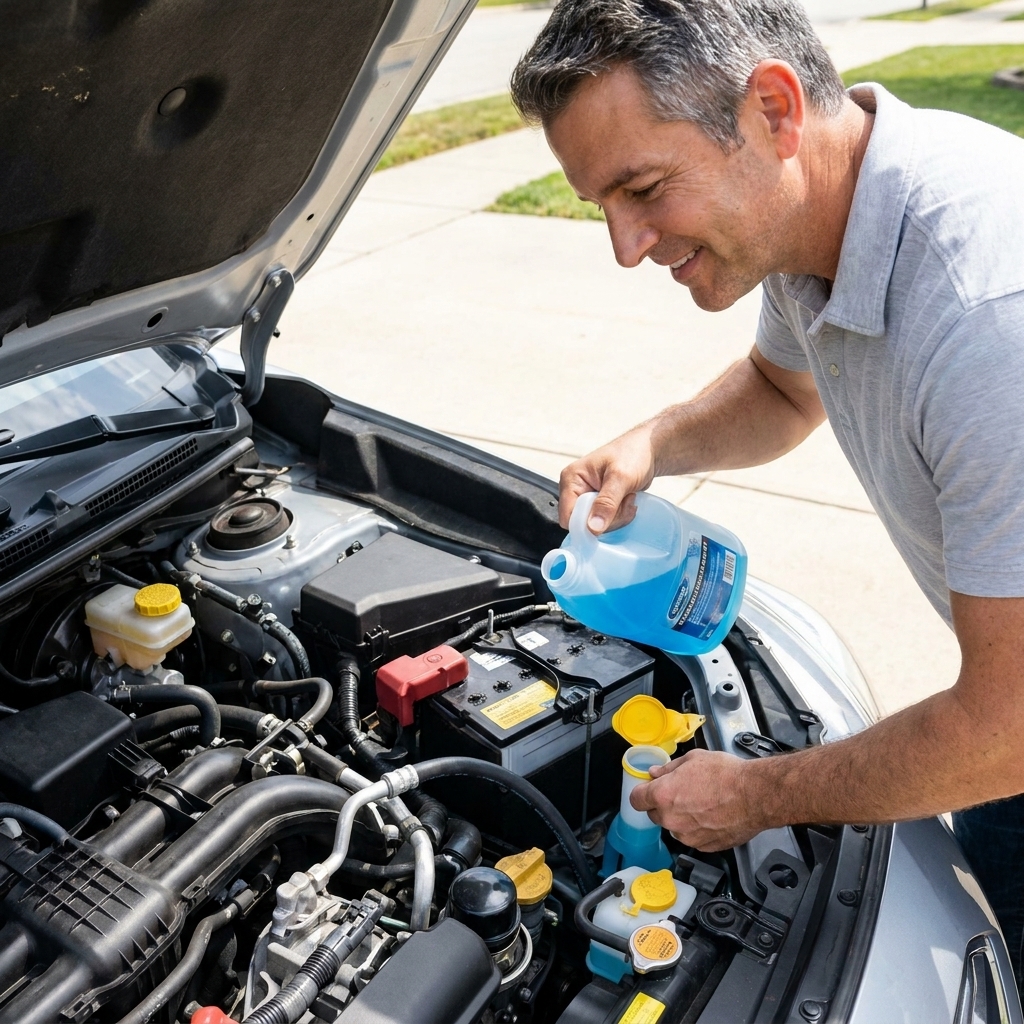
How to check and top it off
- Most reservoirs aren’t clearly marked. If you’re running low, the simplest check is that the sprayers start sputtering.
- Pour washer fluid in until it’s near the top, then stop. Leave a little space so it’s not sloshing out of a narrow filler neck.
- In freezing climates, use winter-rated washer fluid to prevent the system from freezing.
Avoid: plain water in winter. It can freeze in the reservoir, lines, or pump.
A simple check schedule
- Every fuel fill or every other week: quick look at oil level (especially on higher-mileage cars), washer fluid as needed.
- Monthly: coolant reservoir level, brake fluid level, power steering fluid (if equipped).
- Every oil change: a more careful check of all fluids, plus a look underneath for drips.
If you drive a lot, tow, sit in traffic, or live where winters are harsh, check more often. Those conditions are tougher on fluids.
Common mistakes
- Opening the radiator cap hot. Stick to the overflow reservoir unless you know the system is cold and depressurized.
- Mixing coolant types. “Universal” coolant is not universal in practice. Match what your vehicle calls for.
- Topping off brake fluid without asking why it’s low. Pads wear, leaks happen, and both matter.
- Assuming every car has transmission fluid dipstick access. Many don’t, and the wrong procedure can cause overfill.
- Using the wrong power steering fluid. Some take ATF, some don’t. The cap or manual will tell you.
- Overfilling. If you’re unsure, add less, recheck, then add again.
When top-offs aren’t enough
Adding fluid is a short-term move. It keeps you safe and buys you time. But it shouldn’t become your long-term plan. Get the car inspected if:
- You’re adding the same sealed-system fluid repeatedly.
- You see puddles or wet spots under the car.
- You smell something sweet (coolant) or burnt (oil or transmission fluid).
- The brake pedal feels soft or the brake warning light is on.
- The temperature gauge runs hot or swings around.
Most shops can identify leaks quickly, and catching one early is almost always cheaper than waiting for a failure.
Quick FAQ
Can I mix different brands of the same fluid?
Usually yes for engine oil if the viscosity and spec match, and for washer fluid. For coolant, “same type” matters more than brand. For brake fluid, match the DOT rating. For transmission and power steering, follow the exact spec and don’t mix types unless the manufacturer allows it.
Is it normal for oil to go down between changes?
Some engines consume a little oil, especially with higher mileage. What’s not normal is a sudden change in consumption. If you go from adding none to adding a quart every 1,000 miles, something changed and it’s worth checking.
What if I can’t find one of these reservoirs?
Start with the owner’s manual location diagram. If your car has electric power steering, you won’t have power steering fluid. If your transmission is sealed, you won’t have a dipstick. Missing components are often by design, not because you’re overlooking something.