
Hear a knock, tick, squeal, or rattle? Here are 7 common engine-related car noises, what they usually mean, what you can check, and when to stop driving.
I have watched more than a few perfectly good engines’ lives get shortened by one simple thing: the wrong oil for the job, or the right oil left in too long. The synthetic vs. conventional debate gets noisy because both can be “right” depending on your vehicle, how you drive, and what your owner’s manual actually calls for.
Let’s cut through the marketing and talk about what matters in the real world: protection, deposits, cold starts, turbo heat, cost per mile, and how to pick oil that keeps your engine happy for the long haul.

Motor oil basics in plain English
Motor oil does four big jobs inside your engine:
- Lubricates moving parts so metal does not grind on metal.
- Manages heat by carrying heat away from localized hot spots like piston rings and turbo bearings (your cooling system still does the heavy lifting).
- Cleans by keeping tiny contaminants suspended so the oil filter can catch them.
- Protects against corrosion and reduces sludge and varnish buildup.
Oil is not just “oil.” It is a base oil plus an additive package (detergents, anti-wear additives, dispersants, friction modifiers, anti-foaming agents, and viscosity improvers). Synthetic vs. conventional mostly comes down to base oil makeup and how stable the whole formulation stays under stress.
Conventional oil: what it is and where it still makes sense
Conventional oil is refined from crude oil. Today’s conventional oils are far better than what many of us used decades ago, especially modern Group II base oils. Still, compared to many synthetics, conventional formulations can be more likely to thin, oxidize, or leave deposits under sustained heat and shear.
Pros
- Lower upfront cost per quart and per oil change.
- Works fine in many older or simpler engines when the correct spec is met and intervals are reasonable.
- Good choice for short ownership horizons where you are maintaining, not trying to maximize 250,000-mile longevity.
Cons
- Breaks down faster under heat and shear, especially in turbocharged engines and high-load driving.
- More prone to deposits if the engine runs hot, sees lots of short trips, or intervals are stretched.
- Not always available in the exact modern specs some newer vehicles require (for example, certain dexos, VW, BMW, or Mercedes approvals).
If your car is older, naturally aspirated, and driven gently, conventional oil can be a perfectly reasonable budget play. Many shops default to a conservative 3,000 to 5,000 mile interval with conventional. The smarter rule is this: follow the manual, and if you fall under severe service, use the severe service schedule.
Synthetic oil: what you’re paying for
Full synthetic oil uses more highly processed or engineered base stocks that are typically more uniform and more stable under temperature swings and mechanical stress. In practice, that often means better protection in the exact moments that wear happens fastest: cold starts and high-heat operation.
One nuance worth knowing: in the U.S., many oils marketed as “full synthetic” use highly refined Group III base oil. Other synthetics may use Group IV (PAO) or Group V base stocks. Bottom line, the word synthetic is not a performance guarantee. The specification and approvals on the label tell you more about how the oil will behave in your engine.
Pros
- Better cold flow for faster oil circulation on cold starts.
- Stronger high-temperature stability, which matters for turbochargers, towing, mountain driving, and stop-and-go heat soak.
- Improved resistance to sludge and varnish when compared to conventional under similar conditions.
- Often required for modern specs and extended drain strategies designed into newer engines.
Cons
- Higher upfront cost per quart and per oil change.
- Not a magic fix for existing mechanical problems like fuel dilution, coolant leaks, or a worn PCV system.
- Still needs the right spec and viscosity. “Synthetic” on the label does not automatically mean “right for your engine.”

What about synthetic blend?
Synthetic blend is exactly what it sounds like: a mix of conventional and synthetic base oils. It typically offers better heat stability and deposit control than straight conventional, with a smaller price jump than full synthetic.
Blends can be a sweet spot for:
- Drivers in moderate climates who want a little extra protection without full synthetic cost.
- Vehicles that specify blend from the factory (some trucks and SUVs do).
- High-mileage commuters who do frequent changes and care more about consistency than maximum interval length.
One caution: “blend” does not tell you how much synthetic is in the bottle. The real deciding factor is whether the oil meets the correct specification for your vehicle.
The two things you must match
If you take only one thing from this article, make it this: use the viscosity and the spec your manufacturer requires. Synthetic vs. conventional is secondary to meeting the correct standard.
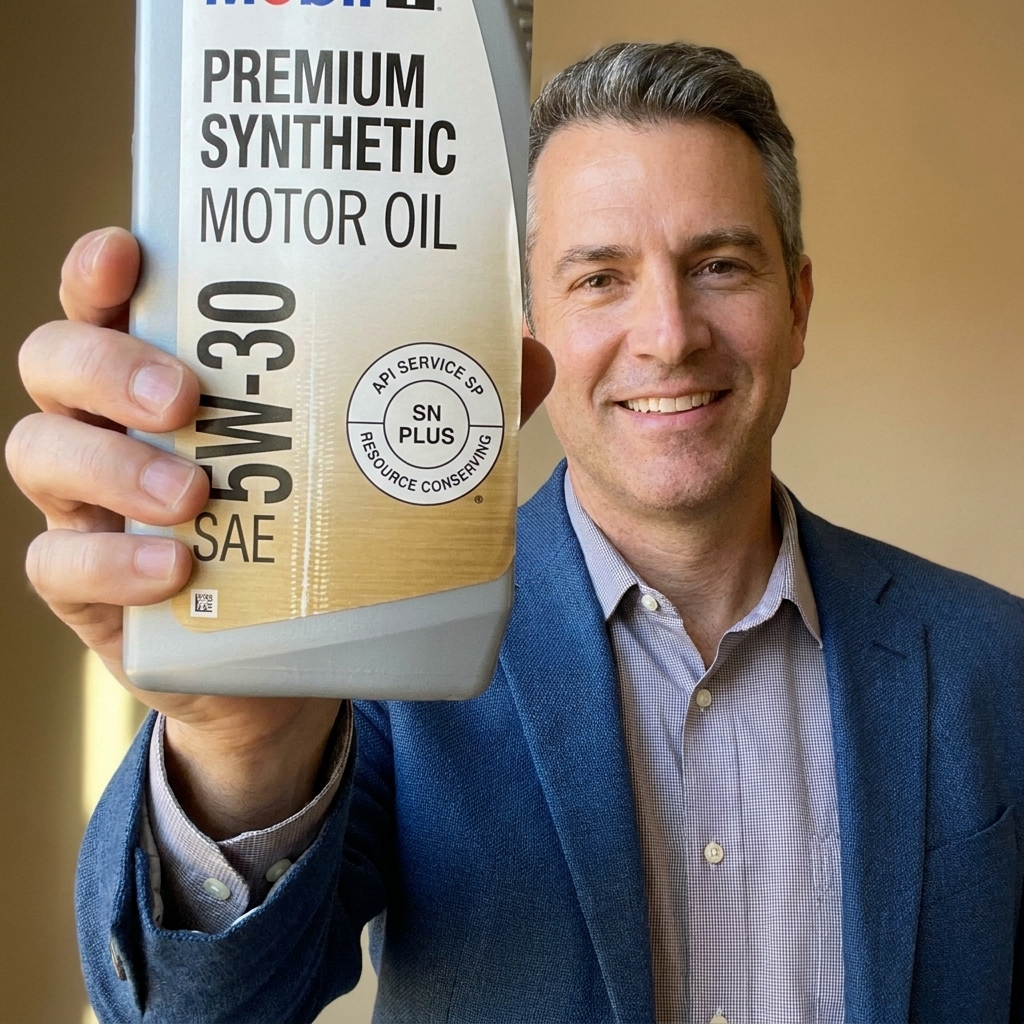
1) Viscosity grade (like 0W-20, 5W-30)
The number before the W relates to cold-flow behavior. Lower numbers generally flow better in the cold. The second number relates to viscosity at operating temperature.
Using the wrong viscosity can cause:
- Slower oil delivery on cold starts (too thick)
- Increased consumption or reduced oil pressure (too thin)
- VVT system issues and timing chain wear in some modern engines
2) Performance specification (API, ILSAC, OEM approvals)
On the bottle you will see certifications like API SP or ILSAC GF-6, plus possible manufacturer approvals (for example, GM dexos, VW 502.00, BMW LL-01 or LL-17, Mercedes 229.5, etc.). Those matter because they address modern issues like:
- LSPI protection (low-speed pre-ignition) in turbo direct-injection engines
- Timing chain wear control
- Turbocharger deposit resistance
- Fuel economy targets and emissions system compatibility
Real-world differences
Cold starts and winter driving
Cold starts are where engines experience a lot of wear. Synthetic oils generally flow quicker at low temperatures, which means faster oil pressure and faster lubrication to critical parts. If you live where winters are real, synthetic is often worth it on that alone.
High heat, towing, and turbochargers
Heat is oil’s enemy. Turbochargers can put serious heat into the oil in and around the bearing housing, and towing or long hill climbs add sustained heat and load. Synthetic tends to hold up better under that stress and can help reduce coking and deposit formation.
One more real-world note: modern water-cooled turbos and better factory heat management reduce coking risk, but they do not eliminate it. If you have been working the engine hard, good oil and sensible shutdown habits still matter.
Deposits and sludge prevention
If your driving is mostly short trips where the engine never fully warms up, moisture and fuel can build up in the oil. Synthetic tends to resist sludge better, but no oil can overcome a bad interval. Short-trip drivers often need shorter intervals, even with synthetic.
Oil consumption
Switching to synthetic does not automatically reduce oil consumption. Sometimes it helps, sometimes it makes no difference. If consumption changes dramatically after a switch, it is often because the engine already had worn rings, hardened valve stem seals, a PCV issue, or the new oil’s formulation cleaned deposits or behaves differently around old seals.
Cost per mile
People get hung up on sticker price. Instead, look at cost per mile and risk management.
- If synthetic costs more but you follow the same 5,000 mile interval as conventional, the cost per mile will usually be higher.
- If your vehicle is designed for longer intervals, synthetic can be competitive, as long as you follow the oil life monitor and the manual’s limits.
A simple rule from the shop floor: if spending a little more on oil helps you avoid even one sludge-related repair, one turbo oiling issue, or one timing system wear problem, it paid for itself.
Which should you choose?
Choose full synthetic if:
- Your owner’s manual specifies synthetic or an OEM approval that effectively requires it.
- You drive a turbocharged engine.
- You do a lot of short trips, stop-and-go, or idle time.
- You tow, haul, drive mountains, or see high ambient heat.
- You live in a cold climate and want easier starts and faster oil circulation.
Conventional can be fine if:
- Your vehicle explicitly allows it and does not require a specific synthetic-only approval.
- You have an older, naturally aspirated engine with a straightforward oil spec.
- You change oil on time and follow the severe service schedule when it applies.
Synthetic blend makes sense if:
- You want better heat and deposit performance than conventional without the full synthetic price.
- Your truck or SUV spec calls for it.
- You do normal intervals and want a little extra cushion.
Severe service: what it really means
Most owner’s manuals have two schedules: normal and severe. “Severe” does not mean you are racing. It usually means your oil gets contaminated or cooked faster than average. Common severe service includes:
- Lots of short trips (especially in cold weather)
- Stop-and-go traffic and long idling
- Towing, hauling, mountain driving
- Very hot or very cold climates
- Dusty roads or frequent construction-zone driving
If that sounds like your life, use the severe service interval. That one choice does more for engine longevity than arguing about brands.
Common myths
Myth: “Once you go synthetic, you can’t go back.”
Not true. You can switch between conventional and synthetic as long as you use the correct viscosity and specs. I prefer consistency for tracking consumption and intervals, but you are not locked in.
Myth: “Synthetic causes leaks.”
Synthetic does not “create” leaks. What happens sometimes is that an older engine already has brittle seals or existing seepage, and after an oil change the leak becomes more noticeable. Different formulations can also clean deposits that were masking seepage. If an engine is already leaking, any fresh oil can highlight it.
Myth: “Synthetic means you can double your interval.”
Only if your manufacturer’s interval or oil life monitor supports it, and your driving is not severe. The safest move is to follow the owner’s manual and treat severe service seriously.
Myth: “Any synthetic is the same.”
The label matters. Two bottles that both say “full synthetic” can meet different specifications. For modern engines, the correct approval is more important than brand loyalty.
How to pick the right oil fast
- Check the owner’s manual for viscosity and required specs or approvals.
- Match the label: viscosity (0W-20, 5W-30, etc.) plus API or ILSAC and any OEM approvals.
- Be honest about your driving. Lots of short trips, heavy traffic, towing, extreme temps, or turbo power means synthetic is usually the safer bet, plus a severe service interval if the manual calls for it.
If you are unsure, take a photo of the page in your manual that lists oil requirements, then compare it to the back label at the store. That one habit prevents a lot of expensive mistakes.
FAQ
Is synthetic oil worth it for an older high-mileage car?
Often, yes, especially for cold-start protection and deposit control. If the car leaks or burns oil, synthetic will not fix that. In those cases, the best “value” might be sticking with the correct viscosity, checking level more often, and changing on time.
Do I need high-mileage oil?
High-mileage oil is about the additive package, not just mileage. It can help condition seals and reduce seepage in some engines. If your engine is dry and healthy, you may not need it. If you have minor seepage or consumption, it can be a reasonable option.
Should I follow the oil life monitor or a fixed mileage?
If your vehicle has an oil life monitor, I generally trust it within the limits of the manual, assuming the engine is stock and functioning properly. If you do lots of short trips or severe service, consider changing earlier than the monitor suggests.
Can I mix synthetic and conventional?
In a pinch, yes, as long as the viscosity is correct and the oil meets the right specs. It is better to top off with something compatible than run low on oil. Just do not treat mixing as a long-term plan.
What matters more than synthetic vs. conventional?
Oil level and change intervals. The best oil in the world cannot protect an engine that is a quart low or run thousands of miles past its realistic interval.
Does this advice apply to diesel engines?
This guide is aimed at typical gasoline passenger vehicles. Diesel engines often require different oil categories and approvals, so stick closely to the spec listed in the manual (especially for modern emissions-equipped diesels).

The bottom line
If your vehicle calls for synthetic, use it. If you drive a turbo engine, tow, deal with extreme heat or cold, or spend your life in stop-and-go traffic, synthetic is usually money well spent. Conventional still has a place in older, simpler engines when you match the correct spec and keep intervals appropriate for your driving.
When in doubt, do this: match the manual, pick a reputable oil that meets the spec, keep records for warranty and resale, and change it on time. That’s the boring advice that keeps engines alive.