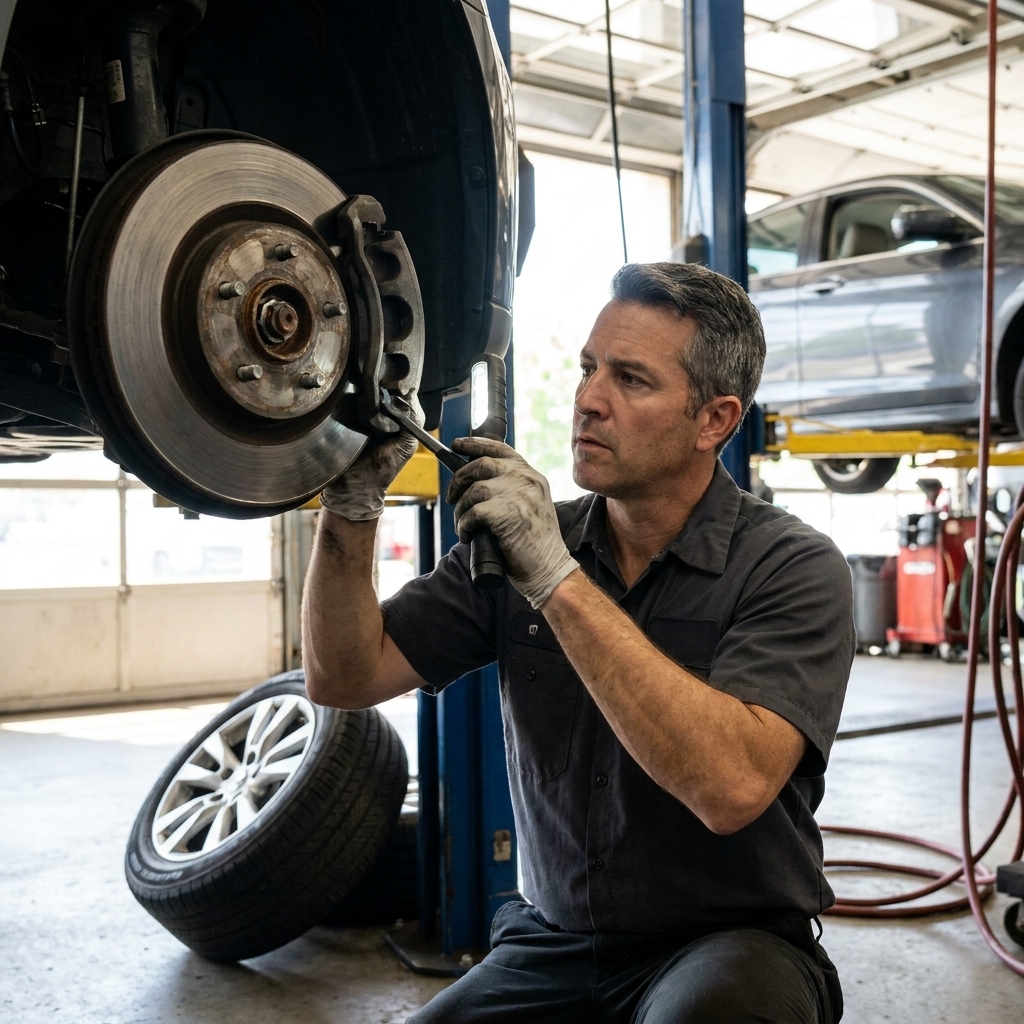
Use this hands-on test-drive checklist to evaluate comfort, steering, brakes, transmission behavior, visibility, tech, tire condition, and red flags before y...
If you've ever driven a newer Nissan, Subaru, Honda, Toyota, or a lot of small crossovers, there's a decent chance you've experienced a CVT and thought, “Why does this thing sound like it's stuck in one gear?” That odd, steady engine note is usually the giveaway.
CVT stands for Continuously Variable Transmission. It's “automatic” from the driver's seat because you put it in Drive and go, but the way it changes ratios is fundamentally different from a traditional automatic transmission with fixed gears. Let’s break it down in plain English and talk about what it means for fuel economy, reliability, and day-to-day driving.
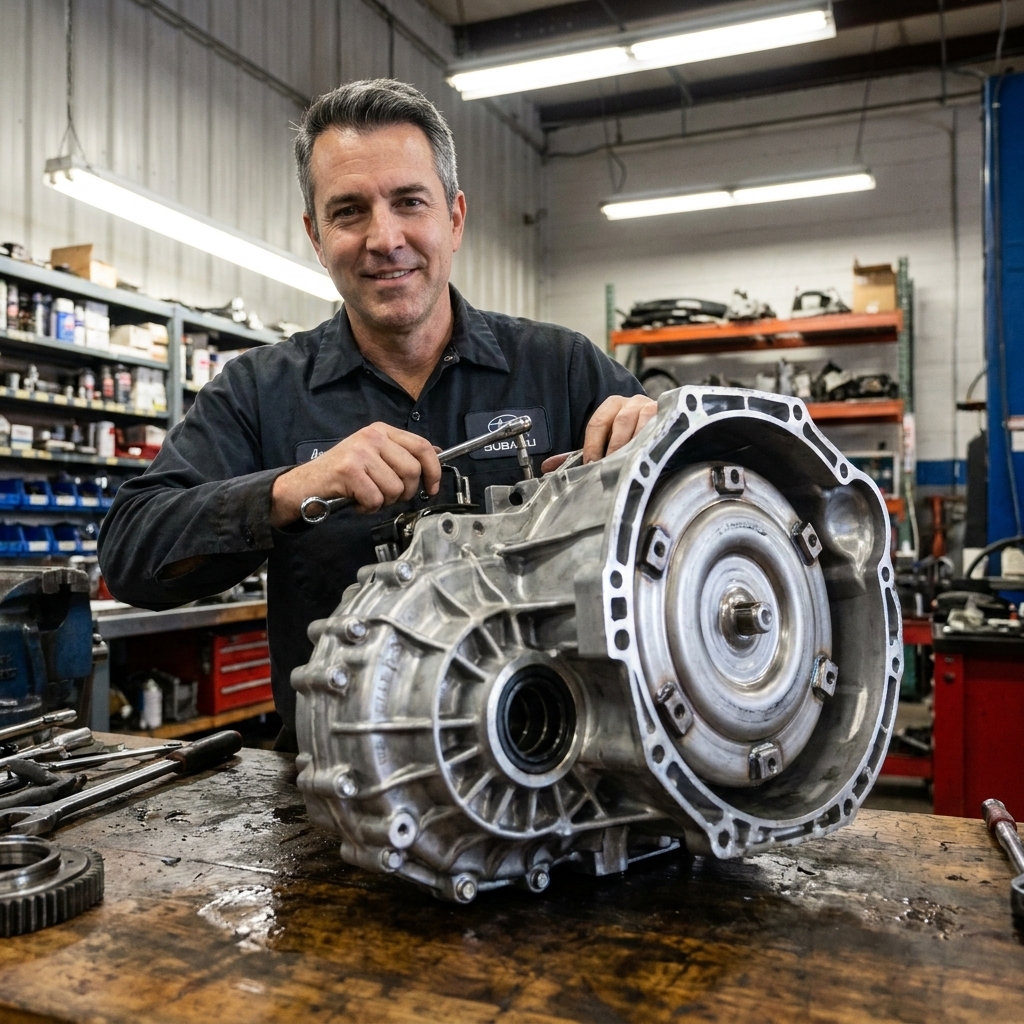
What a CVT is
A CVT is an automatic transmission that can change its gear ratio continuously, instead of stepping through a set of fixed gears like 1st, 2nd, 3rd, and so on.
Most non-hybrid passenger-car CVTs use two variable pulleys connected by a high-strength steel belt or chain:
- Drive pulley (connected to the engine)
- Driven pulley (connected to the rest of the drivetrain)
Each pulley is made of two cone-shaped halves that can move closer together or farther apart. When the halves squeeze together, the belt rides higher on that pulley, making the pulley effectively “bigger.” When they spread apart, the belt rides lower, making it “smaller.” By making one pulley bigger while the other gets smaller, the CVT creates an almost endless number of ratios between low and high.
Think of it like a bike with an infinitely adjustable gear instead of a handful of clicks.
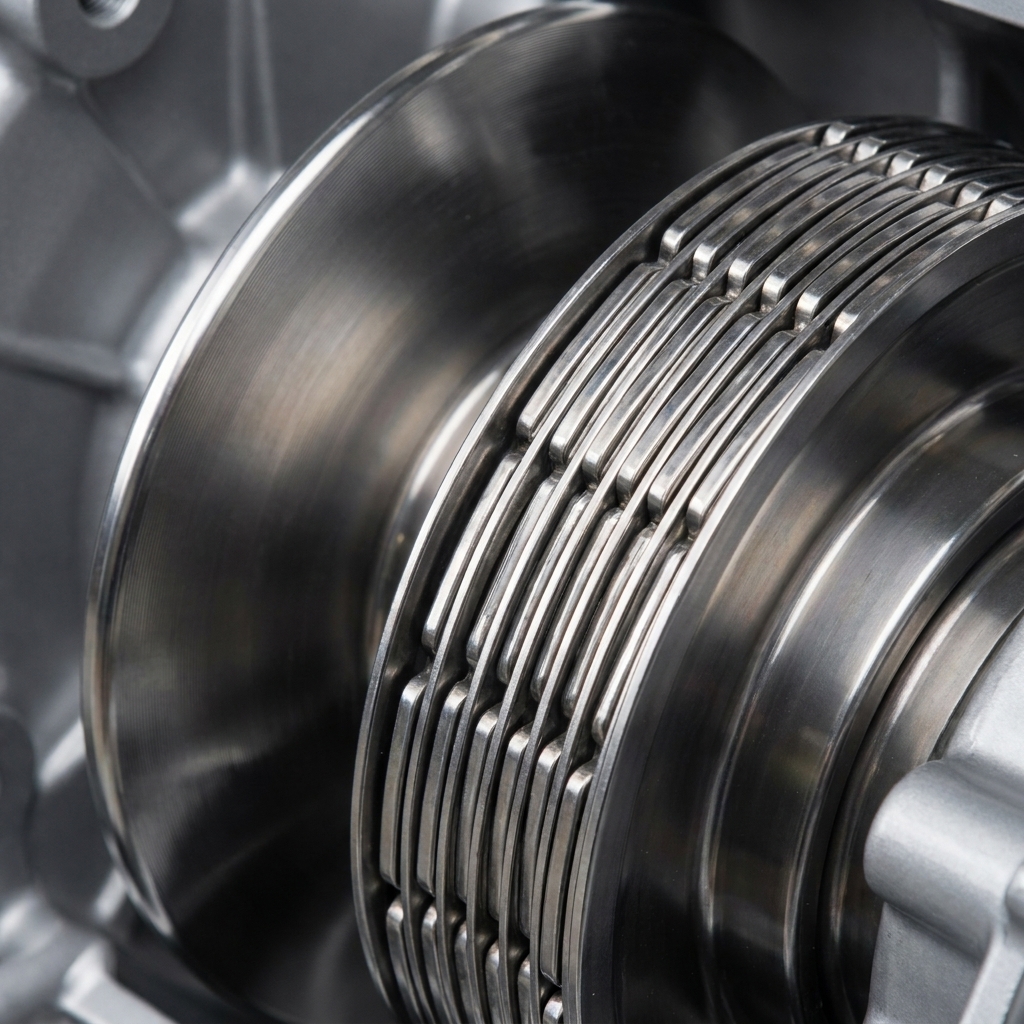
Not all CVTs are the same
One quick clarification that saves a lot of confusion: some vehicles use a CVT-like setup that is not a belt-and-pulley unit. The big example is the Toyota and Lexus hybrid eCVT, which typically uses a power-split planetary gear system and electric motors to blend power smoothly.
From the driver's seat, it can feel CVT-ish (steady RPM, very smooth). Under the hood, the hardware and common failure points are different. The belt/chain-and-pulley type described above is the one most people mean when they talk about CVTs in mainstream non-hybrid cars.
How a traditional automatic works
A traditional automatic transmission (the kind most people grew up with) uses a set of fixed gear ratios. Modern automatics might have 6, 8, 9, or even 10 speeds, but they are still a ladder of specific gears.
Instead of pulleys and a belt, a conventional automatic typically uses:
- Planetary gearsets to create each gear ratio
- Clutches and bands (or clutch packs) to hold and release parts of the gearsets
- A torque converter to let the car idle in gear and to multiply torque off the line
When a traditional automatic shifts, you feel it because the transmission is moving from one fixed ratio to another. That momentary change is the “shift” you sense in your seat.
CVT vs automatic: key differences
1) “Shifting” behavior
Traditional automatic: Steps through gears. Engine RPM rises, shift happens, RPM drops, repeat.
CVT: Often holds the engine at a steady RPM where it is most efficient or where it makes best power, while the car speed increases. That is why CVTs can feel like they are “slipping” even when they are working normally.
To make CVTs feel more familiar, many manufacturers program in simulated shift points. The transmission is still varying ratios continuously behind the scenes, but it will “pretend” to shift so the driver gets that familiar rise-and-fall RPM sensation.
2) Driving feel and sound
Here is the honest mechanic take: some people love CVTs because they are smooth, and some people hate the way they sound under hard throttle.
- Smoothness: CVTs can be extremely smooth in gentle driving because there are no hard gear changes.
- Engine drone: Under acceleration, the engine can sit at a higher RPM and stay there, which can sound like a steady drone.
In daily commuting, most drivers adapt quickly. The biggest culture shock is usually on highway on-ramps or passing maneuvers.
3) Fuel economy
This is the main reason CVTs exist in so many mainstream cars. Because a CVT can keep the engine closer to its most efficient operating range, it often helps:
- Improve city fuel economy (where speeds and loads constantly change)
- Keep RPM lower during steady cruising when conditions allow
That said, modern multi-speed automatics have gotten very good. In some vehicles, a well-tuned 8-speed automatic can match or beat a CVT depending on engine pairing and vehicle weight.
4) Power delivery and performance
CVTs are great at keeping an engine in its sweet spot, which can make a modest four-cylinder feel more responsive around town. But under repeated hard acceleration, towing, or high heat, a CVT can be more sensitive to stress than a heavier-duty automatic designed for big torque.
Also, “fun to drive” is subjective. If you like the feeling of a transmission snapping off quick upshifts, you may prefer a traditional automatic or a dual-clutch setup.
5) Maintenance and long-term ownership
This is where the conversation gets real. A CVT is not automatically unreliable, but it is less forgiving when it comes to maintenance habits.
- Fluid matters: CVTs typically require a specific CVT fluid. It is not the same as regular ATF in many cases.
- Service schedules vary: Some OEM maintenance schedules do not specify a CVT fluid change interval under normal service, but heat and contamination still break fluid down over time.
- Repair costs can be higher: In many markets, CVTs are often replaced as an assembly rather than rebuilt locally, depending on the model and shop capability.
If you're shopping used, a CVT car with documented fluid services is a much calmer purchase than one with a mystery history.
What it’s like to drive daily
For normal commuting, errands, and highway cruising, a CVT usually feels:
- Easy and smooth at low speeds
- Relaxed during light throttle
- A little odd when you accelerate hard because RPM may rise quickly and hang there
Here are a few everyday moments people ask me about:
“Is my CVT slipping?”
Not necessarily. The CVT’s whole job is to let engine RPM change independently from vehicle speed more than you're used to. That can feel like slip, especially if you're watching the tach.
Actual warning signs include shuddering, delayed engagement into Drive or Reverse (especially when hot), overheating messages or transmission temperature warnings, a check-engine light, or RPM flaring accompanied by a real loss of acceleration.
“Why does it rev high and stay there?”
Because the transmission is holding the engine at an RPM where it can deliver the requested power efficiently. The ratio is changing continuously while the RPM stays steady.
“Does a CVT have gears?”
Mechanically, the typical belt-and-pulley CVT does not have fixed gears like a traditional automatic. But many have programmed “steps” that act like gears from the driver's perspective.
Pros and cons
Pros
- Fuel economy potential: Often excellent in city and mixed driving.
- Smooth operation: No hard shifts when driven gently.
- Keeps the engine in its power band: Can make small engines feel more usable.
Cons
- Different sound and feel: The drone under acceleration is real on some models.
- Maintenance sensitivity: Correct fluid and sane service intervals matter.
- Not ideal for heavy-duty use: Some are not happy with frequent towing or sustained high heat loads.
CVT maintenance basics
If you only remember a few things, make it these:
- Use the correct fluid: CVT fluid is not a place to improvise. The wrong fluid can cause shuddering, overheating, and accelerated wear.
- Drain-and-fill is common: Many CVTs are serviced with a drain-and-fill (sometimes with a filter service) using the OEM procedure. Be cautious with power flushes unless the manufacturer procedure specifically calls for it.
- Consider earlier fluid changes: If you do lots of stop-and-go, hills, hot weather driving, or you keep cars a long time, a proactive fluid service can be cheap insurance. Follow your owner’s manual first, but don't be afraid to ask a trusted shop what they see in the real world for your model.
- Watch for software updates: Some drivability issues are calibration-related. Dealers sometimes have updates that improve engagement feel or reduce shuddering.
- Do not ignore warning symptoms: Small issues can become big ones fast if a CVT overheats or runs low on fluid.
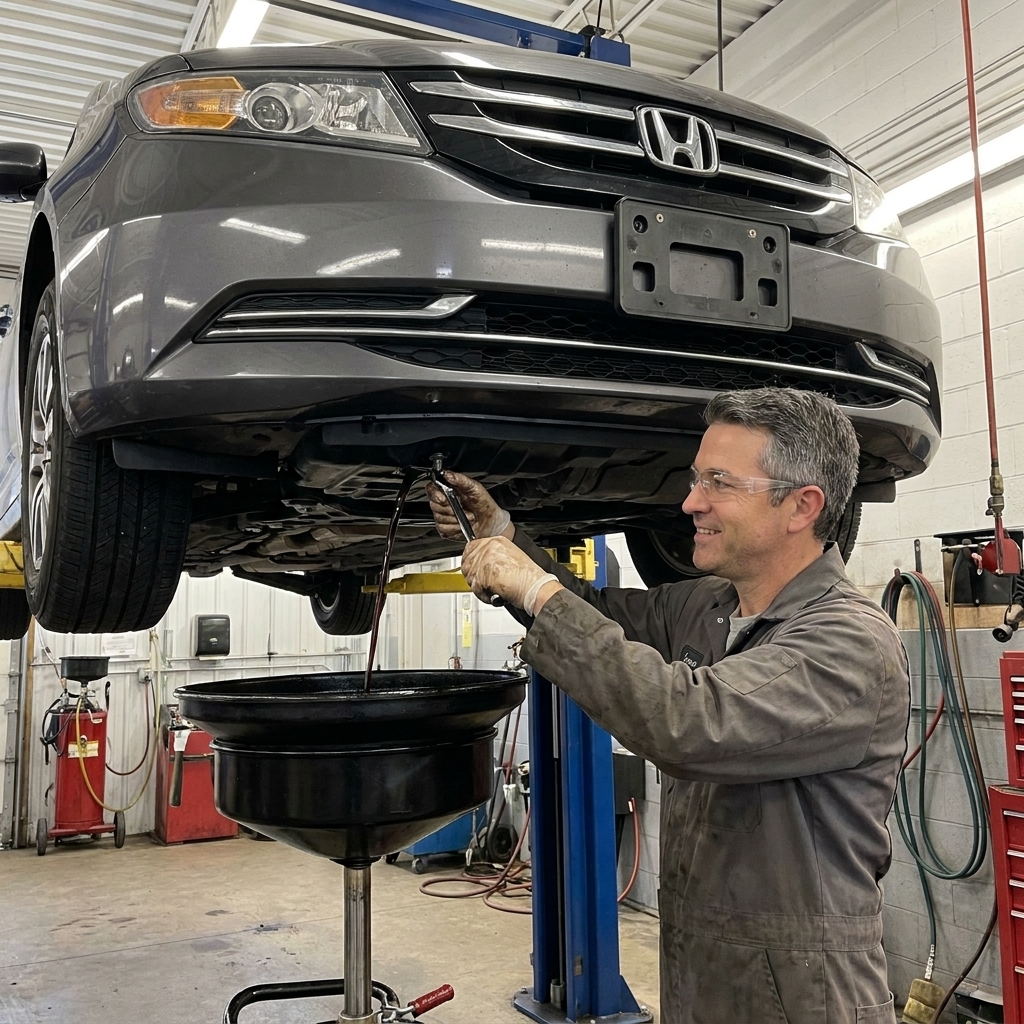
Buying used: quick checklist
If you're looking at a used CVT-equipped car, do two things before you fall in love with it.
- Check the paperwork: Look for receipts that show CVT fluid service (and that the correct CVT fluid was used). If the seller cannot show anything, price the car like you're going to service it immediately.
- Drive it warm: A lot of CVT complaints show up once the transmission is fully up to temp. On the test drive, pay attention to light-throttle shudder, delayed engagement into Drive or Reverse, odd surging at steady speed, and any warning lights.
If the model you're shopping has a shaky track record, this is also where an extended warranty can make sense, as long as you read what it actually covers and what it requires for maintenance.
Should you avoid a CVT?
Not automatically. I wouldn't write off a car you otherwise love just because it has a CVT. The better question is: Is this CVT a good match for your driving?
A CVT is typically a great fit if you:
- Commute daily and care about fuel economy
- Want a smooth, easy driving experience
- Plan to maintain it on schedule
You may prefer a traditional automatic (or another setup) if you:
- Tow regularly or drive in mountainous terrain with heavy loads
- Want a more traditional shift feel
- Drive aggressively and hate the CVT sound
Quick CVT FAQ
Is a CVT the same as an automatic?
In day-to-day use, yes. You drive it like an automatic. Mechanically, it is different because it varies ratios continuously instead of shifting fixed gears.
Do CVTs last as long as regular automatics?
It depends heavily on the vehicle, how it's driven, and maintenance. Some CVTs go the distance with proper care, while others have model-specific weak points. A good service history matters a lot when buying used.
Why do some CVTs have “gear” numbers on the shifter?
Those are usually simulated steps programmed into the transmission control module. They can make the car feel more familiar and can help with engine braking on descents.
Can you tow with a CVT?
Some vehicles with CVTs are rated to tow light loads. Always follow the manufacturer tow rating and consider that towing generates heat, which is a major stressor for any automatic. Some CVTs also have less thermal margin than heavier-duty geared automatics, so shop carefully if towing is a regular part of your life.
The bottom line
A CVT is an automatic transmission that trades fixed gear shifts for a continuously adjustable ratio. The payoff is often better fuel economy and a smoother ride, especially in everyday commuting. The tradeoffs are a different sound and feel under throttle and a higher sensitivity to correct fluid and maintenance.
If you're test-driving a CVT-equipped car, my best advice is simple: drive it like you actually live. Do a stoplight launch, a highway merge, a steady 70 mph cruise, and a mild hill. If the feel doesn't bother you and the model has a solid track record, a CVT can be a perfectly smart, efficient daily driver.