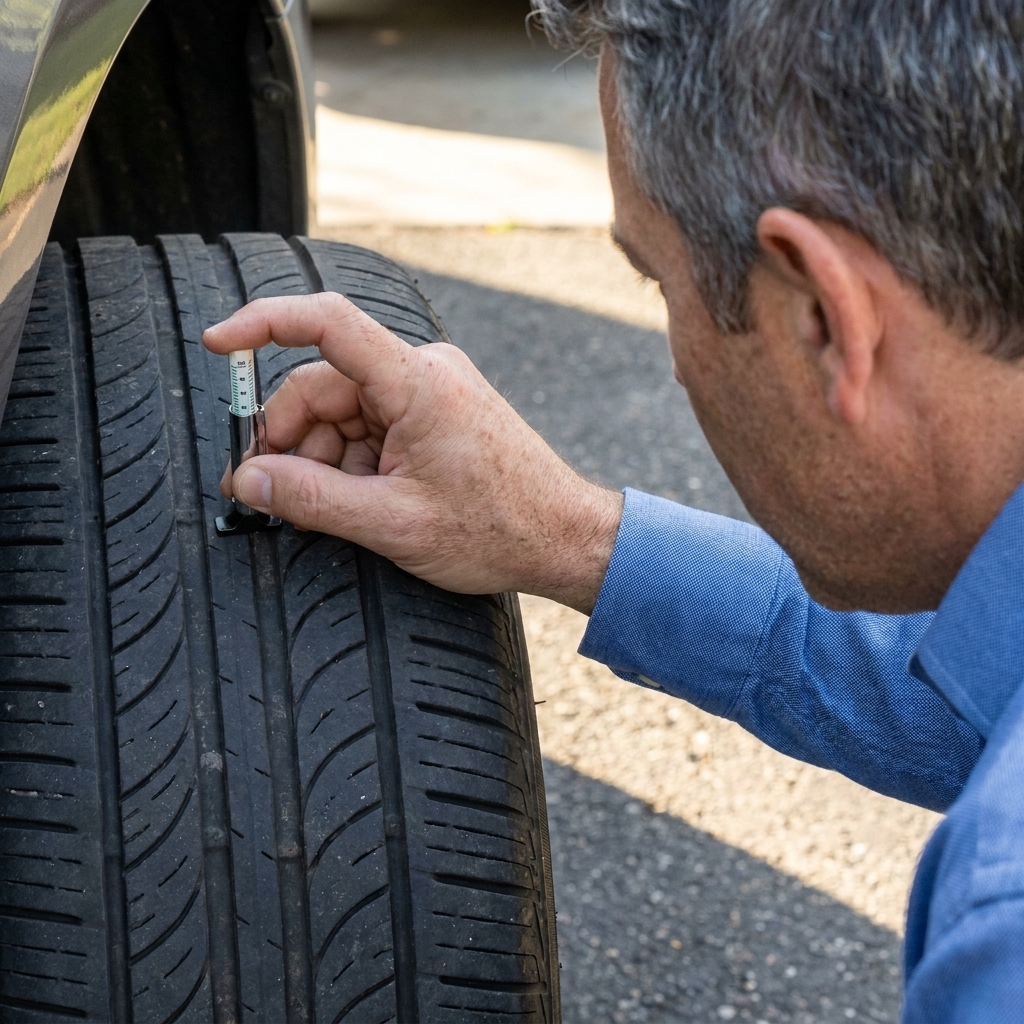
A clear, mechanic-approved guide to checking tire tread with a penny, wear bars, and a depth gauge, plus the real-world signs you should replace tires sooner.
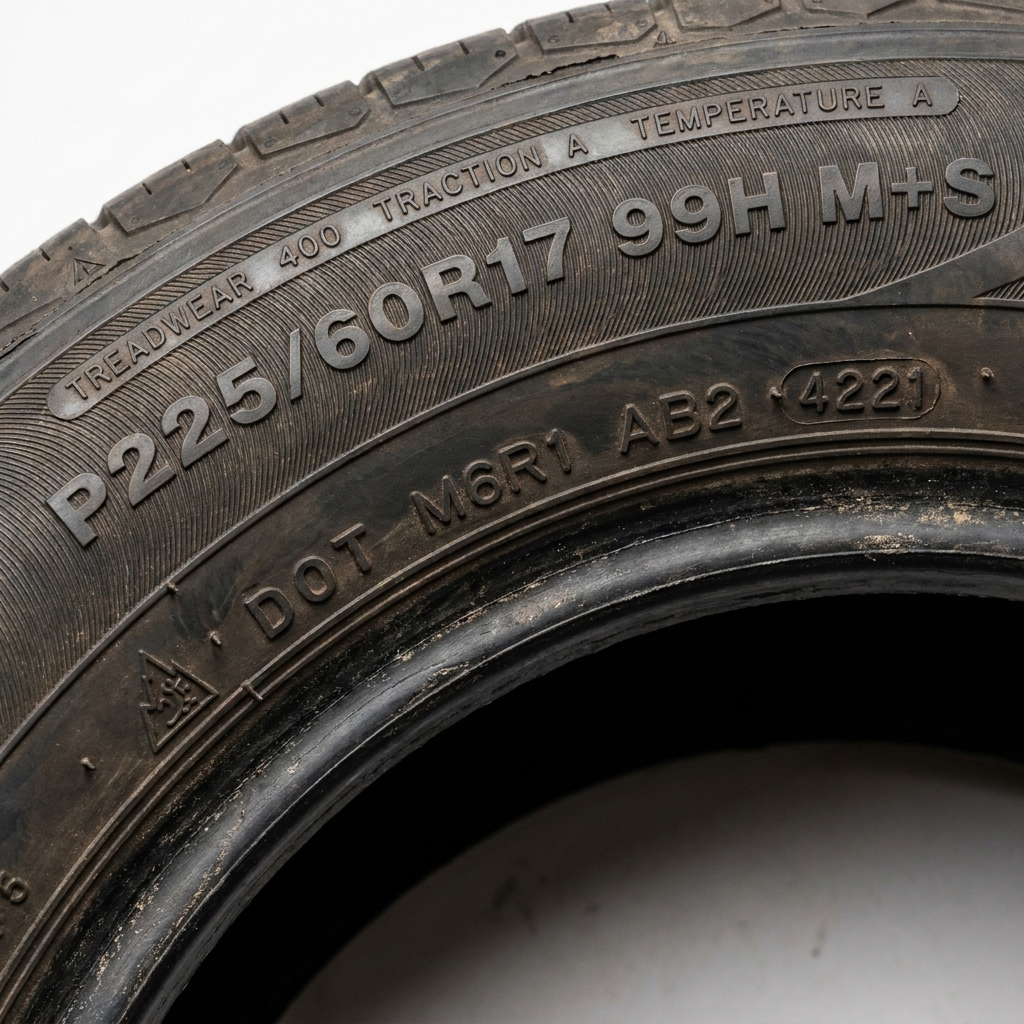
If you have ever stared at your tire sidewall and thought, “This looks like a secret code,” you are not alone. The good news is that the code is consistent, and once you know what each part means, replacing tires gets a lot less intimidating. In this guide I will walk you through tire size, load index, speed rating, service descriptions, and the extra markings that matter when you are buying replacements.
Start with the baseline
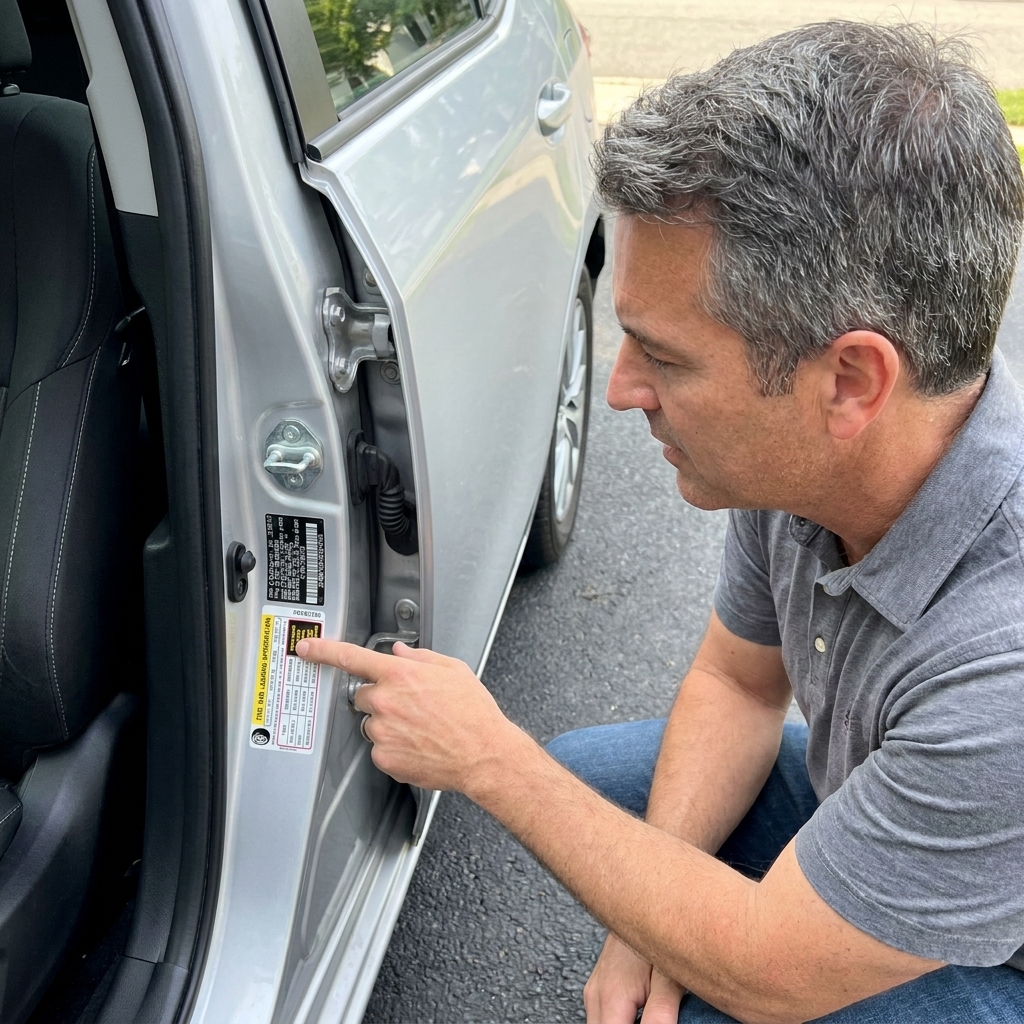
Before you decode anything, you need to know what you are trying to match. You have three reliable places to check:
- Your current tires: The sidewall shows the full size and ratings. This is the fastest reference, but only trust it if you are confident the tires are the correct size for the car.
- Driver door jamb placard: Open the driver door and look for the tire and loading label. It lists the original equipment (OE) tire size and the correct cold tire pressures for front and rear.
- Owner’s manual: Useful if the label is missing or unreadable.
If your current tires do not match the door placard, pause and figure out why. Sometimes people intentionally change sizes, but plenty of mismatches are just mistakes that you do not want to repeat.
Tire size code
A very common tire size looks like this: P215/55R17 94V. You might see extra letters before or after, but the core pieces are consistent. Let’s break it down in the same order you will see on the sidewall.
1) Tire type: P, LT, or nothing
- P = P-metric passenger tire (most sedans, crossovers, and many SUVs)
- LT = Light truck tire (work trucks, heavy-duty pickups, and some SUVs that need higher load capacity)
- No letter = Often a Euro-metric passenger tire size
One nuance that matters: load capacity is governed by the tire’s load index and the correct load tables, not just whether you see a “P” on the front. In other words, do not assume two tires are equivalent just because the size numbers look similar. Always match the service description your vehicle calls for.
Tip from the shop: do not casually swap between P and LT just because the numbers look close. Ride quality, load capacity, and required pressures can change.
2) Section width: 215
215 is the tire’s width in millimeters measured at its widest point (sidewall to sidewall), not the tread. Also worth knowing: published section width is measured on a specified rim width, so the real-world width can vary slightly depending on the wheel it is mounted on.
Wider is not automatically better. Going wider can raise road noise, increase the chance of rubbing if clearances are tight, and in standing water it can sometimes hydroplane sooner at the same pressure. Tread design and compound still matter a lot here.
3) Aspect ratio: 55
55 means the sidewall height is 55 percent of the section width. Lower numbers generally mean a shorter sidewall and a sportier, firmer ride. Higher numbers generally mean a taller sidewall and more cushion over potholes.
4) Construction: R
R = radial construction. Nearly every modern tire you will buy is radial. You may occasionally see other letters on specialty tires, but for everyday cars, expect R.
5) Wheel diameter: 17
17 is the wheel diameter in inches. This must match your wheel size. A 17-inch tire will not mount on a 16-inch wheel, and you cannot safely “make it work.”
6) Service description: 94V
The last two pieces in our example are critical for safety and for matching what the vehicle manufacturer and your tire installer expect:
- 94 = load index
- V = speed rating
Load index
The load index is a numerical code that corresponds to a specific maximum load capacity per tire when the tire is inflated to its rated pressure. It is not a “94 percent” type of number. It is a lookup code.
As a quick reality check: the load index you buy should meet or exceed what the vehicle requires. If you go lower than required, you risk overheating the tire, poor handling, and potential failure under load.
Common load index examples (approximate maximum per tire):
- 91 ≈ 1,356 lb
- 94 ≈ 1,477 lb
- 99 ≈ 1,709 lb
- 102 ≈ 1,874 lb
Because these are lookup codes, always confirm your exact load index in a standard load index chart (the tables used by major standards bodies and tire industry references). If the tire on the car and the tire you are shopping for show the same load index, you are comparing apples to apples.
Two important notes:
- Never “average it out”: Your tires do not always share load evenly, especially during braking, cornering, and when the vehicle is loaded with passengers and cargo.
- Do not confuse load index with tire pressure: Your door placard pressure is the correct starting point for your car, even though the tire itself may list a higher max pressure on the sidewall.
Speed rating
The speed rating is a letter that represents the tire’s maximum sustained speed capability under specific test conditions. In the real world, think of it as a shorthand for how the tire is constructed to manage heat and stability. It is not only about top speed.
Common speed ratings you will see on passenger vehicles:
- S = 112 mph
- T = 118 mph
- H = 130 mph
- V = 149 mph
- W = 168 mph
- Y = 186 mph
My rule of thumb: match the original speed rating unless you have a specific, informed reason to change. Dropping to a lower speed rating than the vehicle calls for can change handling feel and may conflict with manufacturer guidance, inspection rules, or installer policy depending on where you live.
SL vs XL
Two tires can share the same size but have different “load versions.” This usually shows up as SL (Standard Load) or XL (Extra Load), sometimes written as Reinforced.
- SL: Standard load construction, designed for its rated load at standard passenger tire pressures.
- XL or Reinforced: Built to carry more load by allowing higher inflation pressure when needed.
Some vehicles specify XL or Reinforced tires. If your placard or manual calls for XL, treat it as a requirement, not a nice-to-have. If it does not, do not assume you need XL just because it sounds tougher.
Quick tie-in to pressure: the max pressure molded on the tire is the tire’s limit, not your everyday target. Your door placard pressure is still the baseline for normal driving.
Other markings
Real tire sidewalls rarely stop at just the basic size. Here are the most common add-ons that confuse shoppers.
Run-flat
Run-flat tires are designed to be driven a limited distance after losing air, depending on the system and tire. If your car came with run-flats, switching to non run-flats can change ride quality and may leave you without a spare plan. Make that decision intentionally.
M+S and the 3PMSF symbol
- M+S (Mud and Snow) is a basic all-season marking and does not guarantee strong snow traction.
- 3PMSF (Three-Peak Mountain Snowflake) indicates the tire meets a specific severe snow traction performance test.
If you deal with real winter, 3PMSF matters more than M+S.
Directional and asymmetric
- Directional tires have a rotation arrow and must roll the correct direction.
- Asymmetric tires may be marked “Inside” and “Outside” to ensure correct mounting.
These markings do not change the size, but they absolutely affect installation and rotation options.
High-speed notation: ZR
You may see ZR in the size, such as 245/40ZR18, usually paired with a W or Y speed rating in the service description. The letter in the service description is the part to match.
OEM-specific markings
Some tires have original equipment markings that certain vehicles and owners care about. Common examples include:
- MO or MOE (Mercedes fitment, including some run-flat applications)
- * (BMW “star” marked fitment)
- N0, N1 and similar (Porsche fitment codes)
- TO (Tesla fitment marking on some models)
Do you always need the OEM marking? Not always. But if your vehicle originally came with a marked tire, it is worth asking your shop what they recommend, especially on performance cars and some EVs where noise and ride tuning can be very specific.
Commercial van: C
If you drive a van or a work vehicle, you may see a C marking on some tire types and sizes. It usually signals a commercial-rated tire built for heavier duty use. As always, match what the placard and manual call for.
UTQG ratings
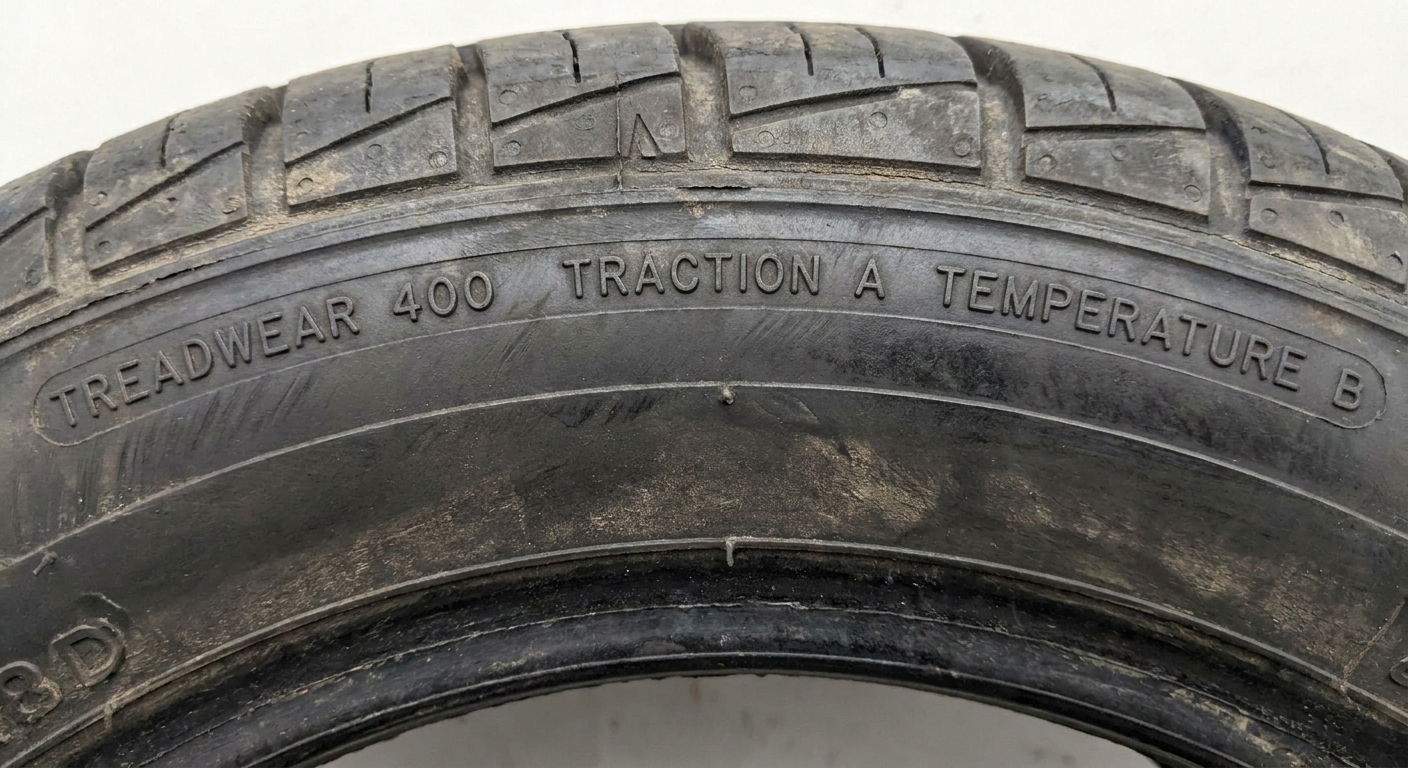
Many passenger tires sold in the US have a UTQG (Uniform Tire Quality Grading) string like: TREADWEAR 500 TRACTION A TEMPERATURE A.
- Treadwear: A comparative number from the manufacturer’s testing. Higher usually means longer wearing, but it is not consistent across brands.
- Traction: AA, A, B, or C rating for wet braking traction on a controlled test surface.
- Temperature: A, B, or C rating for heat resistance.
Use UTQG as one input, not the whole decision. I have seen “high treadwear” tires that were noisy or lacked grip, and “lower treadwear” tires that were the right choice for safety and control.
DOT code and tire age
Some of the most important information is in the small print: the DOT code. At the end of the DOT string is a date code, often a 4-digit number like 3223.
- 32 = the 32nd week of the year
- 23 = 2023
This 4-digit week and year format is used on modern tires. If you ever run into an extremely old tire with a 3-digit date code, treat it as a red flag. That tire belongs in the history books, not on the road.
When you are buying new tires, you generally want something built relatively recently, not tires that have been sitting for years. Aging rubber can harden and lose grip, even if the tread is new.
If you are unsure what is acceptable for you, ask the shop for the DOT date before installation. Any solid retailer should be able to answer that without drama.
Choosing replacements
When you replace tires on a daily driver, your goal is usually simple: match what the vehicle was designed for, then choose the best tire for your climate and driving habits.
Step 1: Match the size
Start with the exact size on your door placard unless you are following a proven alternative size recommended by a trusted tire professional for a specific goal.
Step 2: Meet load and speed
Do not go below the required load index or speed rating. Equal is fine. Higher can be fine too, but it can change ride and cost, so do it on purpose.
Step 3: Pick the category
- Touring all-season: Quiet, comfortable, long tread life for most commuters.
- Performance all-season: Better steering feel and grip, often a bit louder and shorter life.
- Summer: Best dry and wet grip in warm temps, not for freezing conditions.
- All-weather (3PMSF): Great one-set option for many winter states.
- Winter: Best snow and ice grip, usually swapped seasonally.
Step 4: Replace in smart sets
- Best: Replace all four tires.
- If you must replace two: Put the new tires on the rear for stability (even on front-wheel drive).
- AWD warning: Many AWD systems are sensitive to different tire circumferences. Mismatched tread depth can cause drivetrain stress. Check your owner’s manual for allowable tread depth differences. Some manufacturers spell it out in numbers, often around 2/32 inch. In certain cases, shops will shave a new tire to match the others. It sounds extreme until you price an AWD drivetrain.
One more real-world tip: on AWD vehicles, it is not just tread depth. Keeping the same size and, ideally, the same model across the axle (and often all four corners) helps avoid odd traction behavior.
Common questions
Can I change the aspect ratio or tire width?
Sometimes, yes, but it is not a free-for-all. Changing width or aspect ratio can affect speedometer accuracy, ABS and traction control behavior, ride quality, fuel economy, and clearance to struts and fenders. If you want an alternate size, use a reputable tire size calculator and confirm clearance, then have a tire shop sanity-check it.
What does “max pressure” on the tire mean?
That number is the maximum cold inflation pressure for the tire’s rated load, not what your car should run day-to-day. Use the pressure on the door placard as your baseline and adjust only for specific conditions per the vehicle manufacturer.
Do I need the exact same tire brand and model as before?
No. You need the correct size and appropriate load and speed ratings. That said, mixing very different tire types on the same vehicle can create odd handling, noise, and traction behavior. If you are replacing just two tires, try to match the remaining pair as closely as you can.
Quick example
Let’s say your sidewall reads P225/45R18 95W XL.
- P: passenger tire
- 225: 225 mm wide
- 45: sidewall height is 45% of 225 mm
- R: radial
- 18: fits an 18-inch wheel
- 95: load index (a specific load capacity per tire)
- W: speed rating (up to 168 mph under test conditions)
- XL: extra load construction
When you shop, you would look for that exact size and confirm the replacement tire is also 95W (or higher) and XL if the vehicle calls for it.
Checklist before you buy
- Confirm size from the door placard.
- Match or exceed the load index.
- Match the speed rating (or follow manufacturer guidance).
- Check for SL or XL requirements, plus run-flat or 3PMSF if applicable.
- Verify the DOT date when possible.
- If AWD, confirm tread depth matching rules before replacing fewer than four.
If you want, take a clear photo of your tire sidewall and the driver door placard and compare them. If they match, you are already 90% of the way to buying the right tires without any guesswork.