
A mechanic-writer’s clear breakdown of synthetic and conventional oil, including pros, cons, myths, severe service, and how to choose the best oil for long...
If you have ever stood in the oil aisle staring at bottles that read 0W-20, 5W-30, or 10W-40, you are not alone. Those numbers are not random, and they are not marketing. They are the oil’s viscosity grade, basically how thick the oil is at cold start and at operating temperature.
Once you understand what the letters and numbers mean, picking the correct oil stops feeling like a guessing game. It becomes a simple match: your engine, your climate, your driving, and what the manufacturer calls for.

Viscosity in plain English
Viscosity is a fluid’s resistance to flow. Thick honey has higher viscosity than water. Motor oil needs to do two tricky jobs at the same time:
- Flow quickly when cold so it can reach bearings, camshafts, and turbochargers within seconds of start-up.
- Stay thick enough when hot to maintain an oil film that keeps metal parts from touching under load.
That is why most modern oils are multi-grade. They are engineered to cover a wide temperature range instead of behaving like a single-viscosity oil.
If you like knowing who sets the rules, these viscosity grades come from an SAE standard (SAE J300).
What “5W-30” means
Let’s decode the most common format: 5W-30.
The first number (5) is the cold rating
The first number tells you how the oil performs in cold temperatures. A lower number means the oil can flow more easily when it is cold, which generally improves:
- Cold starts
- Initial wear protection (a disproportionate amount of wear can occur in the first minute after start-up)
- Oil pressure build time, especially in overhead-cam engines and turbo engines
The “W” stands for winter
The W literally means winter, as in the oil’s cold-temperature performance.
The second number (30) is the hot rating
The second number describes viscosity at engine operating temperature. A higher number means the oil stays thicker when hot. That can help maintain oil film strength under heat and load, but it is not automatically “better.” Too thick can reduce flow, increase drag, and in some engines lead to poor lubrication in tight passages.
So: 5W-30 means the oil meets SAE 5W cold-start requirements and falls within the SAE 30 viscosity range at operating temperature.
Why manufacturers pick a grade
When a car maker recommends 0W-20 or 5W-30, it is not just about fuel economy. Engineers choose a viscosity based on the engine’s:
- Bearing clearances and oil passage sizing
- Oil pump design and pressure targets
- Operating temperatures (cooling system, turbocharging, underhood heat)
- Valve timing systems like VVT, which rely on fast oil flow
- Emission system compatibility (catalytic converters and particulate filters can be sensitive to certain additives and consumption)
Modern engines are built with tighter tolerances and more oil-controlled systems than the engines many of us grew up with. That is a big reason you will see thinner oils like 0W-20 and 0W-16 in newer vehicles.
Also, check your manual for the viscosity chart. Some cars allow more than one grade depending on ambient temperature, and the 0W versus 5W choice is mostly about cold-start performance.
Common grades and typical uses
These are general patterns, not rules. Your owner’s manual still wins.
- 0W-20: Excellent cold flow, common in many newer Hondas, Toyotas, Fords, and engines designed for it. Helps efficiency and quick lubrication.
- 5W-30: A very common all-around grade for many older and mid-era engines, and still used in plenty of current models.
- 10W-30: More common in warmer climates or older designs. Not ideal for very cold winters.
- 5W-40 / 0W-40: Often used in some European cars, performance engines, and certain turbo applications where higher hot viscosity is specified.
- 10W-40: Shows up in older high-mileage engines or certain applications, but not typically recommended for many modern cars unless specified.
Cold starts matter
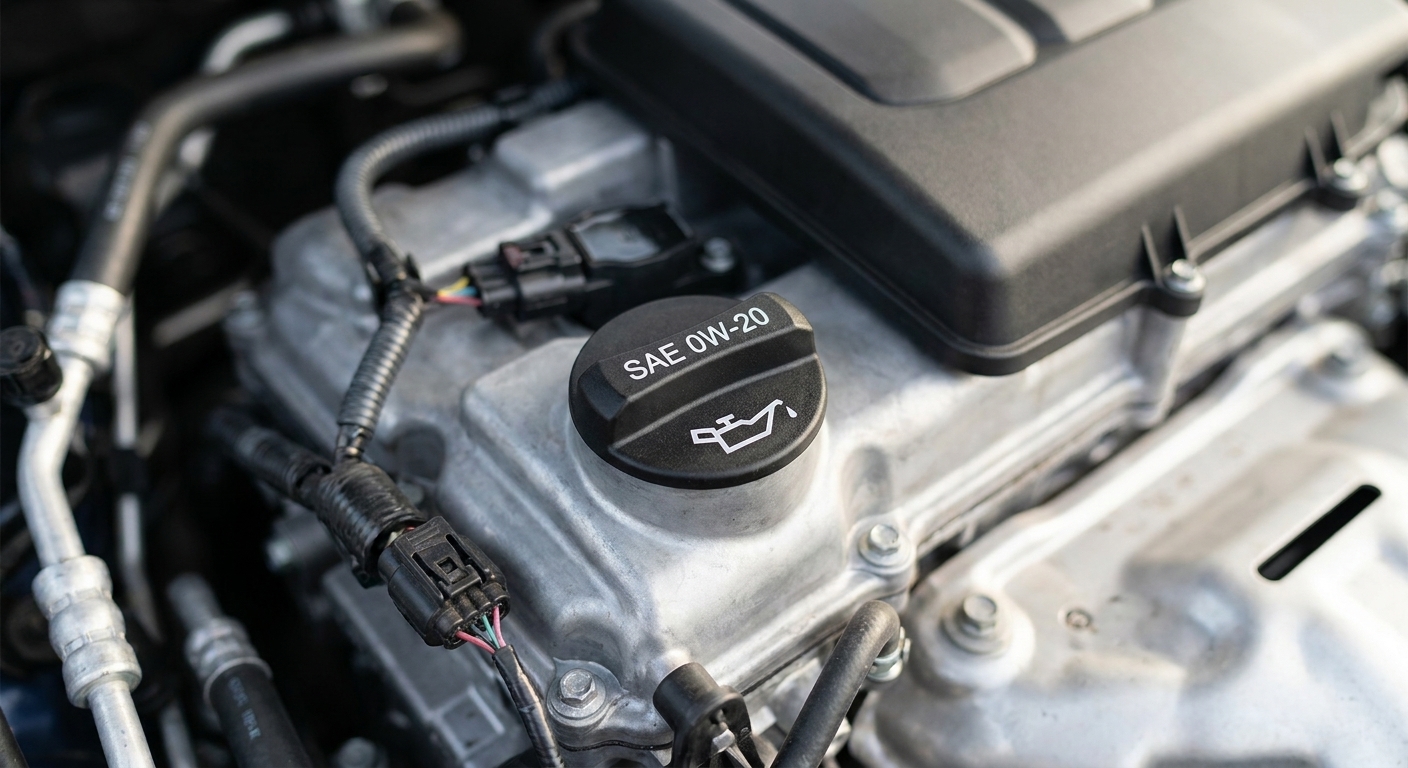
If I had to pick the one moment that separates a “happy long-life engine” from an “I swear it was fine yesterday” engine, it is the cold start. After the car sits, some oil drains back into the pan while a film remains on parts and in passages. On start-up, the oil pump still has to push oil through galleries and into tight clearances before the engine is fully protected.
A lower winter rating like 0W or 5W helps oil move faster in low temps. That is especially important if you:
- Park outside in winter
- Make lots of short trips
- Drive a turbocharged engine
Does thicker oil protect better?
Sometimes, but not always. Thicker oil can maintain a stronger film at high temperature and load, but it can also:
- Flow slower through tight passages
- Increase oil pressure while reducing actual flow in some areas
- Reduce fuel economy
- Interfere with VVT operation if the engine is designed for thinner oil
If your engine calls for 0W-20, jumping to 5W-30 “for extra protection” is not a guaranteed upgrade. In certain engines, it can be the opposite.
Synthetic vs conventional
Viscosity grade and base oil type are related, but they are not the same thing.
Synthetic oil
- Typically holds viscosity better under heat and stress
- Often flows better in extreme cold
- Usually resists deposits and oxidation longer
Conventional oil
- Can be perfectly fine for older engines designed around it
- Often costs less
- May not handle extreme heat, cold, or extended intervals as well as synthetic
Many modern vehicles often end up on synthetic or synthetic blend because it is the easiest way to meet the required specs and hold up to the recommended interval. Still, the rule is simple: follow your manual’s oil type guidance and change interval, then buy an oil that matches the listed specs.
Those extra letters matter
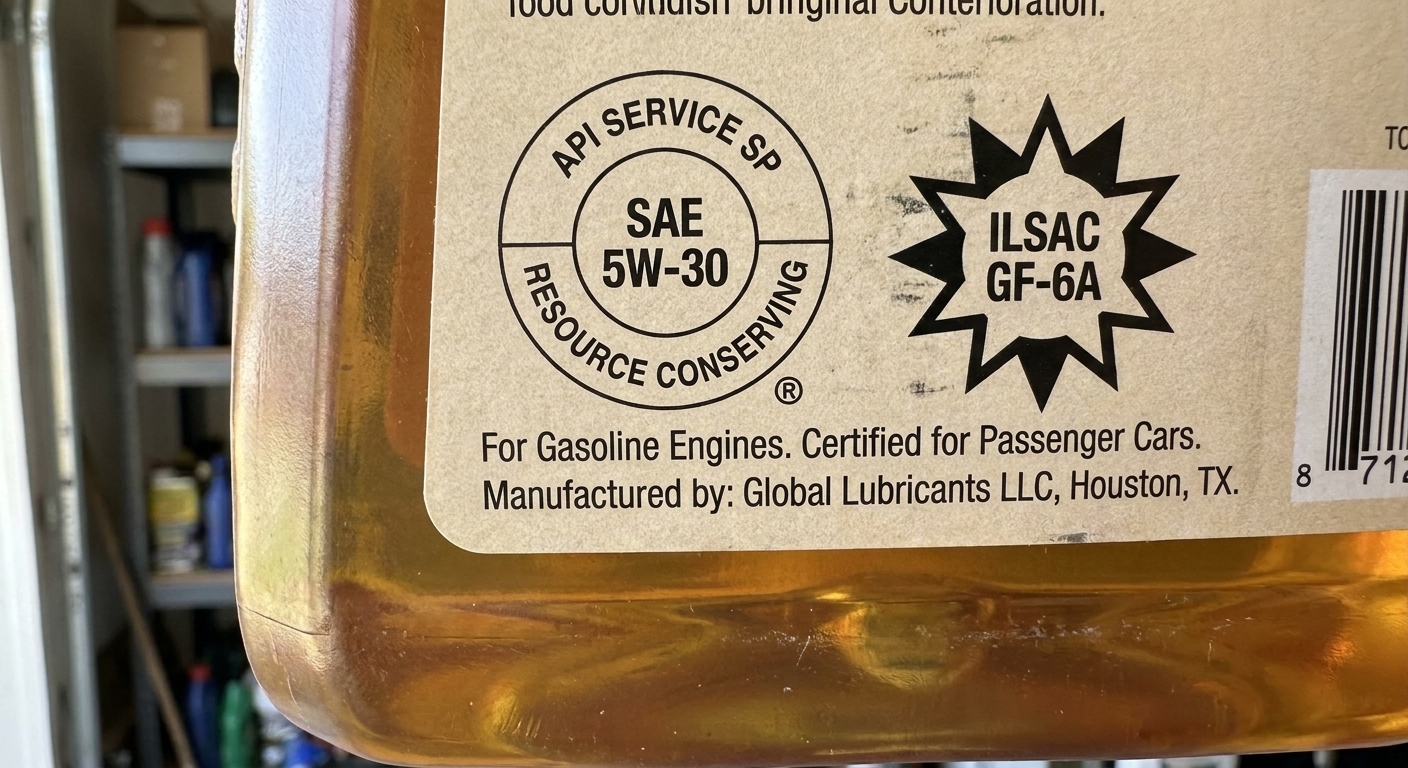
The viscosity grade tells you how thick the oil is. It does not fully tell you whether the additive package and performance meet what your engine needs.
Here are the big ones you will see:
- API SP: A modern gasoline engine oil standard that improves protection against issues like low-speed pre-ignition in turbo engines and helps with wear control in modern valvetrains and timing systems.
- ILSAC GF-6: Common on many North American and Japanese vehicles, focuses on fuel economy and protection for modern gas engines.
- GM dexos1 Gen 3: A GM specification commonly required for many GM gas engines. You may still see dexos1 Gen 2 on shelves, so check the label to confirm what the oil is approved for.
- ACEA (A3/B4, C3, etc.): Common on European vehicles. These can be very specific about high-temp shear stability and emissions system compatibility.
If your oil cap or manual calls out a spec, match it. Two oils can both be 5W-30 and still not be interchangeable if one lacks the approval your engine requires.
And if you drive a diesel, be extra careful. Diesel engines often require different specs (like API CK-4 or ACEA E-series), and “diesel oil” versus “gas oil” is not automatically interchangeable just because the viscosity looks the same.
Different viscosity in a pinch?
Sometimes you can, but treat it like a short-term solution, not a lifestyle.
When it is usually OK temporarily
- You are traveling and your exact grade is unavailable
- The alternative viscosity is close (for example 5W-30 instead of 0W-20 or vice versa) and the oil meets the required specs
When you should not improvise
- Your manual warns against it (some do)
- Your engine is under warranty and the manufacturer is strict about grade and approvals
- You have a diesel or a gas direct-injection turbo engine that requires a specific approval
- Your vehicle uses a very specific low-viscosity oil like 0W-16 or 0W-8
If you must substitute, keep the interval short and return to the correct viscosity at the next change. And always make sure the oil still meets the required API/ILSAC/ACEA spec.
What about topping off or mixing?
In an emergency, topping off with a different brand, or even a slightly different viscosity, is generally acceptable if it meets the required spec. Just do not make it a habit, and get back to the correct oil at the next change.
High-mileage and viscosity
When an engine gets up in miles, you might see slightly higher consumption or small leaks. Some drivers reach for thicker oil immediately. Sometimes that reduces consumption a bit, but it can also mask a real problem.
A better first step is usually:
- Use a high-mileage version of the factory-recommended viscosity (like High Mileage 5W-30)
- Fix obvious leaks (valve cover gaskets are a classic)
- Verify the PCV system is working correctly
If oil consumption is significant, talk to a trusted shop before jumping viscosities. Some engines have known issues (stuck oil control rings, turbo seals, etc.) that thicker oil will not solve.
Quick way to choose
- Check the oil cap. Many cars print the viscosity right on it.
- Confirm in the owner’s manual, especially if your engine has multiple options for different temperatures.
- Match the required spec (API SP, dexos, ACEA, etc.).
- Choose synthetic if your driving is severe: short trips, extreme temps, towing, lots of idle time, turbo driving, or long drain intervals.
If you want the mechanic answer: the best oil is the one that matches the manufacturer’s viscosity and approvals, and gets changed on time.
FAQ
Is 5W-30 thicker than 5W-20?
At operating temperature, yes. They share the same cold rating (5W), but 30 is thicker than 20 when hot.
Is 0W-20 too thin for hot weather?
Not if your engine calls for it. The 20 part is the hot viscosity grade. A properly specified 0W-20 is designed to protect at operating temperature, including summer heat.
What does single-grade oil mean (like SAE 30)?
That is a single-viscosity oil. It does not have a winter rating and is not formulated to cover a wide temperature range the way multi-grade oils do. You will still see it in certain small engines and specific applications, but it is uncommon in modern passenger cars.
Will the wrong viscosity cause damage right away?
Usually not instantly, but it can increase wear over time, create oil pressure and flow issues, and cause problems with systems that depend on specific oil flow characteristics. If your car runs noticeably different after an oil change (new ticking, sluggish VVT response, oil pressure warning), double-check what was installed.
If two oils are both 5W-30, are they the same?
No. Same viscosity does not guarantee the same performance level or approvals. Always compare the API/ILSAC/ACEA ratings and any manufacturer specs your vehicle requires.