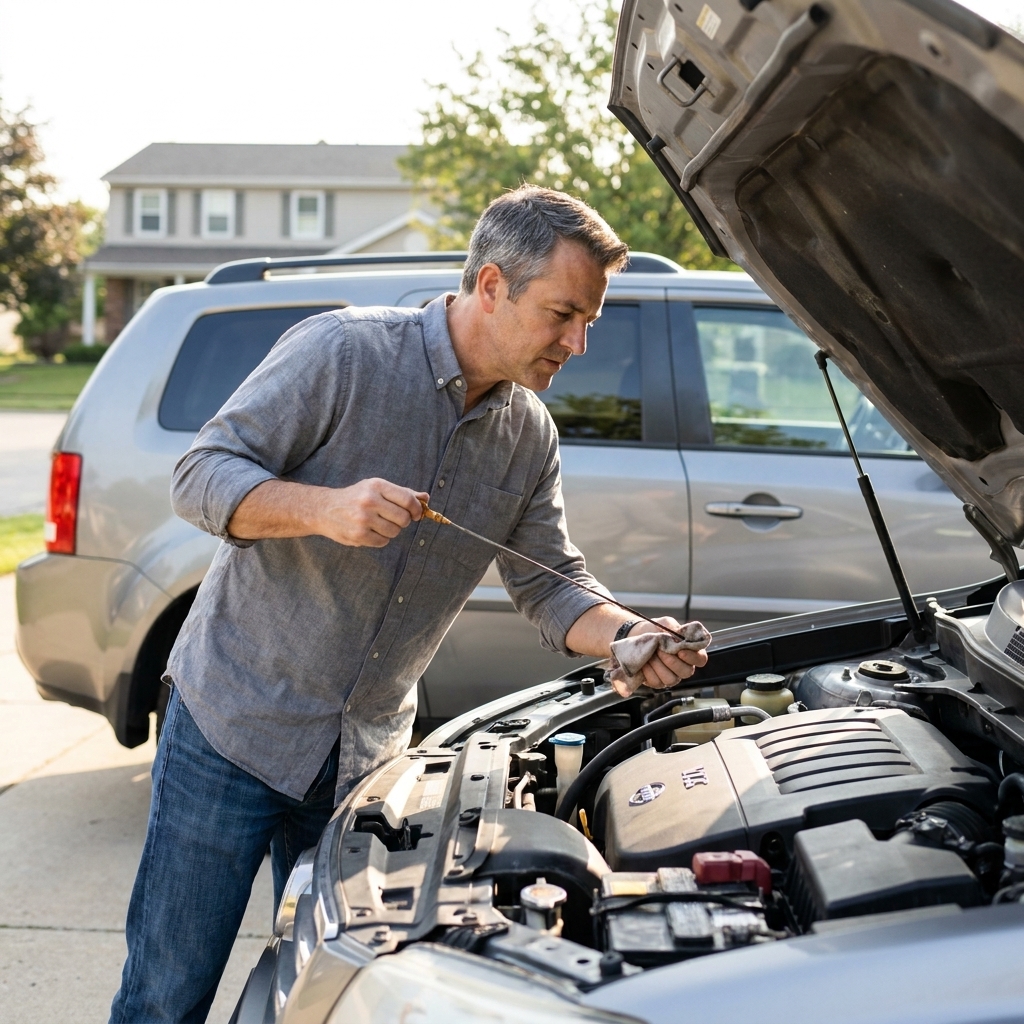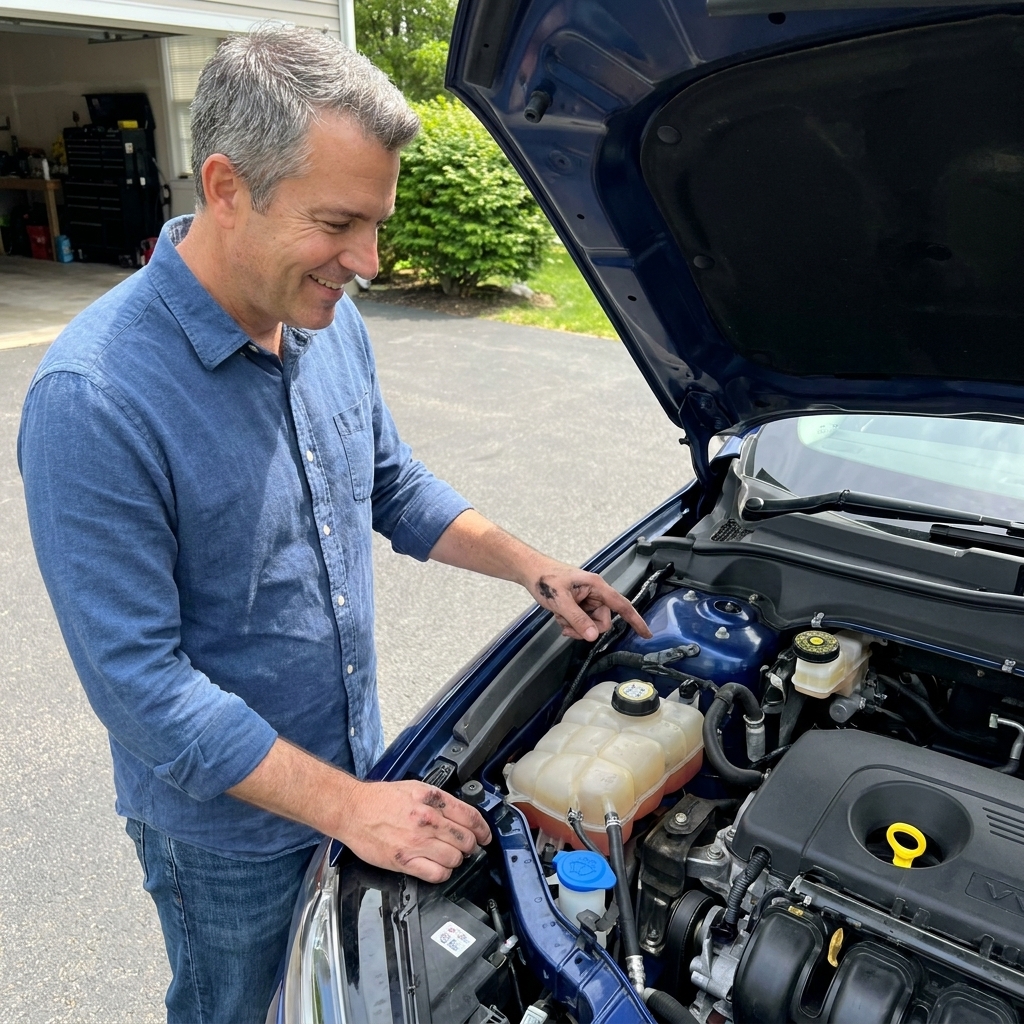
A beginner-friendly walkthrough for checking and filling oil, coolant, brake fluid, transmission fluid, power steering fluid, and washer fluid, plus what “...
When your temperature gauge suddenly spikes on the highway, you are not just risking a breakdown. You are flirting with warped cylinder heads, blown head gaskets, and a repair bill that can dwarf the value of an older car. The good news is that the right moves in the next minute can help reduce the risk of catastrophic damage, depending on how hot it got and for how long.
I have seen plenty of engines survive an overheating scare with no lasting harm, and I have seen others get cooked because the driver tried to “just make it to the next exit.” Use this as your calm, step-by-step playbook.
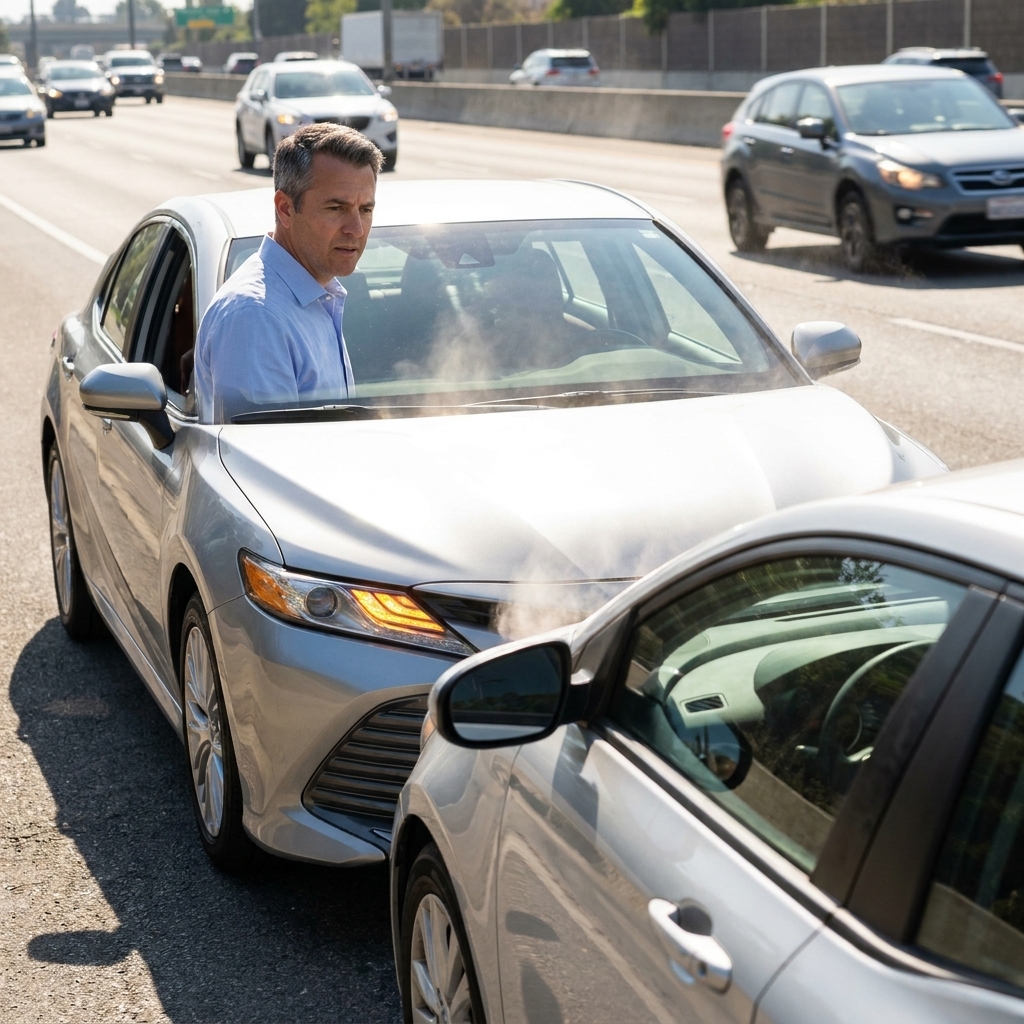
First priority: safety and less heat
Before anything else: control the situation
- Keep your seatbelt on until you are fully stopped in a safe spot.
- Do not panic brake unless you must. Signal early and plan your move.
1) Turn off the A/C
Your A/C system adds load to the engine and dumps additional heat into the cooling stack in front of the radiator. Shutting it off is the fastest “free” help you can give the cooling system.
2) Turn the heater on full hot, fan on high
This feels wrong in summer, but it works. Your heater core is basically a small radiator. Blasting heat can pull heat out of the coolant and buy you time.
Important caveat: if the gauge is already pegged, you see steam, or the car is losing power, the heater is not your solution. Your solution is stopping safely and shutting down.
- Set temperature to HOT
- Fan to HIGH
- Crack windows so you do not roast
3) Ease off the throttle and avoid high RPM
More fuel burned equals more heat. If traffic allows, gently slow down and keep RPMs modest. Avoid downshifting for engine braking or “powering through” a hill. If you are towing, do not push it.
4) Know the “pull over now” signs
- Temperature gauge in the red or pegged
- Red temperature warning light, or an overheat warning message (many newer cars do not have a traditional gauge)
- Steam or visible vapor from the hood, or a sweet coolant smell
- Smoke, a burning oil smell, or an electrical burning smell
- Loss of power, misfire, or rough running
- A/C suddenly stops blowing cold and the temperature rises fast
If you see any of these, your goal is not the next exit. Your goal is the next safe place to stop.
How to pull over safely
Pick the safest stopping spot you can
Signal early, take the nearest safe shoulder, ramp, or parking lot. A wide shoulder is better than a narrow one. Avoid stopping on curves or just over a hill crest where drivers cannot see you.
- Turn on hazard lights
- Get as far right as practical
- If you are on the shoulder, turn your wheels to the right (toward the shoulder or guardrail) so the car is less likely to roll into traffic if struck
Do you shut the engine off right away?
Most of the time, yes, once you are stopped. If the gauge is high but not pegged and there is no steam, you can let it idle for 15 to 30 seconds while the heater is on full hot to stabilize temperatures, then shut it down.
Shut it down immediately if you see steam, smell burning, hear knocking, or the gauge is fully pegged. Continuing to run an overheated engine is how head gaskets die.
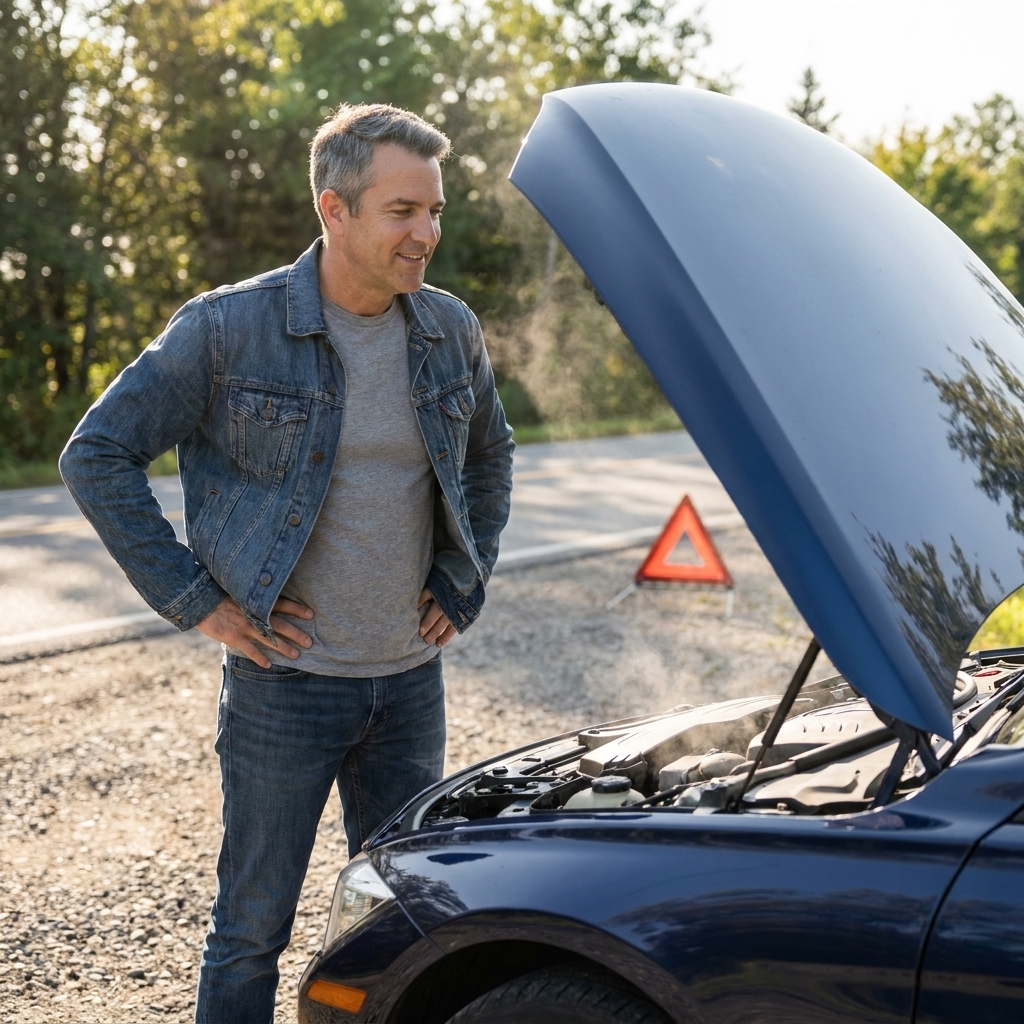
Pop the hood only if it is safe
Opening the hood can help heat escape, but it is optional. Only do it if you can stand well away from traffic. Open the hood carefully and keep your head and hands back. Hot coolant can spray if a hose or tank is compromised.
What not to do
- Do not open the radiator cap or a pressurized expansion tank cap on a hot engine. Pressurized coolant can erupt and cause severe burns.
- Do not pour cold water on a hot engine or radiator. Rapid cooling, especially on hot aluminum parts, can cause damage.
- Do not keep driving “as long as it runs.” Overheating damage can happen fast.
- Do not ignore low coolant warnings or puddles under the car. Overheating often means coolant is low, not circulating, or the system cannot hold pressure.
Quick roadside checks
Think of this as triage, not a full repair. Your job on the shoulder is to decide whether you can limp to a shop safely, or whether you need a tow.
Step 1: Let it cool down
Give it at least 30 minutes. Longer is better, especially if it was in the red or you saw steam. Only open anything when the system is fully cool and no longer under pressure.
Step 2: Look for obvious leaks
With the engine off, look underneath and around the engine bay for:
- Puddles or dripping coolant (often bright green, orange, pink, or blue depending on type)
- Coolant spray pattern on the underside of the hood
- A split radiator hose or a hose that popped off
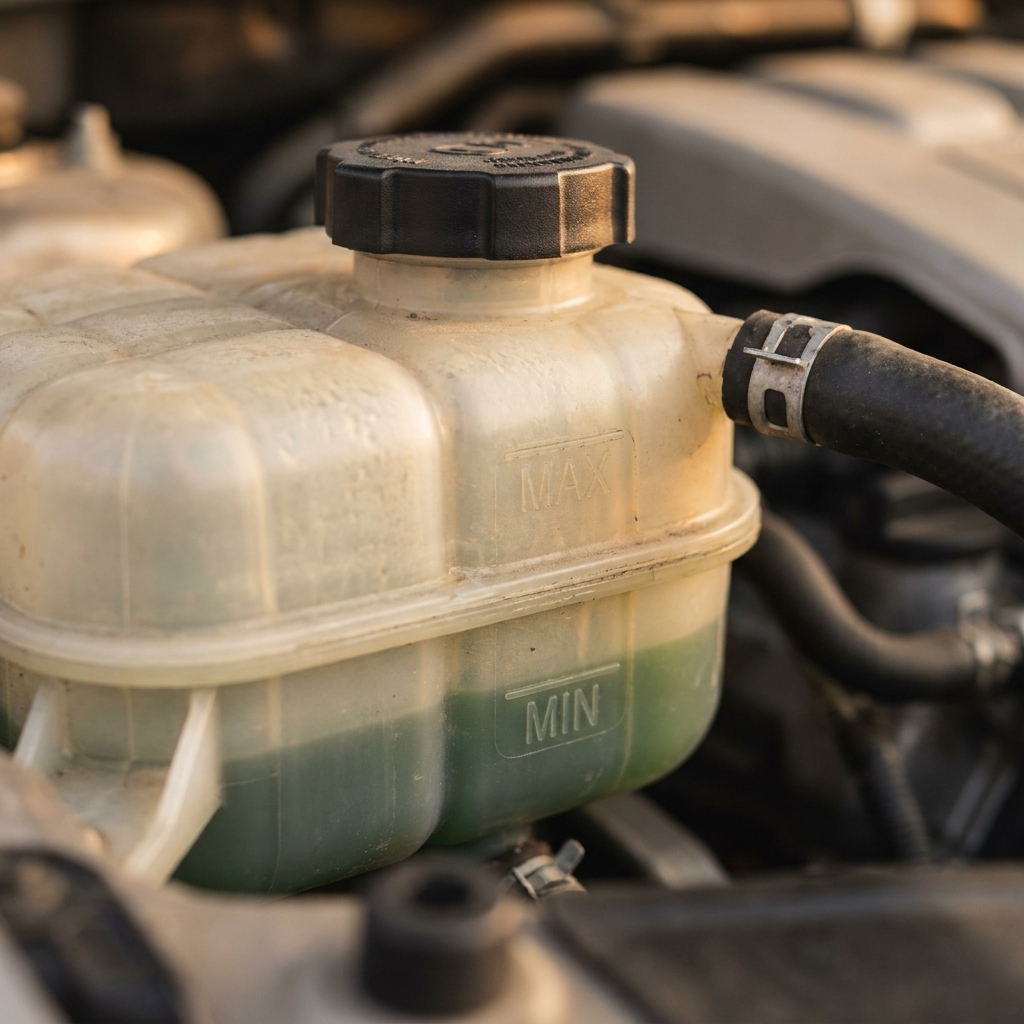
- Cracked plastic coolant reservoir or expansion tank
If you see an active leak, plan on a tow. Even if you refill coolant, it will likely dump out again once pressure builds.
Step 3: Check belt basics
Take a quick look at the serpentine belt. On many vehicles it drives the water pump. If the belt is missing or shredded, do not attempt to drive. You may also lose power steering and charging.
Step 4: Check coolant level at the correct fill point
When the engine is cool enough that you can touch nearby metal without pain, check the coolant level at the safe fill point for your car:
- Many modern cars use a pressurized expansion tank as the fill point. That is where you check and add coolant, but only when fully cool.
- Some cars have a simple overflow reservoir plus a separate radiator cap. If so, the reservoir level helps, but it does not always prove the radiator is full.
If you are not sure, follow your owner’s manual. The one universal rule is still true: do not remove a radiator cap or pressurized tank cap when hot.
Step 5: Restart briefly and watch what happens
If there is no steam and coolant is at least visible at the proper fill point, you can restart for a short check.
- Cooling fans: as the engine warms toward operating temperature, the fans should engage. Some take several minutes and some are variable speed. If the temperature is climbing and the fans never run, suspect a fan, relay, fuse, wiring, or sensor issue.
- Heater output: with the heater on hot, do you get strong heat? If the heater stays cold, coolant may be low, there may be air in the system, or the water pump may not be circulating.
- Gauge or warning behavior: if it climbs rapidly again, shut it off and tow.
Common causes
Low coolant from a leak
- Clues: sweet smell, puddle after stopping, crusty residue near hose ends or radiator, reservoir or tank low
- Highway behavior: can overheat under sustained speed or hills because the system cannot hold pressure or volume
Cooling fan problem
- Clues: overheats in stop and go traffic more than at speed, fans do not come on
- Highway behavior: can still overheat at speed if the system is heat soaked, airflow is restricted, or coolant is low
Thermostat stuck closed
- Clues: temperature climbs fast, heater output may be inconsistent
- Highway behavior: often overheats regardless of speed
Water pump issue
- Clues: grinding noise, coolant leak near the pump, overheating plus weak cabin heat
- Highway behavior: temperature rises even with good airflow because coolant is not circulating
Radiator blockage or airflow restriction
- Clues: fins packed with bugs and debris, bent fins, previous stop-leak use, rusty coolant history
- Highway behavior: tends to show up under load, hot days, long grades
Head gasket trouble
- Clues: repeated overheating, coolant loss with no visible leak, bubbling in reservoir or tank, sweet exhaust smell, white smoke, rough start, oil that looks milky
- Highway behavior: can overheat unexpectedly and pressurize the cooling system hard
Can you add coolant roadside?
Sometimes, yes, and it can save your engine. But do it safely and only if the situation makes sense.
Only add fluid after it cools
Wait until the engine is fully cool. If you must add something and you are in a pinch, clean water is better than running it dry, but correct coolant mix is the goal.
Add only at the proper fill point
On many modern cars, the safe fill point is a pressurized expansion tank, not a traditional radiator cap. On other cars, topping the overflow reservoir alone may not restore the radiator level.
If you are unsure, consult the owner’s manual. If your car has a traditional radiator cap, only open it when the engine is stone-cold.
If it starts overheating again, stop
If the temperature climbs back toward hot within a couple minutes, shut it down and call for a tow. Limping it repeatedly is how you turn a small issue into a big engine job.
When to drive vs tow
If the car cooled down, you have no steam, coolant is at a reasonable level, and the temperature stays stable at idle, you may be able to drive a short distance to a shop. Here is how to give yourself the best shot:
- Keep the heater on hot and fan high
- Drive gently, avoid hard acceleration and hills
- Stay in the right lane so you can pull off quickly
- Watch the gauge or warnings constantly
- Keep the A/C off
Tow it instead if any of the following are true:
- Steam or smoke from the hood
- Gauge pegged or red warning stays on
- Knocking, rough running, or major power loss
- Active coolant leak
- Serpentine belt damage or missing belt
- It overheats again quickly after cooling and topping up
After the incident
Do not assume it is fine
Overheating can weaken hoses, damage a radiator cap, cook a thermostat, or start head gasket failure that shows up later. If you had a serious overheat, plan on a professional inspection.
What a shop should check
- Cooling system pressure test (find leaks)
- Radiator cap or expansion tank cap test
- Fan operation and fan relays
- Thermostat function
- Coolant concentration and condition
- Combustion gas test for head gasket concerns
What to monitor over the next week
- Coolant level each morning (engine cold)
- Any new sweet smell after parking
- Temperature behavior in traffic
- Oil condition on the dipstick (milky or frothy is bad)
FAQ
Is steam always coolant?
Not always. Steam can be coolant boiling off, but visible vapor can also be oil smoke or another fluid hitting a hot surface. Either way, if you see it from under the hood, treat it as serious and stop.
Why did my car overheat at speed? I thought airflow helps.
Airflow helps, but it cannot compensate for low coolant, poor circulation (thermostat or water pump), internal blockage, a bad cap that cannot hold pressure, or a leak that prevents the system from building pressure. Highway overheating often points to a coolant volume or circulation problem, not just a fan issue.
Will running the heater damage anything?
No. It is uncomfortable, but it is one of the safest ways to pull heat out of the engine in an emergency.
Can I drive with the temperature warning light on?
You should not. If it flickers briefly then goes away after you reduce load, you still need the cooling system inspected. If it stays on, pull over and shut down.
The takeaway
If your engine starts overheating on the highway, your mission is simple: reduce heat load, pull over safely, and avoid any move that turns pressure and heat into injury or engine damage. In most cases, the cheapest overheating repair is the one you stop early enough to make.
If you want one rule to remember from a stressed-out driver’s seat, it is this: an engine can survive one careful shutdown far more often than it can survive one more exit.