A beginner-friendly walkthrough for checking and filling oil, coolant, brake fluid, transmission fluid, power steering fluid, and washer fluid, plus what “...
Nothing kills a road trip vibe faster than a check engine light two hours from anywhere or a tire that starts shaking at 72 mph. The good news is many trip-ending problems give you warning signs if you know where to look. Some failures are sudden, like a nail in the road, an alternator that quits, or a battery that finally gives up, but a quick pre-trip check stacks the odds in your favor.
I built this checklist from what I used to do in the shop when a customer said, “We’re driving cross-country next week, can you take a quick look?” You can knock out most of it in your driveway in under an hour. And if anything looks questionable, you still have time to schedule service before you’re stuck paying premium emergency rates in a strange town.
This isn’t a substitute for a professional inspection if you have a warning light on, obvious leaks, tire damage, or brake issues. For safety-critical stuff, get it checked.
Quick pre-trip walkaround (5 minutes)
Start simple. A fast walkaround catches the stuff that turns into roadside drama.
- Look under the car for fresh puddles or wet spots. A little water dripping from the A/C on a hot day is normal. Oily spots or colored fluid isn’t.
- Check for tire issues: bulges, cracks, nails, or cords showing. If you see a bubble on a sidewall, that tire is done.
- Scan your lights: headlights, high beams, turn signals, brake lights, hazards, reverse lights. Ask a friend to press the brake pedal or back up near a wall to see reflections.
- Confirm wipers and washer spray. If the blades chatter, smear, or leave gaps, replace them now, not in a gas station thunderstorm.
- Listen on startup. New squeals, rattles, or a long crank are worth investigating before you put 1,500 miles on the clock.
- TPMS note: Your tire pressure warning system is helpful, but it doesn’t replace a real gauge. It can be slow to update and it won’t catch every problem.
Fluids: the big five to check
Fluids are cheap compared to engines, transmissions, and tow trucks. If your car has an oil-life monitor or you have recent service records, use them. If not, do these checks cold, on level ground.
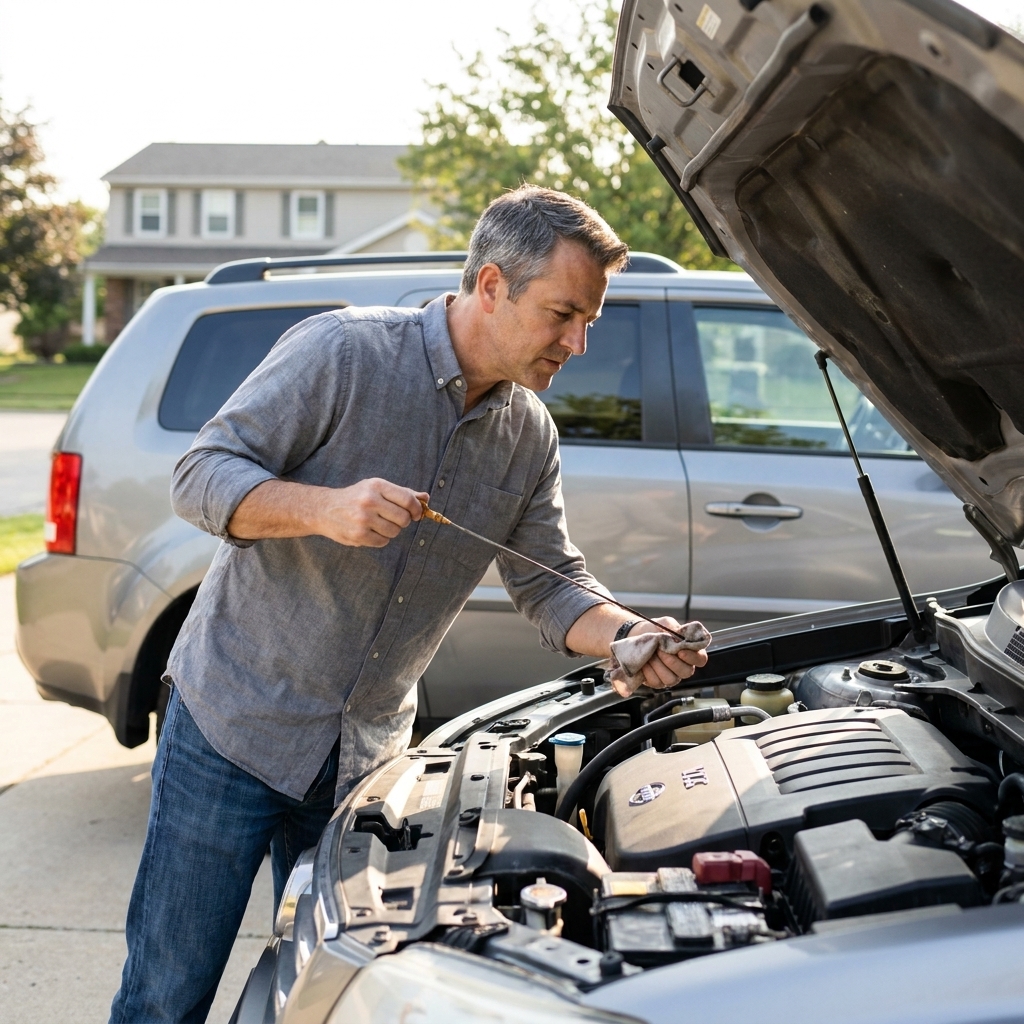
Engine oil
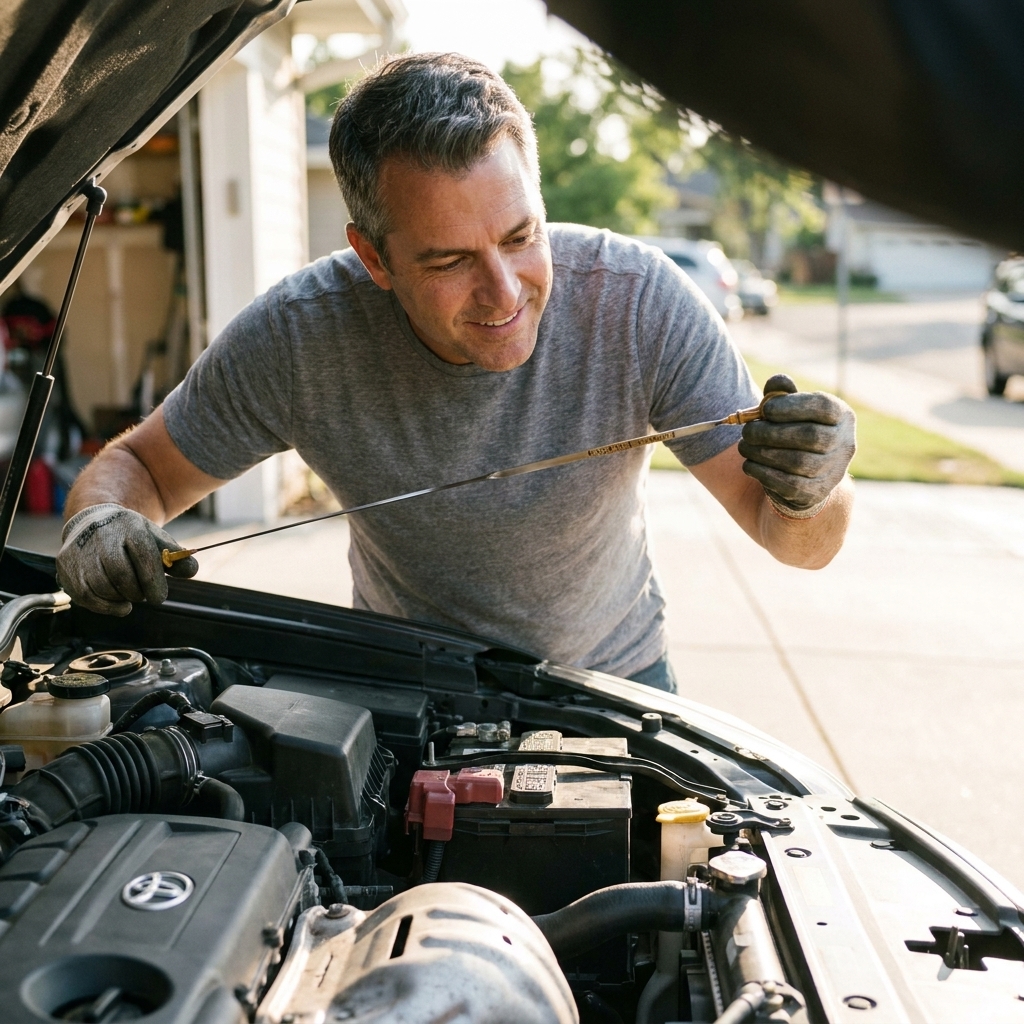
- How to check: Pull the dipstick, wipe, reinsert, pull again. Level should be between the marks.
- What you want to see: Honey to dark brown is normal. Milky oil can indicate coolant contamination.
- Road trip rule: If you’ll hit your oil change interval during the trip or shortly after you get home, change it before you leave. Starting a long drive with fresh oil and the correct level is cheap peace of mind.
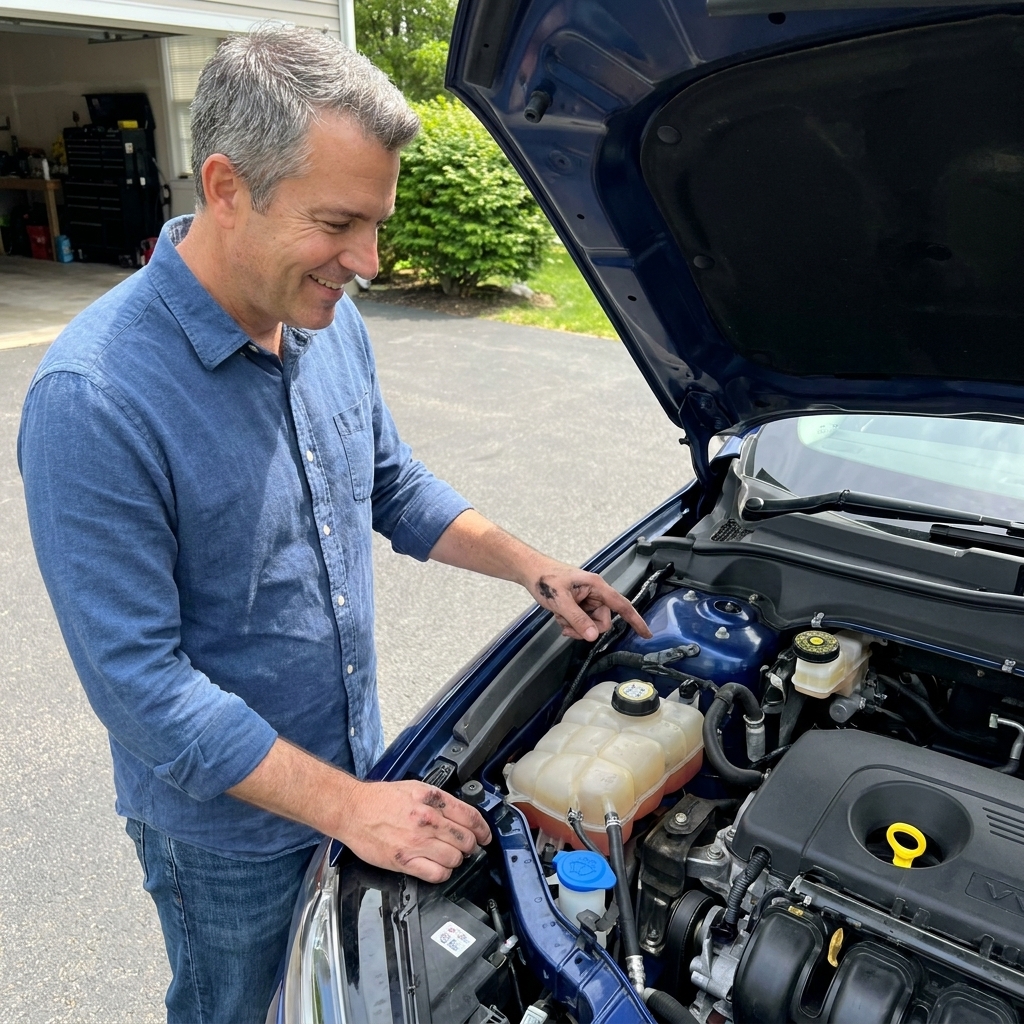
Coolant (engine antifreeze)
- How to check: Use the overflow reservoir markings when the engine is cold. Don’t open a hot radiator cap.
- What you want to see: Level between MIN and MAX, fluid not rusty or oily.
- Red flag: You have to top off coolant repeatedly. That’s a leak until proven otherwise.
Brake fluid
- How to check: Look at the brake fluid reservoir. Most have MIN and MAX lines.
- What you want to see: Level in range. Color varies, but very dark fluid can be a hint it’s overdue. Moisture content is what really matters, so a test strip or meter is the best way to know.
- Road trip rule: Low brake fluid can mean worn brake pads or a leak. Either one deserves a shop visit.
Power steering fluid (if equipped)
- How to check: Some cars have a dipstick cap, others are sealed. Many newer vehicles use electric power steering and have no fluid.
- What you want to see: Level in range, no whining when turning at idle.
Windshield washer fluid
- Why it matters: Bug splatter and road grime are constant on long drives. Washer fluid is visibility insurance.
What about transmission fluid? Many modern automatics are “sealed” with no dipstick. If your vehicle has a dipstick and your manual tells you how to check it, follow that procedure. If you notice slipping, delayed engagement, shuddering, or a burnt smell, get it inspected before you go.
Tires: where trips are won or lost
I’ve seen more road trips derailed by tires than by engines. Tires are your only contact with the road, and at highway speed, small problems get big fast.
1) Set tire pressure correctly
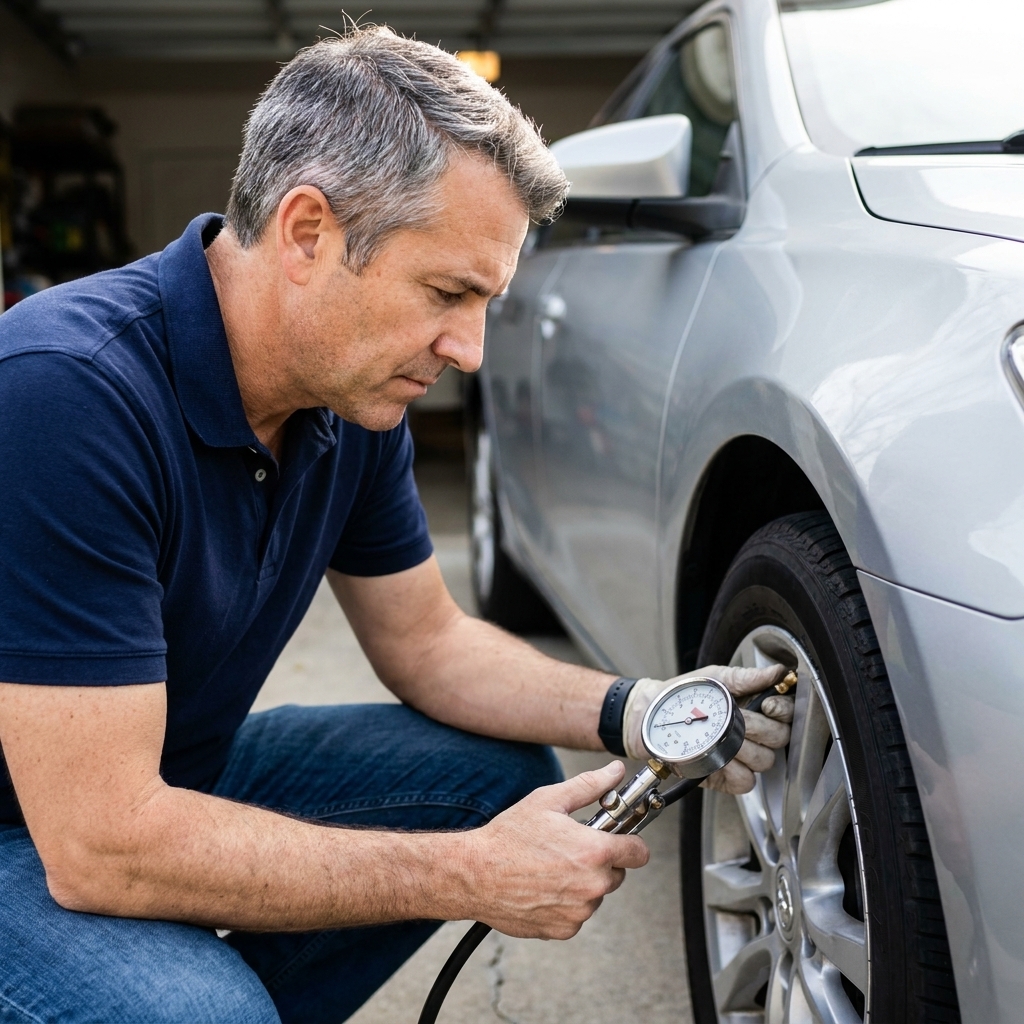
- Use the door jamb sticker for the correct PSI, not the number molded into the tire sidewall.
- Check when cold, ideally before driving more than a mile.
- Don’t forget the spare. Spares love to be flat when you need them most.
- Re-check after loading. If you pack heavy or add a cargo box, check pressures again once the car is loaded.
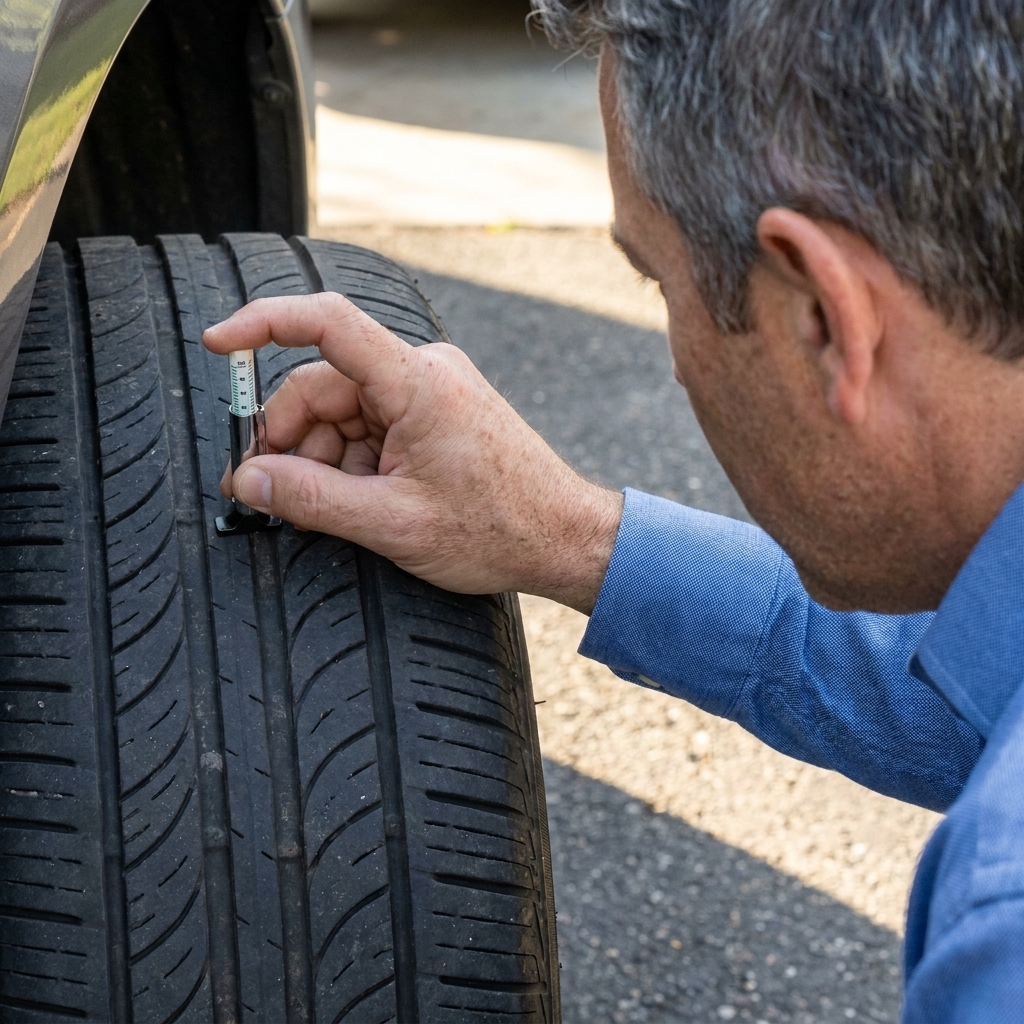
2) Check tread depth with numbers
- Quick test: The quarter test is a fast screening tool, but it’s not super precise. A cheap tread depth gauge is better.
- Practical guidance: Around 4/32 inch is where wet-weather traction starts dropping off. 2/32 inch is the legal minimum in most places, but I don’t like sending anyone on a long trip that low.
- Wear bars: If the tread is down to the built-in wear indicators, it’s time to replace.
3) Inspect for uneven wear
Uneven wear is your car quietly asking for help.
- Inside edge wear often points to alignment issues.
- Cupping or scalloping can indicate worn shocks or struts.
- One tire worn more than the others can be a rotation problem or a suspension issue.
4) Plan for heat, loads, and speed
Loaded cars build tire heat. Hot pavement builds tire heat. Long highway stretches build tire heat. If you’re packing heavy or towing, verify your tire load rating is appropriate and follow your vehicle’s recommended pressures for that load.
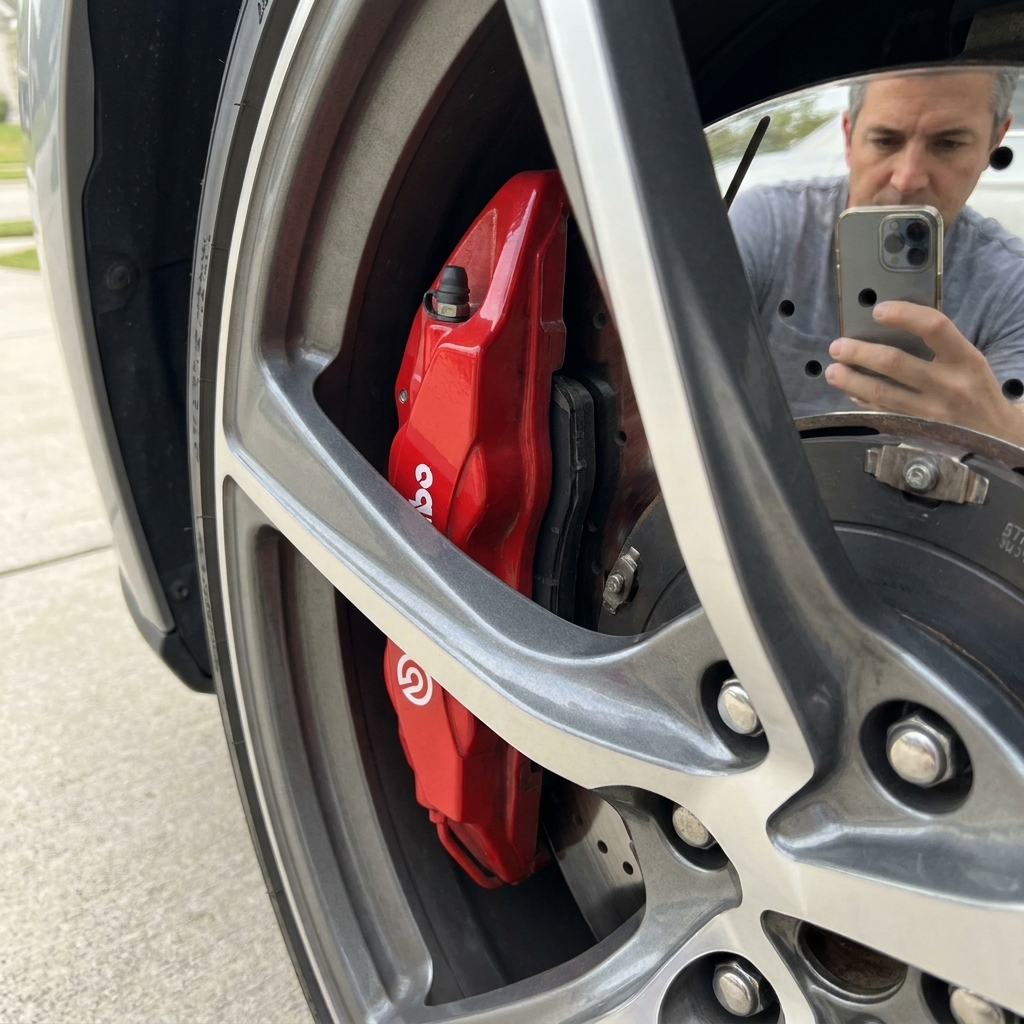
Brakes and suspension
Your brakes might feel fine around town, then fade on a long mountain grade when the car is loaded with people and luggage.
Brake checklist
- Pedal feel: Firm and consistent is good. A soft or sinking pedal isn’t.
- Noises: Grinding is an emergency. Screeching can be a wear indicator, or it can be hardware. Either way, inspect.
- Vibration: Steering wheel shake while braking often points to rotor issues (runout, thickness variation, or pad deposits) or other front-end problems. It’s worth diagnosing before a long drive.
- Pulling: If the car pulls when braking, don’t ignore it.
Suspension and steering checklist
- Highway wandering or constant correction can signal alignment or worn components.
- Clunks over bumps can mean worn sway bar links, ball joints, or struts.
- One corner sitting low can point to a bad spring or suspension damage.
- Steering shake at speed can be balance, a bent wheel, a tire defect, or worn suspension parts.
If you’re feeling any of the above, get it checked before you go. Fixing worn parts and getting a proper alignment can also save you fuel and tires on the trip.
Battery and charging system
Batteries tend to fail at the least convenient time: after you stop for fuel, when the car is heat-soaked, or early in the morning at a hotel. If your battery is older, be proactive.
- Battery age: Many last 3 to 5 years, sometimes more, sometimes less. If yours is pushing that range, consider a preemptive test or replacement.
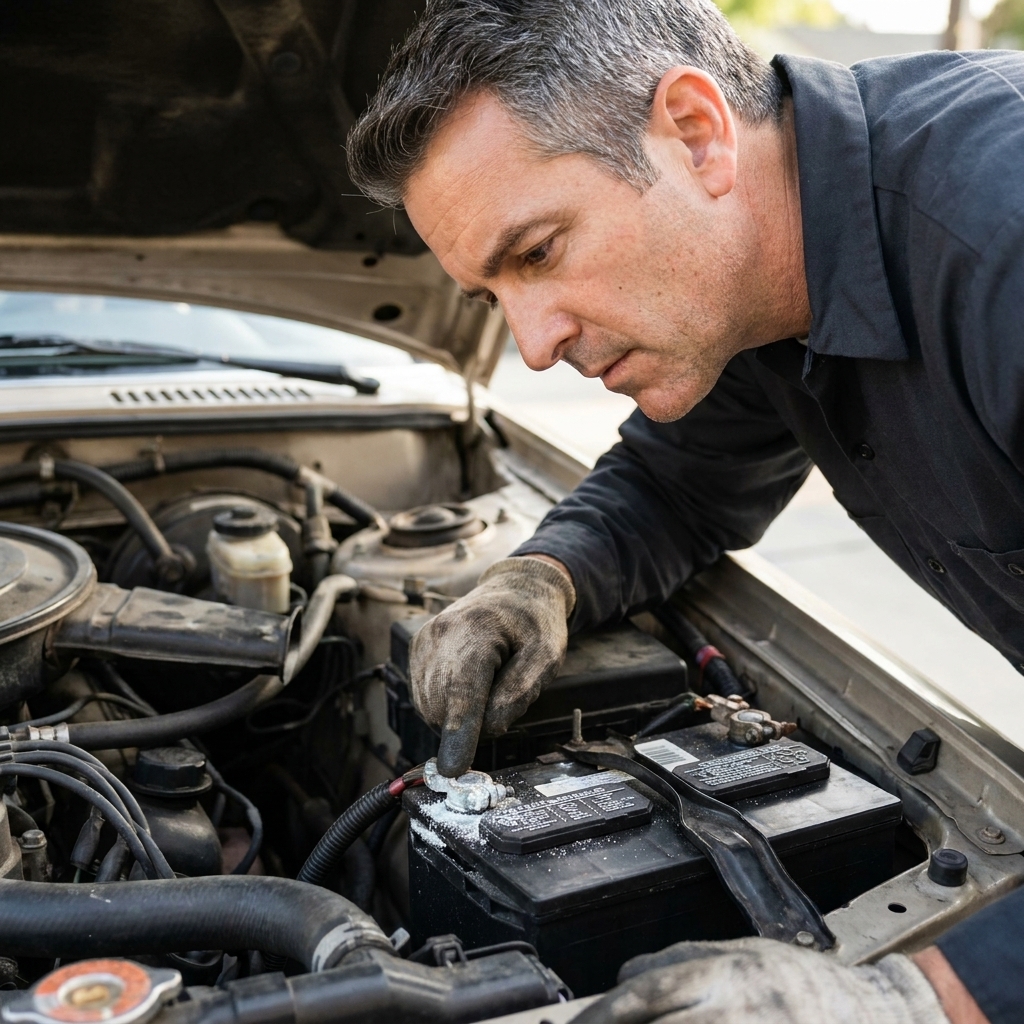
- Corrosion: White or blue fuzz on terminals can cause weak starts. Clean and tighten connections.
- Slow crank: If it sounds sluggish starting, don’t ignore it.
- Get a quick test: Most parts stores can load-test the battery and check charging output in minutes.
Lights, wipers, and visibility
Long drives mean more night miles, weather changes, and road spray. Visibility is safety.
- Replace wiper blades if they streak or chatter.
- Top off washer fluid and make sure both nozzles spray properly.
- Clean inside glass. Interior haze turns headlights into glare.
- Headlight clarity: If lenses are cloudy, a basic restoration kit can help. If bulbs are dim or one is out, replace as a pair when possible.
Heat and A/C
Comfort keeps you alert. Also, defrost performance is tied to the HVAC system.
- Confirm A/C is cold and the blower works on all speeds.
- Test defrost before you need it. Weak airflow can mean a cabin air filter packed with debris.
- Watch engine temperature on longer grades. If your temp gauge runs hotter than normal, investigate before the trip.
Filters, belts, hoses, and leaks
You don’t need to be a master tech to spot obvious issues.
- Cabin air filter: If airflow is weak or it smells funky, replace it. It’s usually a quick DIY and it helps defrost work better.
- Engine air filter: If it’s packed with dirt or leaves, replace it. A clogged filter can hurt performance and fuel economy.
- Belts: Look for cracking, fraying, or glazing. If you hear squealing on startup or with A/C on, get it checked.
- Hoses: Look for swelling, cracks, wetness near clamps, or crusty residue.
- Smells: Sweet smell can indicate coolant. Burnt oil smell can indicate leaks onto hot exhaust.
Emergency gear
You can’t control every variable on the road, but you can be ready. This is the stuff that turns an “oh no” into a minor delay.
Must-haves
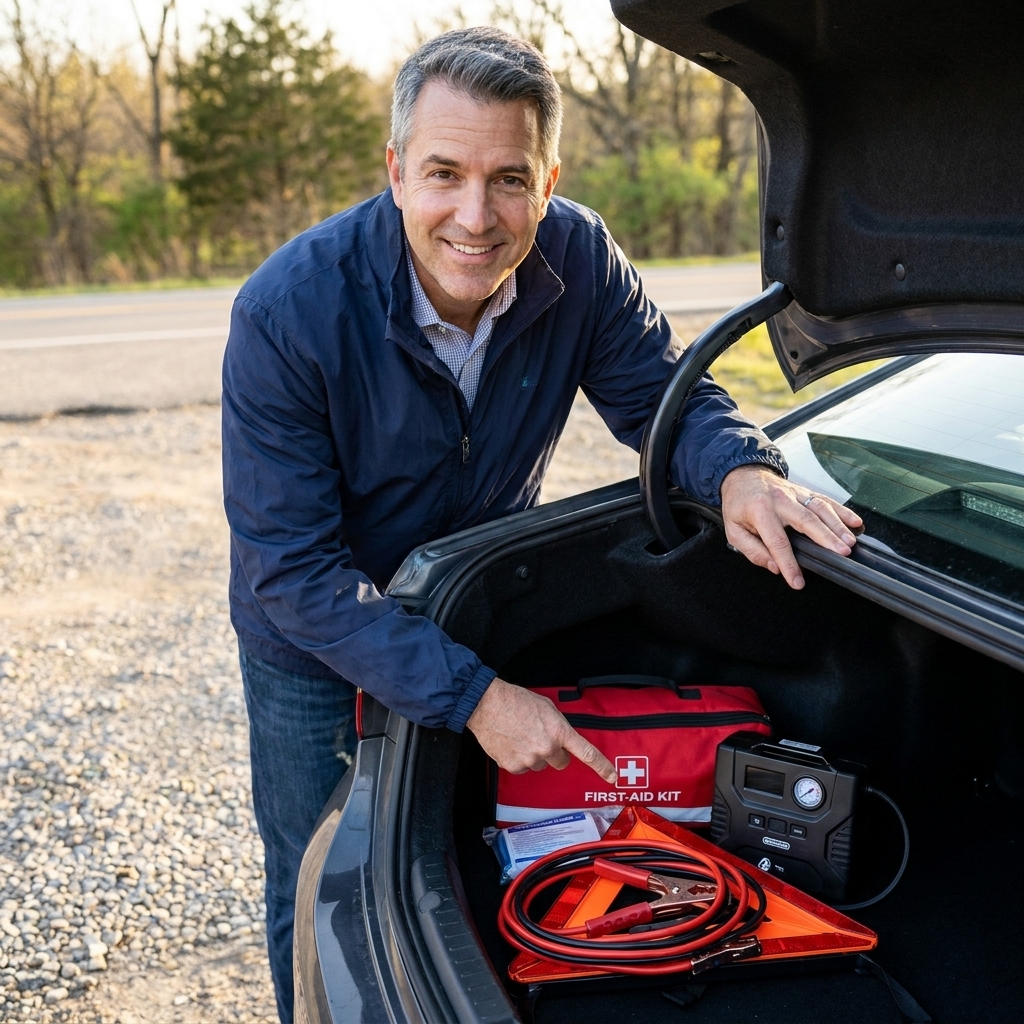
- Spare tire, jack, and lug wrench, and verify you can access them
- Test-fit your tools: Make sure the lug wrench fits your lug nuts and you have the key for any locking lugs
- Tire inflator or small compressor
- Tire plug kit (for tread punctures, not sidewall damage)
- Jumper cables or a jump pack
- Flashlight or headlamp with fresh batteries
- Reflective triangles or road flares
- Work gloves and a small rag shop towel
- Basic first-aid kit
Nice-to-haves
- Basic tool kit (pliers, screwdriver, adjustable wrench)
- Zip ties and duct tape
- Small fire extinguisher rated for automotive use
- Extra washer fluid and a quart of the correct engine oil
- Blanket and drinking water
Paperwork and digital prep
It’s not glamorous, but it matters when something goes sideways.
- Insurance and registration: Make sure they’re current and accessible.
- Roadside assistance info: Save the number in your phone and know what’s covered.
- Navigation backup: Download offline maps for low-signal areas.
- Key plan: If you have a second key, consider bringing it and storing it separately.
Towing and roof loads (if applicable)
If you’re towing or using a roof box, do a quick double-check before you roll.
- Verify ratings: Confirm hitch, ball, and trailer ratings match your load.
- Lights and brakes: Check trailer lights, and confirm your brake controller works (if equipped).
- Re-check pressures: Set tire pressures with the vehicle loaded and follow any manufacturer guidance for towing.
EV road trip prep
If you’re road-tripping in an EV, the fluids and belts list shrinks, but planning matters more.
- Check tires carefully. EVs are heavy and hard on rubber.
- Confirm charging setup: Your charging network accounts, adapters, and the portable charge cable.
- Precondition when possible before fast charging to reduce time at the charger.
- Know your range reality: Speed, headwinds, cold temps, elevation, and roof boxes can all hit range.
- Brake feel: Test friction brakes occasionally. Regenerative braking can mask sticking calipers or rusty rotors if you never use the pedal. Where it’s safe and legal, a few occasional firm stops can help keep things clean.
When to book a shop visit
If you spot any of these, don’t roll the dice.
- Check engine light that’s on steadily, or any warning light for brakes, charging, or temperature
- Coolant loss, overheating, or sweet smell under the hood
- Oil level dropping between changes, or visible leaks
- Tire bulges, repeated low pressure, or cords showing
- Brake grinding, pulling, pulsation, or a soft pedal
- Steering shake at highway speed
- Battery slow crank or frequent jump starts
If you’re leaving soon, tell the shop you’re heading out on a long trip. A good tech will prioritize road-trip reliability checks like tires, charging system, brakes, and leaks.
Printable road trip checklist
If you want a quick list to screenshot, here’s the condensed version:
- Fluids: oil, coolant, brake fluid, washer fluid, power steering (if equipped)
- Tires: pressure (including spare), tread depth, no bulges or punctures, re-check after loading
- Brakes: pedal feel, no grinding, no vibration or pulling
- Battery: strong starts, clean terminals, tested if older
- Lights: headlights, brake lights, turn signals, hazards
- Wipers: blades OK, washer spray OK
- Filters: cabin air filter and engine air filter in good shape
- Comfort: A/C cold, heat and defrost working
- Emergency gear: jack and tools fit your car, inflator, jump pack, triangles, first aid
- Paperwork: insurance, registration, roadside assistance, offline maps
FAQ
How far in advance should I check my car?
At least a week is ideal. That gives you time to order tires, schedule an alignment, or fix a leak without rushing. If you’re leaving tomorrow, do tire pressure, fluid levels, and a light check today.
Is it better to change oil before or after a road trip?
If your next oil change will come due during the trip or shortly after, do it before you leave. Fresh oil is cheap peace of mind, and you’ll start the trip at the correct level.
What tire pressure should I run?
Use the PSI listed on the driver’s door jamb sticker, set when the tires are cold. Don’t inflate to the maximum PSI on the tire sidewall unless the vehicle manufacturer specifically calls for it.
Should I rotate or balance my tires before a long drive?
If you’re due for a rotation, do it before the trip. If you feel any vibration at highway speed, get the tires balanced and inspected. Vibration can also be a bent wheel, tire defect, or suspension issue.
What’s the single most important thing to check?
If I have to pick one, it’s tires. Correct pressure and good tread help prevent blowouts, improve braking, and keep the car stable in rain. A great engine won’t help if your tires are unsafe.