A practical, step-by-step plan for handling a check engine light, including when to pull over, how to use an OBD2 scanner, and what common codes mean.
Dashboard warning lights are supposed to help you, but I get why they spike your blood pressure. Some are gentle reminders. Others are your car saying, “Stop driving me like this.” The trick is knowing which is which.
This guide breaks down the most common (and a few “what even is that?”) warning lights, what they typically mean, and what you should do next. Keep in mind: icons vary by brand, and hybrids and EVs add their own set of alerts. When in doubt, the message center and your owner’s manual are the final word on what a specific symbol means in your exact vehicle.

Start with color
Before we get into individual icons, start with the easiest shortcut: color.
- Red: Usually stop and address immediately. Continuing can be unsafe or cause expensive damage.
- Amber or yellow: Caution. Often safe to drive gently for a short time, but diagnose soon.
- Green, blue, or white: Informational. A system is on or active (high beams, cruise control, lane assist).
Color is a strong clue, but it is not universal. Some manufacturers use amber for problems that can become safety-critical quickly, and some reds mean “stop soon” rather than “stop now.” Always read any on-screen message and default to the owner’s manual if you are unsure.
Also pay attention to how the car is acting. A yellow light plus shaking, overheating, grinding noises, or a burning smell moves you into “pull over” territory fast.
Red lights: pull over
Engine oil pressure (oil can icon)
What it usually means: The engine is not building oil pressure. That can be low oil, a failed oil pump, a clogged pickup screen, or internal engine issues.
What to do:
- Pull over as soon as it is safe and shut the engine off.
- If it is safe to do so (and you are not standing in traffic), check the oil level.
- If it is low, add oil and only restart if the light goes out.
- If the level is normal or the light stays on, get it towed.
Running an engine with no oil pressure can destroy it in minutes.
Engine temperature or coolant warning (thermometer icon)
What it usually means: The engine is overheating or coolant level is critically low.
What to do:
- Turn off the A/C, turn the heat on full blast, and pull over.
- Shut the engine off.
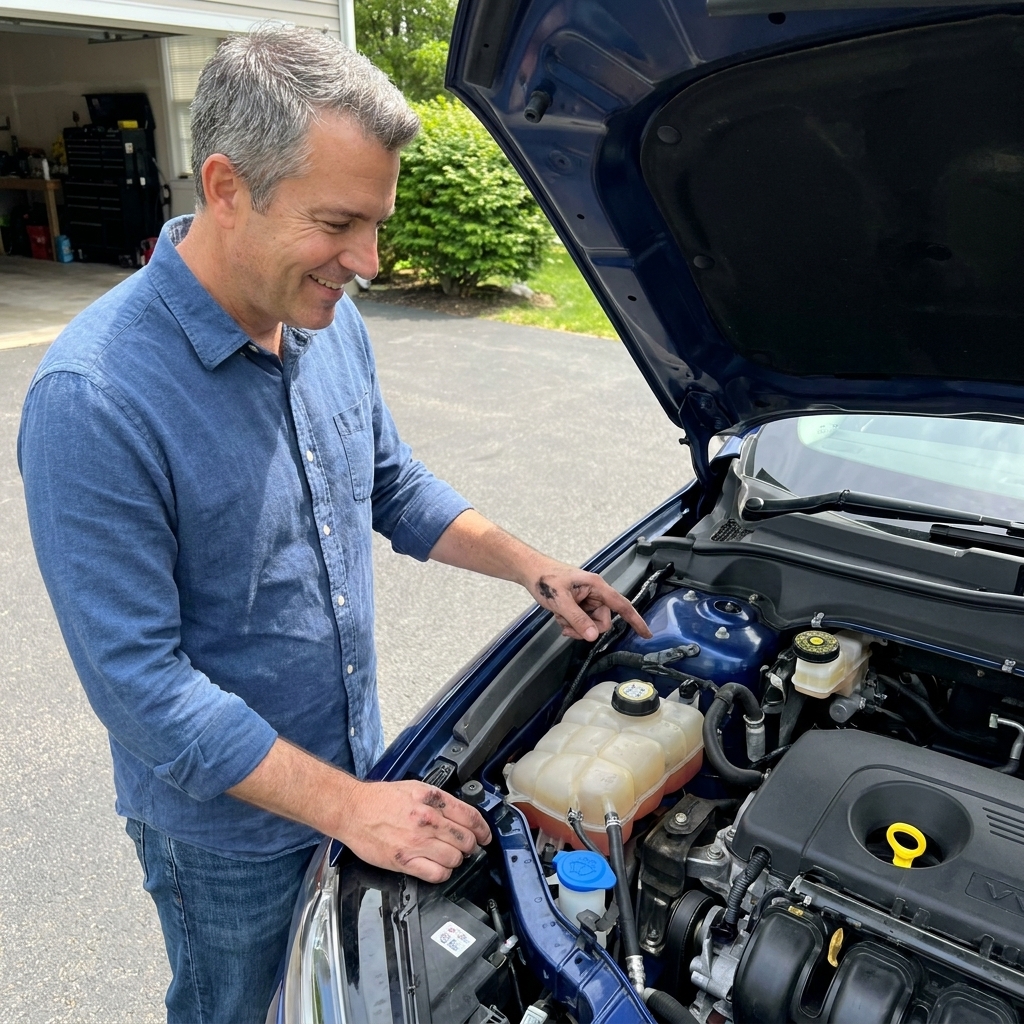
- Do not open a hot coolant reservoir or radiator cap.
- After it cools, check coolant level and look for leaks.
- If it overheats again or the temperature gauge keeps climbing, get it towed.
Brake system warning (circle with exclamation or “BRAKE”)
What it usually means: Parking brake is on, brake fluid is low, or there is a hydraulic brake system fault.
What to do: First, confirm the parking brake is fully released. If the light stays on, treat it as serious. Brake fluid may be low due to worn pads or a leak. If the pedal feels soft, sinks, or stopping distance is longer, do not drive. Get it towed.
If braking feels normal and you are close to a shop, you may be able to drive slowly, but keep plenty of distance and avoid highways.
Charging system warning (battery icon)
What it usually means: The alternator is not charging the 12-volt system, or there is a related electrical or belt drive issue. On many gas cars, that means you are running on the battery alone and will eventually stall, but how long you have can vary a lot.
What to do:
- Turn off nonessential loads (heated seats, rear defrost, high fan speed).
- Head to a safe place or repair shop.
- If you also see overheating, a dead battery warning, or other belt-related symptoms, stop and shut it down. On some engines, a failed belt can also stop the water pump.
Steering assist may or may not change depending on whether your car uses electric or belt-driven systems, so focus on the warning itself and any change in vehicle behavior.
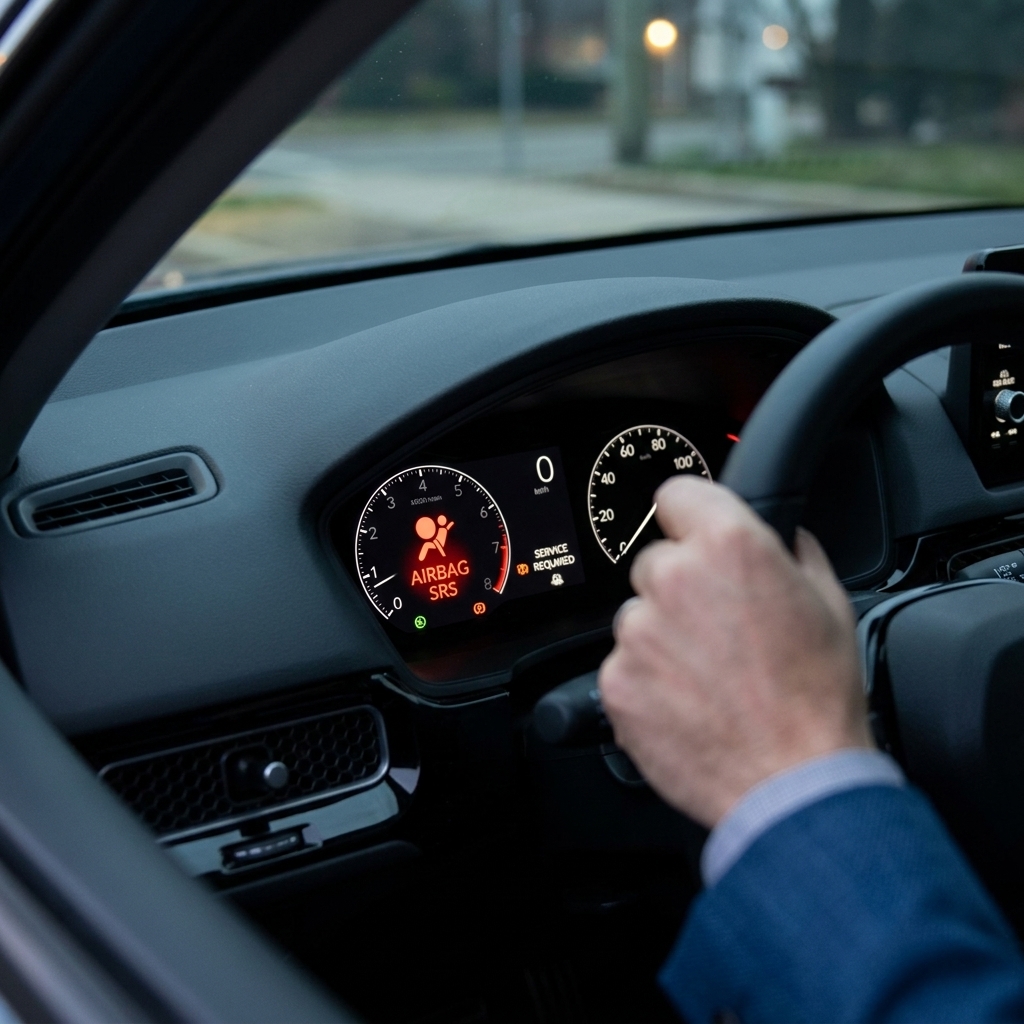
Airbag or SRS warning (person with a circle/airbag)
What it usually means: A fault in the airbag system. Airbags may not deploy as intended in a crash.
What to do: You can usually drive, but schedule service soon. If the light came on after interior work (seat removal, stereo install), it may be a connector issue, but it still needs proper diagnosis.
Yellow lights: fix soon
Check engine light (engine icon)
What it usually means: The engine computer detected a problem, ranging from a loose gas cap to a failing ignition coil or catalytic converter issue. Some dashboards say “Service engine soon” instead of “Check engine.” In most vehicles, it is the same idea: the computer wants attention.
What to do:
- Solid light, car drives normally: You can usually drive, but get the codes read soon.
- Flashing light: Stop driving if possible. A flashing check engine light often indicates a misfire that can overheat and damage the catalytic converter quickly.
Quick tip: If you just fueled up, tighten the gas cap until it clicks and see if the light clears after a few drive cycles. Do not ignore it forever, but this is a common, harmless cause.
Traction control or stability control (car with squiggly lines)
What it usually means: If it blinks while driving, the system is actively preventing wheel spin. If it stays on steady, the system may be disabled or there is a fault (often a wheel speed sensor, steering angle sensor, or brake-related issue).
What to do: If it is blinking, ease off the throttle. If it is steady, drive cautiously, especially in rain or snow, and schedule service.
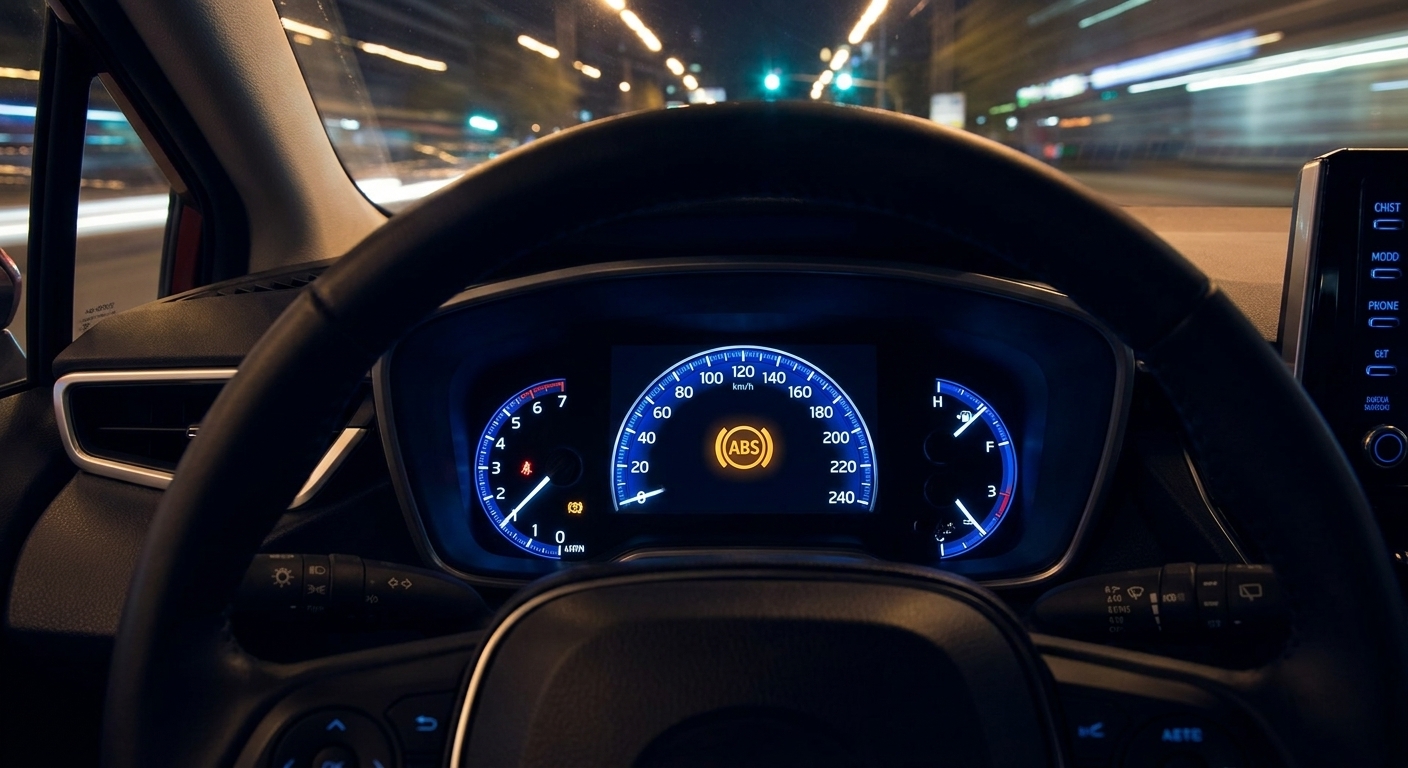
ABS warning (ABS letters)
What it usually means: Anti-lock braking is offline due to a fault. Normal braking usually still works, but ABS will not help you in a panic stop on slick pavement.
What to do: Drive normally but leave extra following distance and schedule a repair. If the red brake light is also on, treat it as urgent.
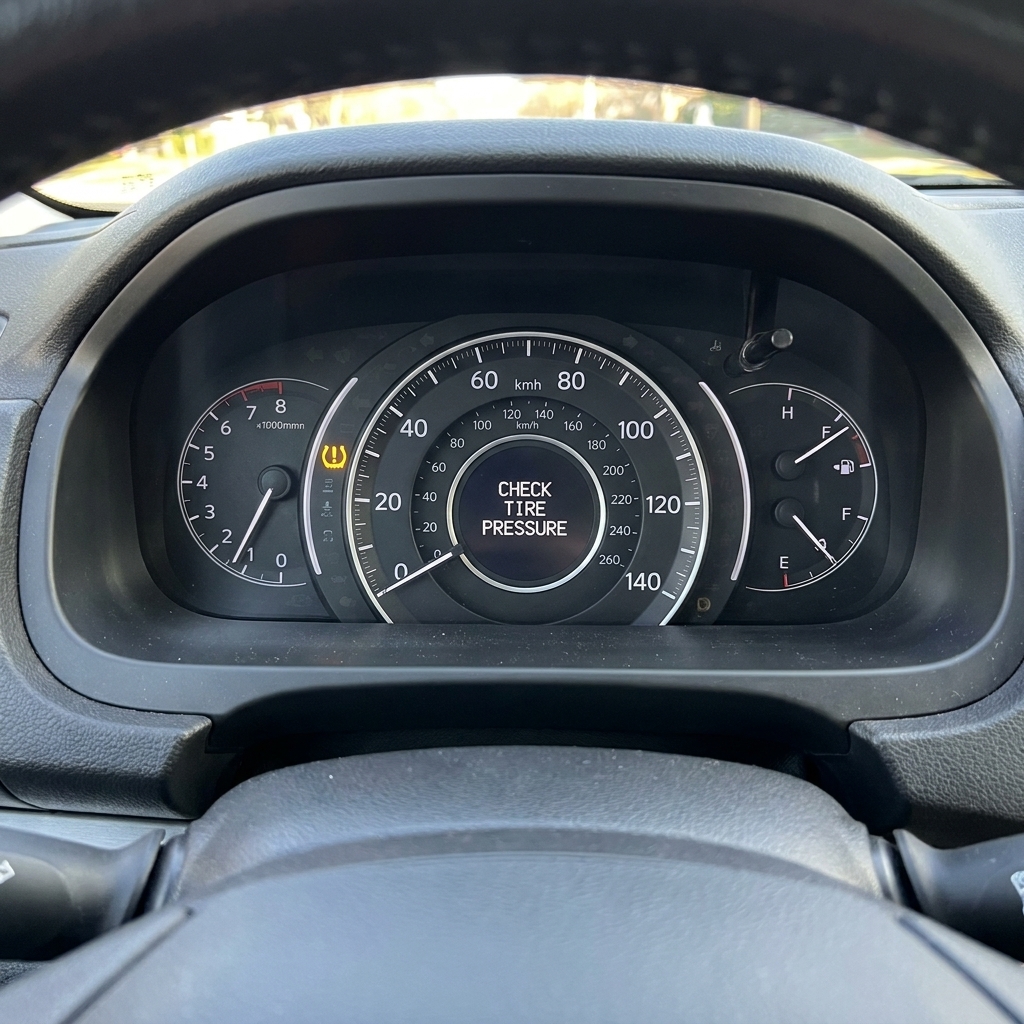
Tire pressure monitoring system (TPMS) (horseshoe with exclamation)
What it usually means: One or more tires are underinflated, or a sensor is malfunctioning.
What to do: Check tire pressures with a real gauge as soon as you can. Inflate to the pressure on the driver’s door jamb sticker, not the tire sidewall. If a tire is losing air repeatedly, you likely have a puncture.
About the spare: A few vehicles monitor the spare, but most temporary spares are not monitored.
If the TPMS light is flashing and then stays on, that often points to a sensor or system issue rather than low pressure.
Low fuel (fuel pump icon)
What it usually means: You are near reserve.
What to do: Fill up soon. Repeatedly running very low can increase fuel pump stress on some vehicles, and it can leave you vulnerable to fuel starvation on hills and turns. If your car is sputtering on turns or hills, you are really low.
Power steering warning (steering wheel icon)
What it usually means: Electric power steering fault, or low fluid on older hydraulic systems.
What to do: If steering suddenly becomes heavy, slow down and pull over. You may still be able to steer, but it can be unsafe at speed. Get it inspected before you do more driving.
Transmission temperature or gearbox warning
What it usually means: The transmission fluid is overheated, or the transmission control system has detected a serious condition. Some vehicles show a thermometer or a “TRANS TEMP” type message.
What to do: Ease off, pull over when safe, and let it cool. Avoid towing, steep grades, and stop-and-go traffic. If the warning returns quickly, or you notice slipping, burning smell, or harsh shifting, get it towed to avoid expensive damage.
Common confusing lights
Maintenance required (wrench icon)
What it usually means: A scheduled service reminder, often an oil change interval. It is not the same as a check engine light.
What to do: Check the service schedule and get the maintenance done. Afterward, reset the reminder correctly.
Brake pad wear message or indicator
What it usually means: Some cars have a dedicated pad wear sensor or message that triggers when brake pads are getting thin.
What to do: Plan a brake inspection soon. If you hear grinding, feel vibration, or braking performance changes, treat it as urgent.
Washer fluid low (windshield with spray)
What it usually means: Washer fluid level is low.
What to do: Top it off. In winter states like my home turf in Michigan, use winter blend so it does not freeze.
Fog light indicators (lamp with lines)
What it usually means: Fog lights are on. Front fog indicator is typically green, rear fog indicator often amber.
What to do: Use them appropriately. Rear fogs in particular can blind drivers behind you in clear conditions.
High beam indicator (blue headlight)
What it usually means: High beams are on.
What to do: Dim them for oncoming traffic or when following another vehicle closely.
Door, hood, or trunk ajar
What it usually means: Something is not fully latched.
What to do: Pull over and close it. A hood that is not latched can be dangerous if it flies up.
Immobilizer or security light (car with a key or padlock)
What it usually means: Normal behavior is a blinking light when the car is off. If it stays on while driving or the car will not start, the system may not recognize the key or there is a fault.
What to do: Try a spare key. Replace the key fob battery if applicable. If it still will not start, you may need dealer-level programming.
Hybrids and EV warnings
“Ready” light
What it usually means: The car is on and ready to drive, even if the engine is not running.
What to do: Nothing. Just remember how quiet these vehicles can be.
EV system warning or “Stop safely” message
What it usually means: A fault in the high-voltage system or a critical condition that needs immediate attention.
What to do: Treat any “stop safely” instruction as urgent. Pull over when safe and follow the prompts. Do not poke around orange high-voltage cables.
Regenerative braking limited
What it usually means: The battery is too cold, too full, or the system is protecting itself. You will rely more on friction brakes.
What to do: Drive normally but expect a different deceleration feel, including less one-pedal effect, until regen returns.
Can you keep driving?
If you only remember one thing, remember this triage list.
Stop driving and shut it off
- Red oil pressure light
- Red temperature/overheat light or rising temp gauge
- Red brake warning with braking changes
- Flashing check engine light, especially with shaking or loss of power
- Any warning paired with smoke, burning smell, loud knocking, or grinding
Drive gently to a safe place or shop soon
- Battery/charging light (you may not have long)
- ABS light (brakes usually work, ABS may not)
- Stability/traction light that stays on
- Check engine light that is solid and the car feels normal
- Transmission temp warning that clears after cooling (if it returns, stop)
Schedule service when convenient
- Maintenance reminder/wrench
- Washer fluid low
- Most lighting indicators and information lights
When it pops on mid-drive
- Stay calm and look for other clues. Is the engine running rough? Any odd smells? Is the temp gauge climbing?
- Scan for red lights first. Red usually beats everything else.
- Find a safe spot. A parking lot is better than the shoulder, but do not push an overheating engine to get there.
- Make it visible. Use hazard lights. If you have reflective triangles and it is safe, set them up.
- Do a quick walk-around. Look for a low tire, puddles, steam from the hood, or dragging plastic.
- Check basics only if it is safe. Tire pressure, oil level, and coolant level (only after cooling) can save a tow. If traffic makes it unsafe, skip it and call for help.
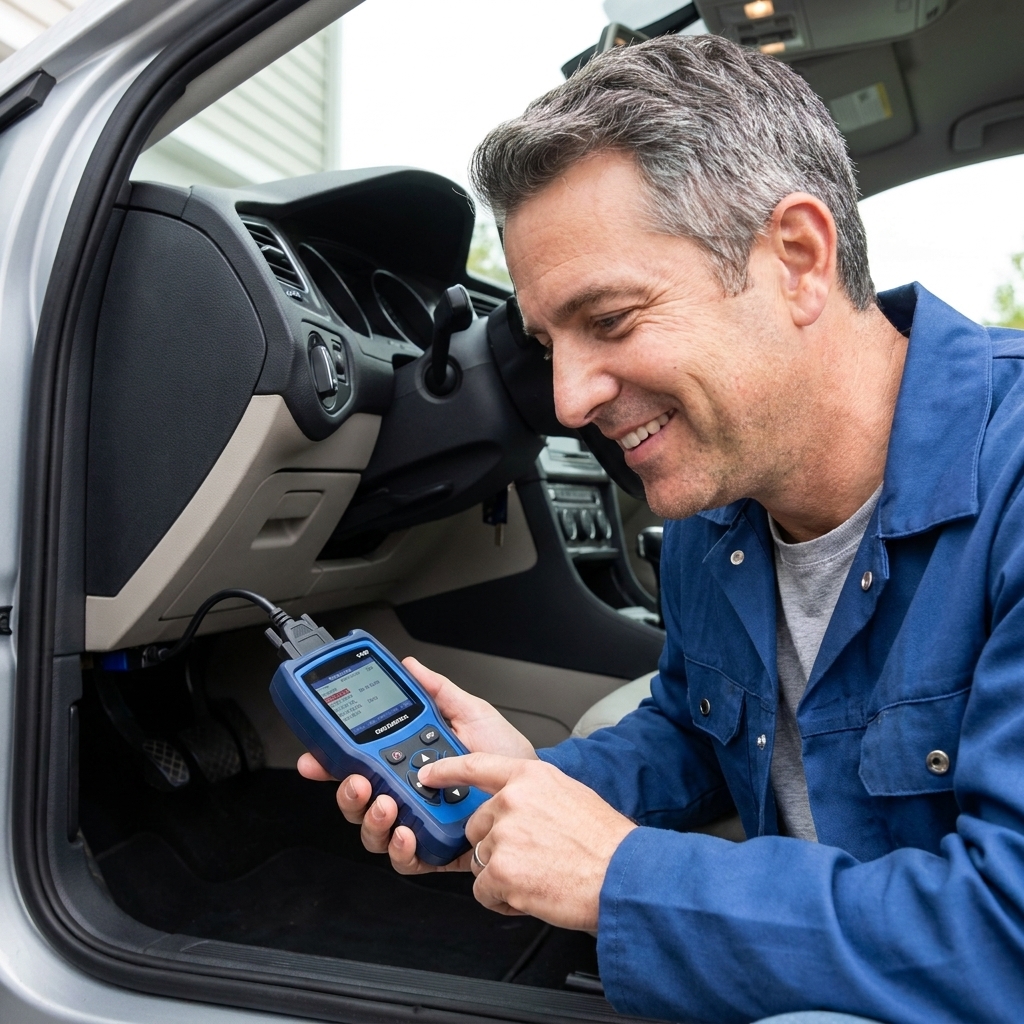
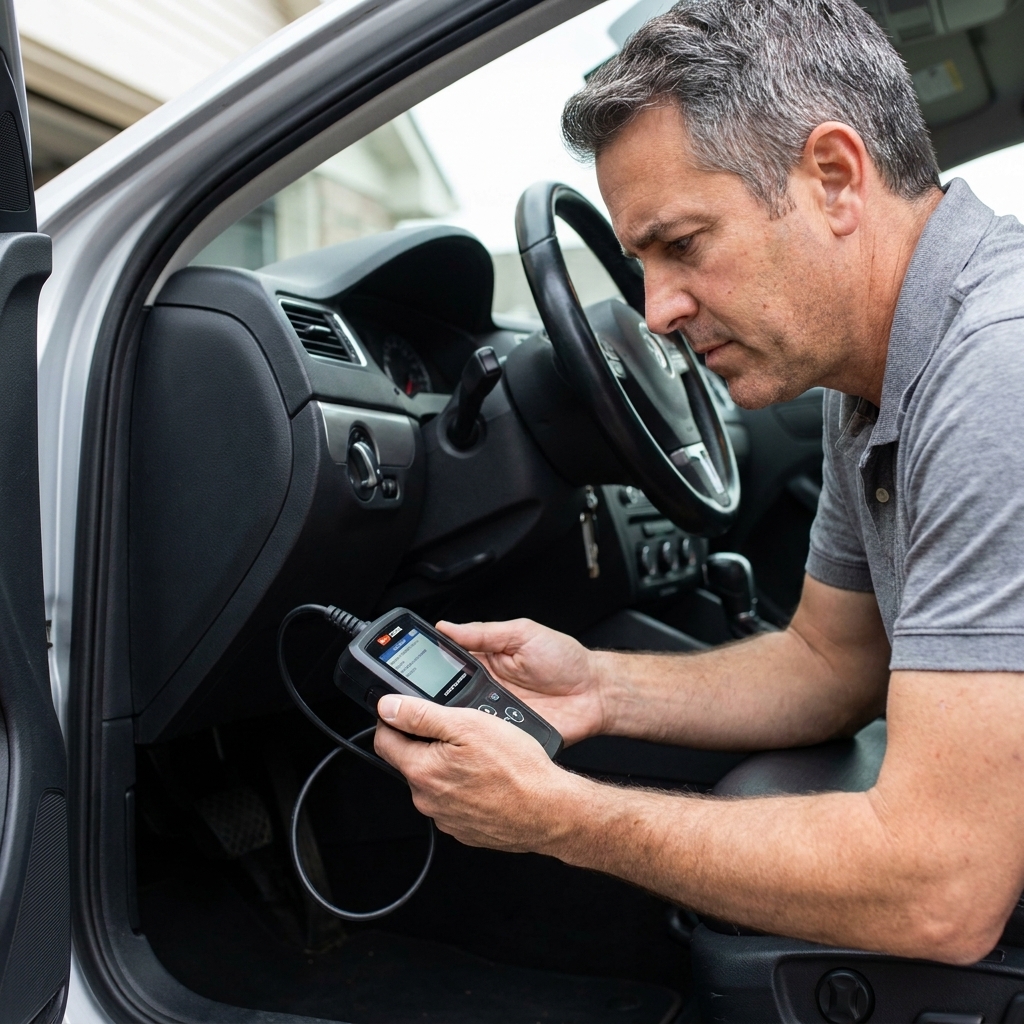
- Get the codes read. For check engine lights, a basic OBD-II code read can point you in the right direction. The code is a starting point, not a full diagnosis.
FAQ
Why did my warning light turn on and then go away?
Some faults are intermittent. A loose gas cap, a momentary misfire, or a wheel speed sensor glitch can set a light and later clear. The history code may still be stored, which is why it is worth scanning even if the light went off.
Is it safe to keep driving with the check engine light on?
If it is solid and the car drives normally, often yes for a short time. If it is flashing, or you notice shaking, power loss, or a fuel smell, stop driving and get it checked immediately.
My TPMS light is on but the tires look fine. Now what?
Use a gauge. A tire can be 8 to 10 psi low and still “look” okay. If pressures are correct and the light persists or flashes, you may have a bad sensor or the system needs recalibration.
Can I reset warning lights by disconnecting the battery?
You can clear some lights temporarily, but you are also wiping learned settings and potentially creating new headaches. More importantly, if the issue is real, the light will come back. Fix the cause first, then clear codes properly.
The bottom line
Your dashboard is not trying to ruin your day. It is giving you a heads-up before a small issue becomes a tow truck bill. Treat red lights like urgent warnings, take yellow lights seriously, and use the informational indicators as confirmation that a feature is doing what it should.
If you are ever unsure, play it safe. Pull over, look for obvious problems, and get a professional diagnosis. A good shop would much rather tell you, “You caught this early,” than deliver the opposite news.