A beginner-friendly EV guide that breaks down real-world range, charging at home and on the road, connector types, battery degradation, incentives, and the c...
Your first electric vehicle feels a little like the first smartphone did. At first, you worry about battery percentage and chargers. A few weeks later, you realize it is simpler than what you drove before, and you start wondering why you ever tolerated gas station lines and oil change reminders.
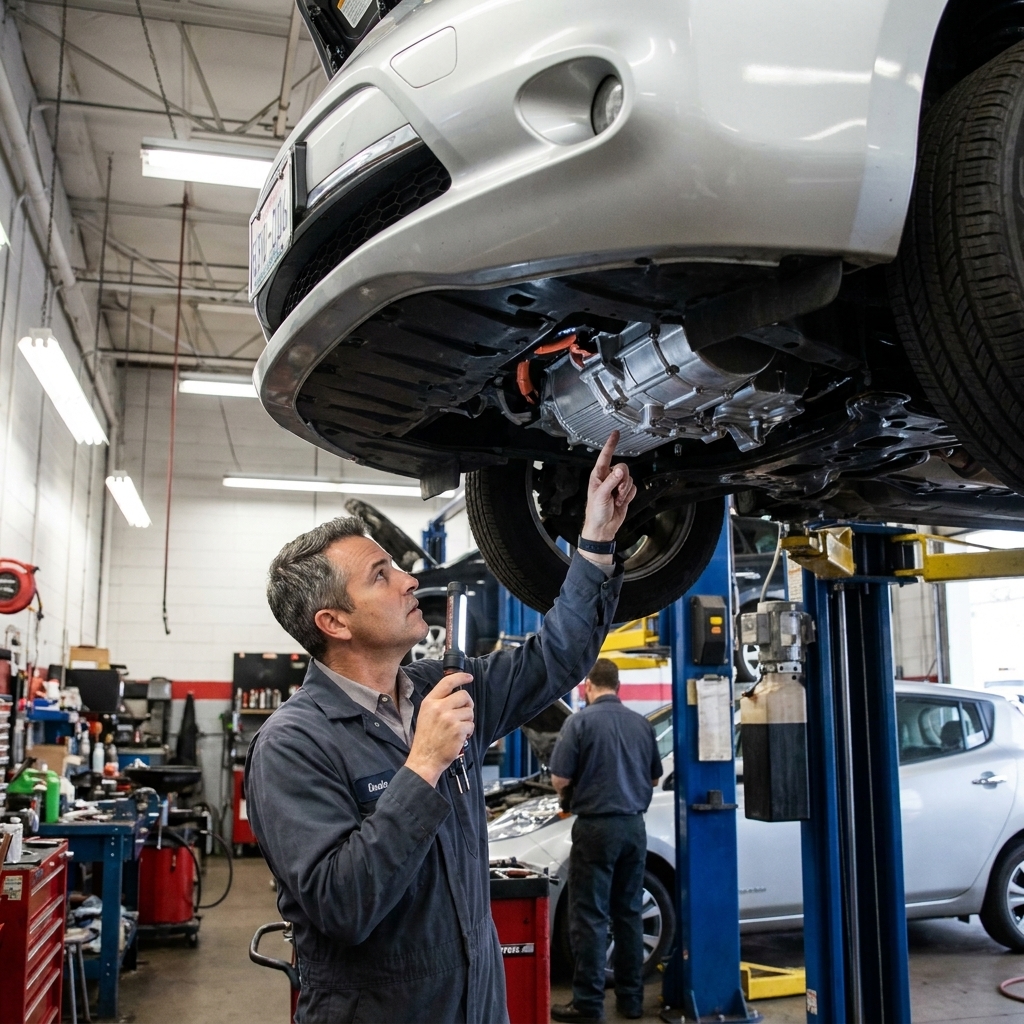
I have spent years wrenching on gas cars and helping drivers avoid expensive mistakes. EV ownership has its own learning curve, but it is mostly about three things: charging at home, treating the battery right, and building a few habits that keep range anxiety off your shoulder.
Charging basics
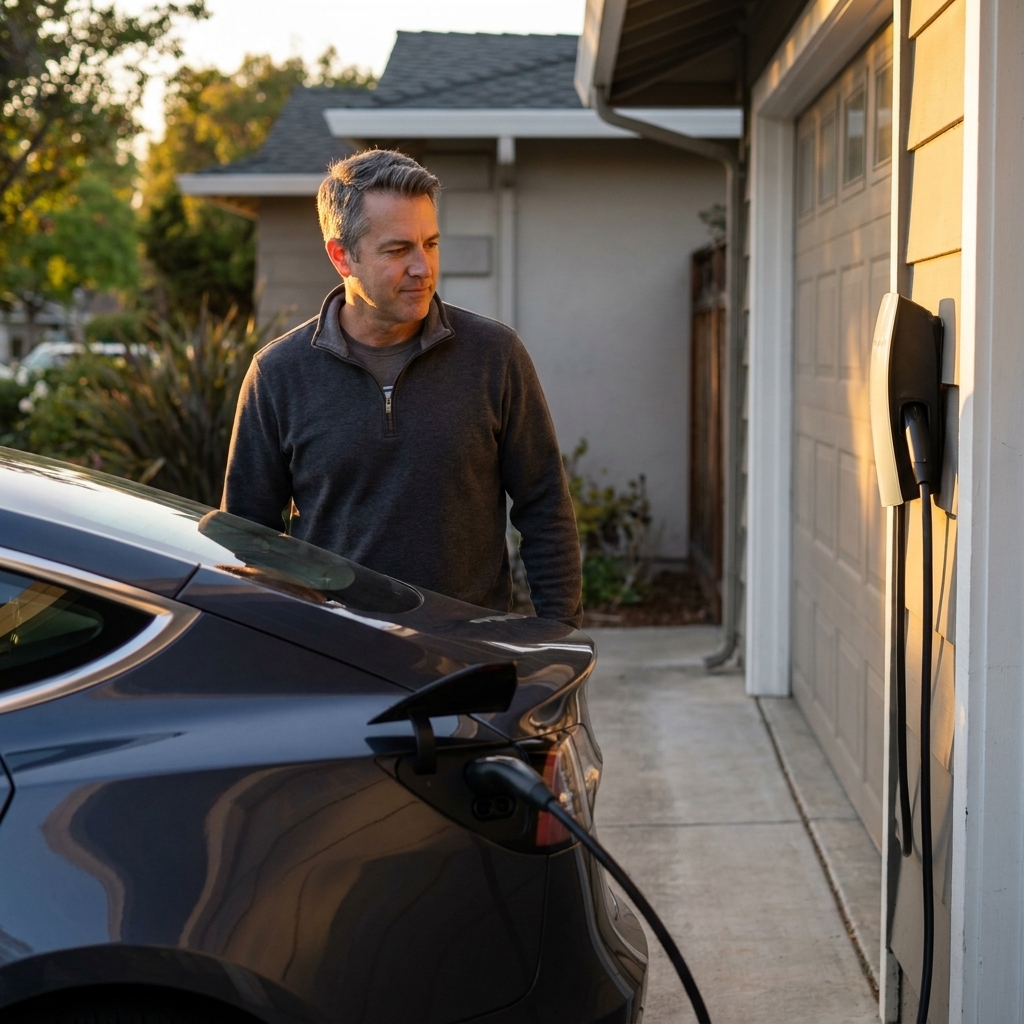
Most new EV owners get nervous about charging because it is different, not because it is difficult. The goal is to make charging boring. Boring is good.
Level 1 vs Level 2
- Level 1 (120V outlet): Uses a standard household outlet. It is slow, but it works. Many drivers see roughly 2 to 5 miles of range per hour depending on the car, the outlet, and whether the charger is running at 8A or 12A (sometimes higher on the right circuit). Great if you drive lightly, can charge overnight, or rent and cannot install equipment.
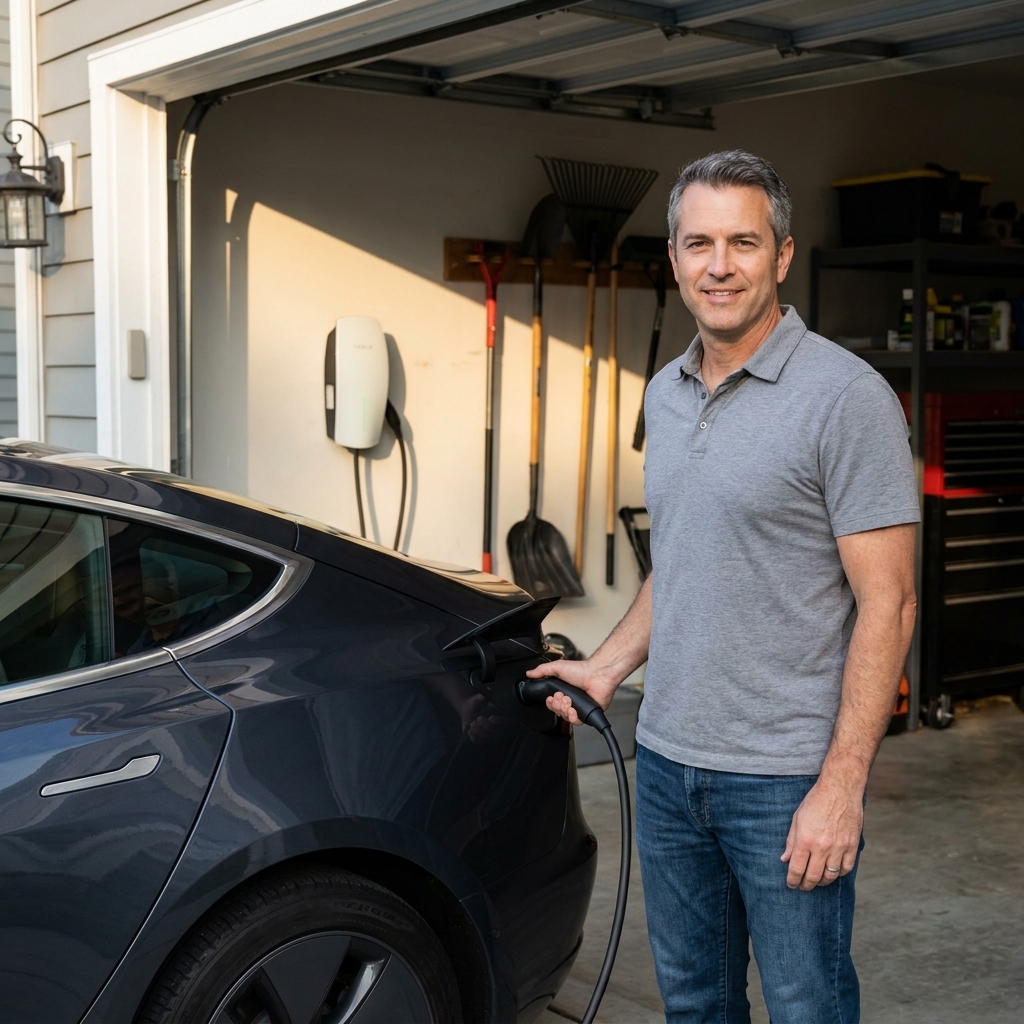
- Level 2 (240V charger): Faster home charging. A common 32A to 48A setup often adds roughly 15 to 35+ miles of range per hour, depending on EV efficiency and charger output. This is the sweet spot for most owners.
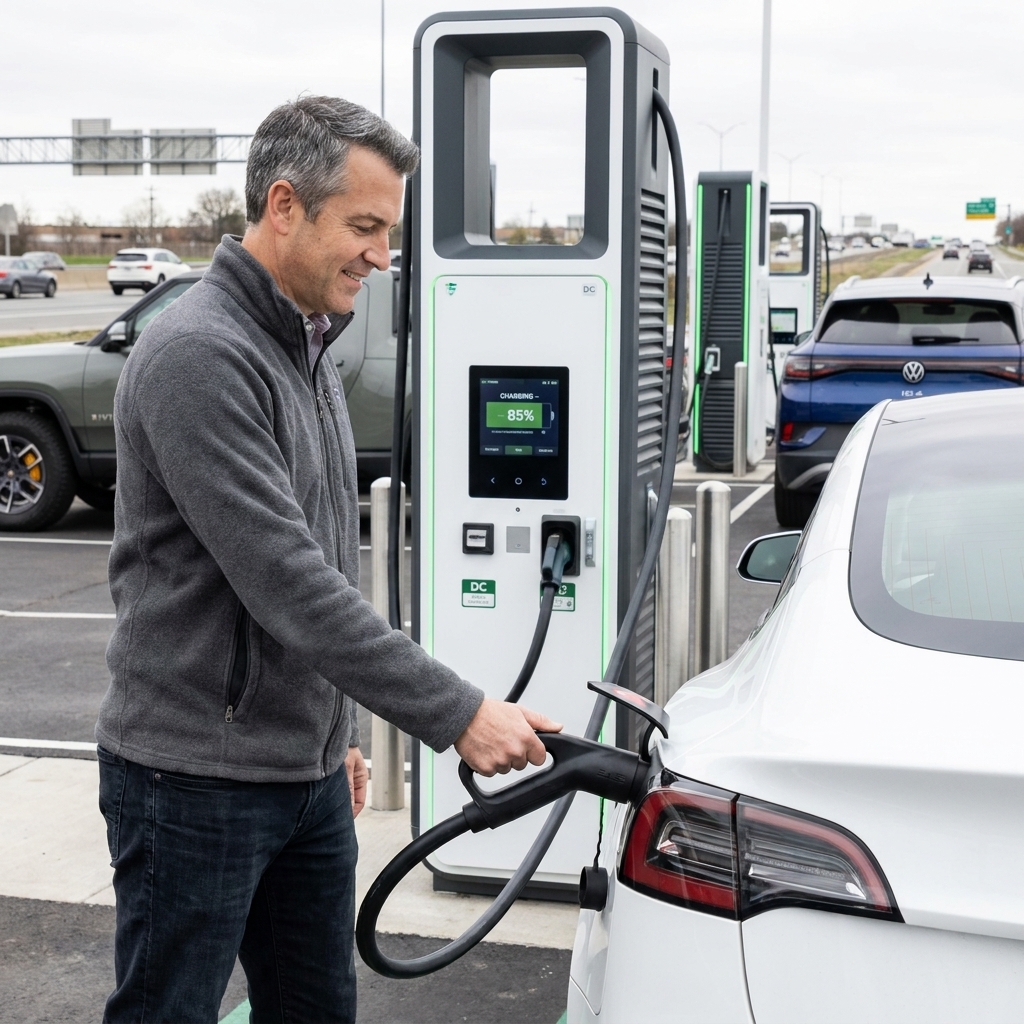
- DC fast charging (public): Road-trip tool, not a daily lifestyle. Fast, convenient, and often more expensive per mile than home charging, with exceptions (free workplace charging, promos, and some subsidized sites).
My rule of thumb: If you drive under about 30 to 40 miles a day and can plug in nightly, Level 1 can be enough. If you want your EV to feel effortless, Level 2 at home is the upgrade that delivers.
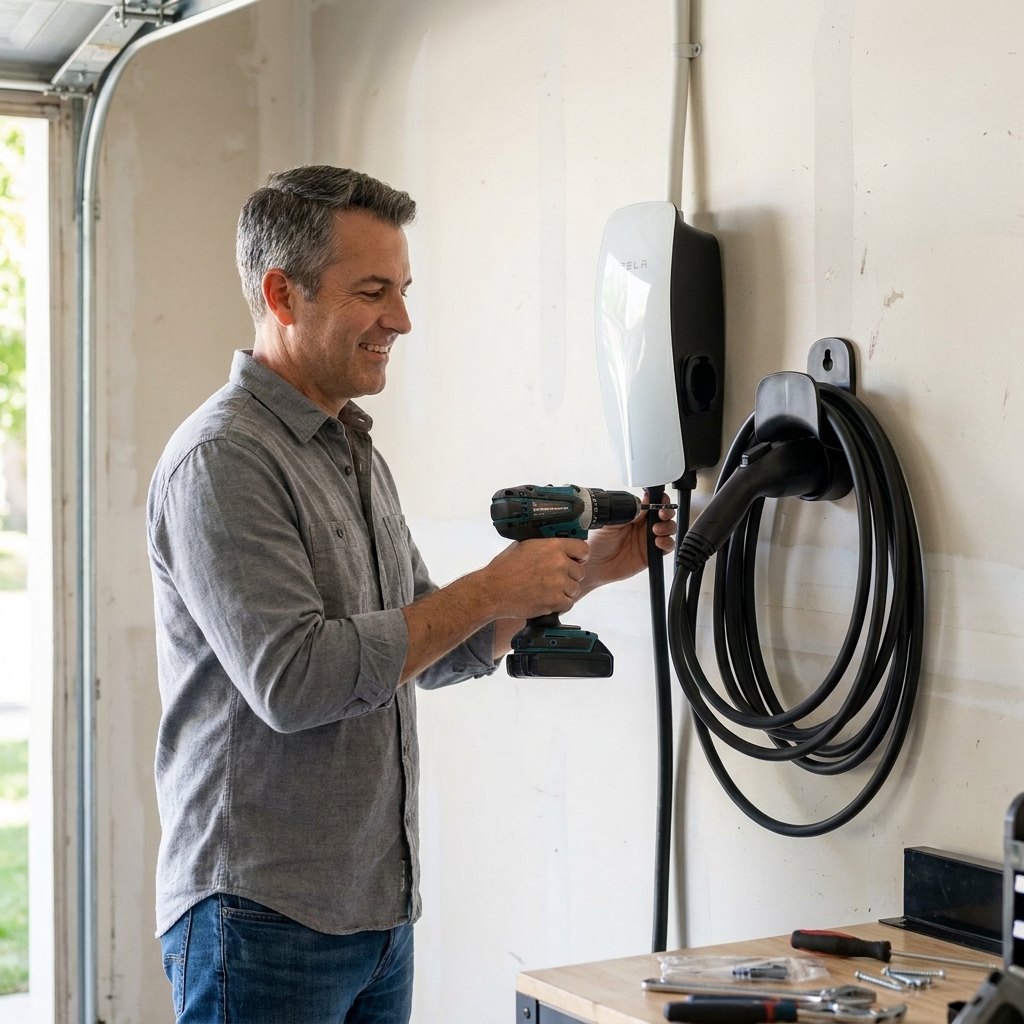
Home Level 2 setup
If you are installing home charging, treat it like a major appliance circuit. Proper breaker sizing, correct wire gauge, clean connections, and code compliance matter because EV charging is a high, continuous load for hours.
- Check your panel capacity: Many homes can handle a 40A or 50A circuit, but not all. Older homes with 100A service may be tight, especially with electric dryers, ranges, hot tubs, or heat pumps. A licensed electrician can do a load calculation.
- Remember the continuous load rule: EV charging is typically treated as a continuous load, so circuit sizing follows the 80 percent guideline (for example, a 40A circuit for a 32A charger, a 50A circuit for a 40A charger).
- Decide plug-in vs hardwired: Hardwired can be more robust and can support higher continuous output. Plug-in is flexible if you ever move.
- Use a quality outlet if you plug in: Cheap receptacles can overheat under long charging sessions. A high-quality receptacle and correct installation torque make a difference.
- Pick the right amperage: More is not always better. A 32A to 40A setup is plenty for most commutes and overnight charging.
- Mount location matters: Put the unit where the cable reaches your charge port without stretching across a walkway.
- Weather rating: Outdoor install needs a unit rated for it, plus proper conduit and a weatherproof approach.
Money tip: Some utilities offer rebates for Level 2 chargers or installation, especially if you enroll in off-peak charging programs.
Charging like a pro
Charge when power is cheapest
If your utility has time-of-use rates, off-peak hours can dramatically reduce your cost per mile. Many EVs let you schedule charging in the car settings or in the manufacturer app, so you plug in now but the car waits to start charging later.
- Set a charging schedule for overnight off-peak hours.
- Precondition the cabin (heat or cool) while still plugged in so you use wall power, not battery power, to get comfortable.
Do the math once
If you want a simple cost estimate, here is the mechanic-style version: your electricity price per kWh times your EV's kWh per mile.
- If power costs $0.15 per kWh and your EV averages 0.30 kWh per mile, that is about $0.045 per mile.
Your car may show this as kWh/100 miles or miles/kWh. Either way, you can convert it and get a realistic number fast.
Know what 80 percent means
You will hear this a lot: keep it around 80 percent for daily driving. Here is the practical version:
- For daily use: Set a charge limit around 70 to 80 percent if your EV allows it.
- For road trips: Charge to 90 to 100 percent when you need the extra buffer, then drive soon after.
- For long-term parking: Aim around 40 to 60 percent if the car will sit for weeks.
The reason is simple: most lithium-ion batteries are happiest when they are not kept at the extremes (very full or very empty) for long periods.
Important exception: Some EVs use LFP batteries (lithium iron phosphate). Many manufacturers recommend charging LFP packs to 100 percent regularly (often weekly) for calibration and accurate range estimates. Follow your owner manual first, then build your habit around that.
Public charging made easier
Public charging is where first-time owners get frustrated. A few habits make it smoother.
- Load apps ahead of time: Create accounts, add payment methods, and save your preferred stations before you need them in a hurry.
- Filter for reliability: In charging apps, sort by recent check-ins or station status when possible.
- Arrive with a warm battery when fast charging: Many EVs charge faster when the battery is warm. Use the car navigation to route to the fast charger so the car can precondition the battery if it supports that feature.
- Do not chase 100 percent on a fast charger: Charging slows down near the top. On trips, it is often quicker to charge from about 10 to 60 or 70 percent and keep rolling.
Connectors and adapters
This is changing fast, and it is worth understanding the basics before your first road trip.
- J1772: Common for Level 2 public charging (non-Tesla), and many EVs include or can use an adapter depending on the inlet.
- NACS: Tesla's connector, now adopted by many automakers. Access to Tesla Superchargers depends on your vehicle, software approval, and sometimes an adapter.
- CCS: A common DC fast charging connector for many non-Tesla EVs, especially older models.
Bottom line: know what port your car has, keep the right adapter in the trunk if you need one, and verify which networks you can actually use before you depend on them.
Battery life habits
EV batteries are built to last, and most owners will not need a battery replacement during typical ownership. But your daily habits can influence how well the pack holds range over the years.
Use a daily charge limit
If your EV lets you set a max charge, use it. It is one of the simplest ways to reduce battery stress with zero lifestyle penalty. If your manual calls out an LFP routine, follow that guidance instead of generic internet rules.
Avoid letting it sit full or empty
It is fine to charge to full for a trip. The part to avoid is charging to 100 percent and letting the car sit that way for days, especially in heat. Same story on the low end: do not make a habit of parking it near empty for days.
Heat is the enemy
Hot weather is harder on batteries than cold weather. If you live in a hot climate:
- Park in shade or a garage when you can.
- Use scheduled charging so it finishes closer to departure time.
- Pre-cool the cabin while plugged in.
Fast charging is fine in moderation
DC fast charging is not "bad" in the way internet comments make it sound. It is simply higher stress than slower charging. If most of your charging is at home or work and you fast charge mainly on trips, you are using the system as intended.
Maintenance basics
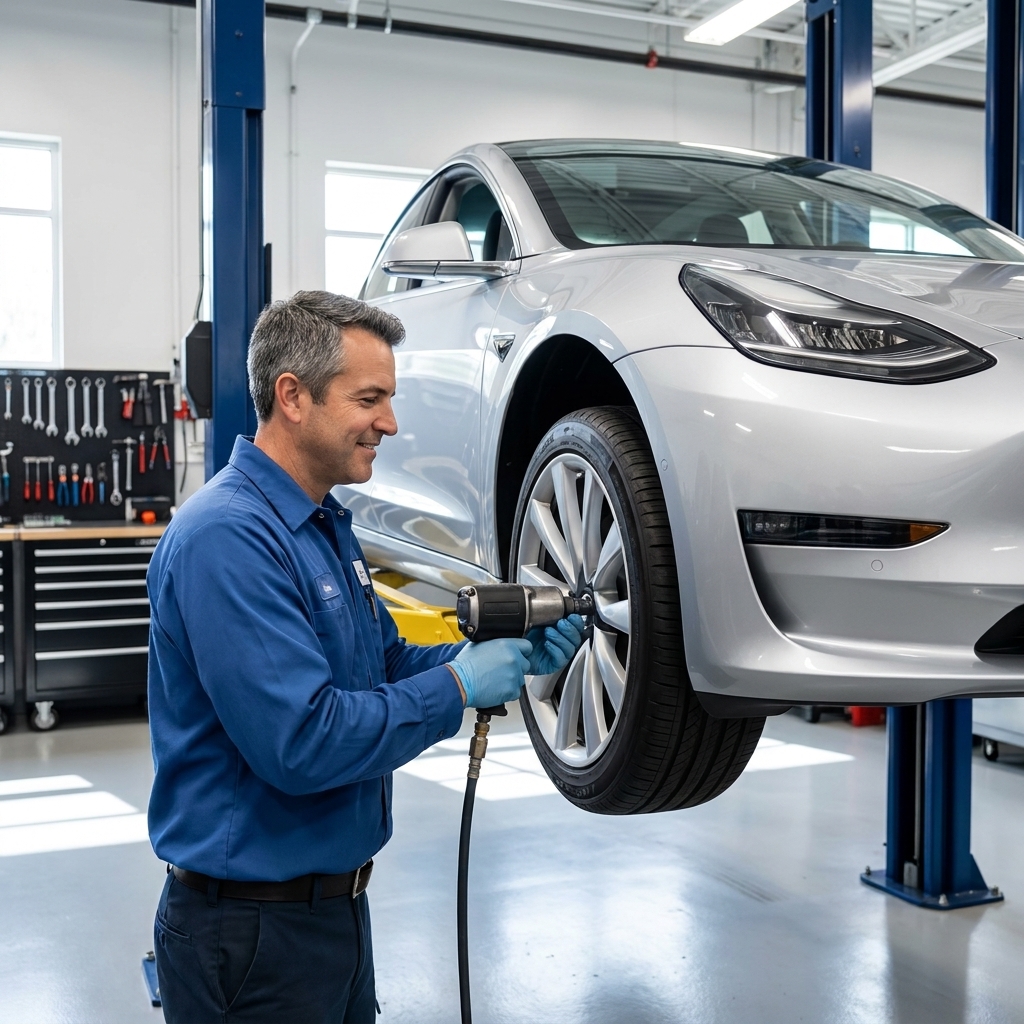
This is the part I love explaining to first-time EV owners: your car still needs maintenance, but the list is shorter and the big-ticket routine stuff is mostly gone.
What you can stop doing
- Oil changes
- Spark plugs
- Timing belts
- Most engine-related leaks and gaskets
- Traditional automatic transmission service (many EVs use simpler gear reduction units)
What still matters
- Tires: EVs are heavy and have instant torque. Expect faster tire wear if you drive hard. Keep pressures correct and rotate on schedule.
- Brakes: Regenerative braking often means brake pads last a long time, but brakes can rust from lack of use in salty or wet climates. When conditions are safe, periodically use the brake pedal deliberately so the friction brakes do real work.
- Cabin air filter: Easy, overlooked, and it affects HVAC performance and smell.
- Coolant: Many EVs have coolant loops for battery and power electronics. It is not the same as an engine cooling system, but it still has service intervals.
- Brake fluid: Still absorbs moisture over time. Follow the maintenance schedule.
- Suspension wear: Weight and torque can be harder on bushings and links, especially on rough roads.
Mechanic tip: Stick to the factory maintenance schedule and do not let a shop upsell you into gas-car services your EV does not even have. If a service writer mentions fuel injection cleaning on an EV, that is your cue to smile and leave.
Daily driving tips
One-pedal driving
Many EVs offer strong regenerative braking when you lift off the accelerator. It can feel strange for the first day. Give yourself a week, and you will likely love it.
- Practice smooth lift-offs to avoid jerky stops.
- In slippery conditions, use a gentler regen mode if your car offers it.
- Remember that brake light behavior varies by model. Keep extra following distance until you understand how your car signals deceleration.
Precondition before you leave
Heating and cooling can take a meaningful bite out of range, especially in winter. Preconditioning while plugged in is one of the best "free range" tricks. If your EV supports battery preconditioning, that can help winter efficiency and fast-charging speed too.
Use seat heaters
Seat and steering wheel heaters use less energy than heating the entire cabin. In cold weather, they are the move.
Stop chasing the highest range number
Just like EPA mpg ratings on gas cars, rated EV range is a baseline, not a promise. Wind, speed, temperature, tires, and elevation change the math. The hack is to drive the car you have in the conditions you have, then learn what your real-world range looks like.
Range anxiety
Range anxiety is normal at first. You are rewiring a decade of habits built around gas stations on every corner. Here is how to make it fade quickly.
Build your home routine
Most EV owners charge at home most of the time. Once you experience the rhythm of plugging in like you plug in a phone, the anxiety drops.
Use the 20 to 70 window
You do not need to live at 100 percent. For daily driving, a comfortable operating window is often about 20 to 60 or 70 percent, depending on your commute. That gives you buffer without babying the car. If you have an LFP pack and your manufacturer wants regular 100 percent charges, you can still keep a comfortable window most days and do the 100 percent charge on the schedule your manual recommends.
Plan trips around stops
On trips, I plan charging like bathroom breaks.
- Start the day near your chosen limit, maybe 90 or 100 percent if you need it.
- Drive, stop when it is convenient and the battery is low enough to charge fast.
- Charge to the next comfortable hop, usually not to full.
Know the range killers
- High speed: 75 to 80 mph can noticeably reduce range versus 65 to 70 mph.
- Cold temps: Batteries and cabins both demand more energy in winter. Short trips can be the worst because the car spends the whole drive warming things up.
- Headwinds and rain: More drag, more rolling resistance, less range.
- Roof racks and cargo boxes: Convenient, but they can dent efficiency.

Quick FAQ
Is it bad to charge every night?
No. Frequent topping up is normal. If your EV supports it, set a daily charge limit around 70 to 80 percent and plug in whenever it is convenient. If you have an LFP battery and your manual recommends regular 100 percent charges, follow that routine.
Should I install Level 2 right away?
If your daily driving is light and you can charge overnight, try Level 1 for a couple weeks first. If you find yourself thinking about charging too often, Level 2 is worth it.
How often do EVs need service?
Less often than gas cars, but not never. Tires, cabin filters, brake fluid, and coolant checks still matter. Follow the factory schedule.
Will fast charging ruin my battery?
Occasional fast charging is fine. If most charging happens at home or work and fast charging is mainly for road trips, you are using the system as intended.
The mindset shift
The biggest "aha" moment for first-time EV owners is realizing the car does not need trips to get energy. It gets energy while it is already sitting still. Dial in home charging, set a realistic daily limit (based on your battery type and your manual), and learn what your EV does in your weather and commute. After that, EV ownership gets wonderfully boring, and that is exactly the point.