A driver’s guide to OBD2 scanners, code types, freeze frame data, and the most common check engine light codes, plus what you can safely check at home.
Most drivers do not get burned because a shop is “bad.” They get burned because they approve work they do not fully understand. A repair estimate is supposed to be the translation layer between what your car is doing and what it will cost to make it right. If the estimate is vague, inconsistent, or missing key details, you are not being set up to make a confident decision.
I spent years on the service counter writing estimates and years in the bay working off them. Once you know what each line item is trying to say, you can spot the difference between a legitimate recommendation and a padded ticket pretty quickly.
What a good estimate should include
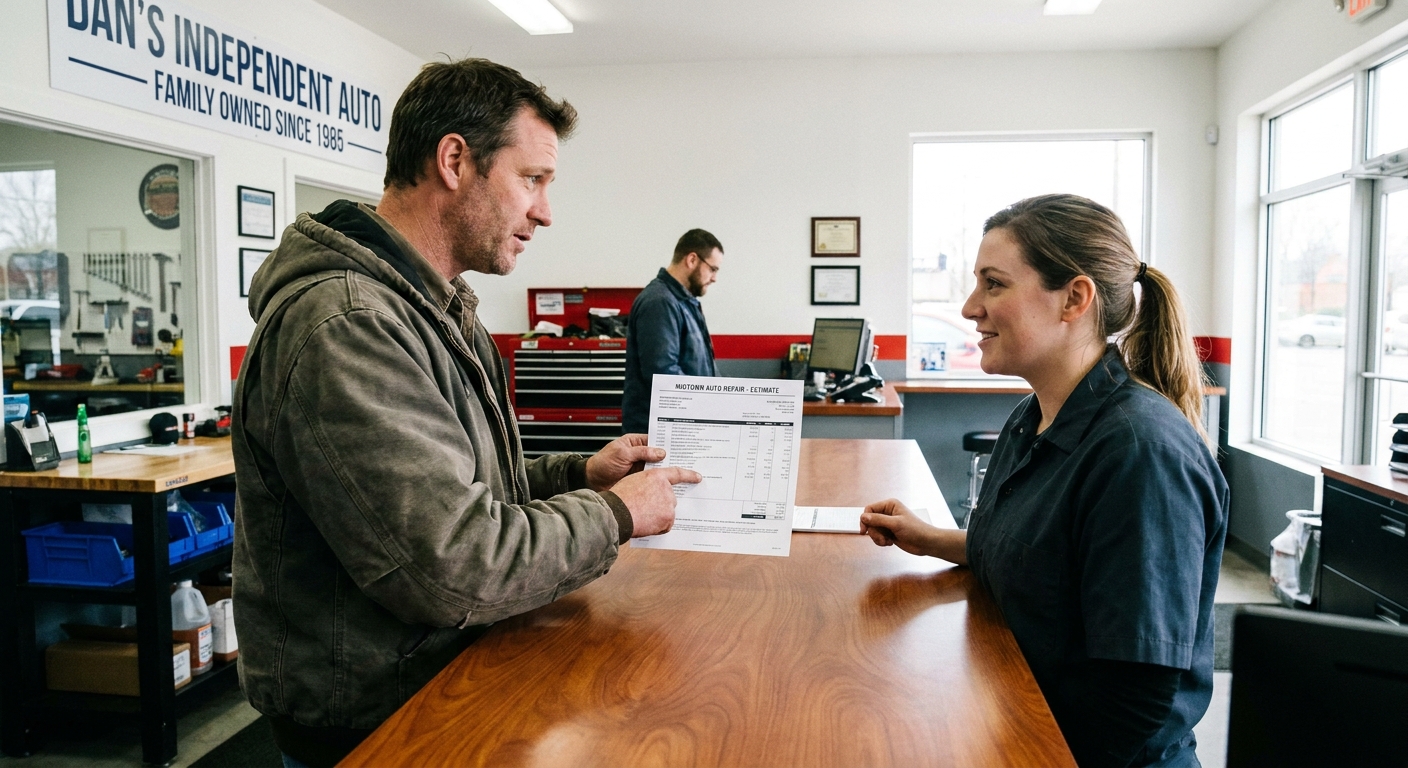
A solid repair estimate is specific enough that another competent shop could understand what is being authorized. At minimum, look for:
- Customer concern (why you came in)
- Vehicle info (year, make, model, VIN or plate, mileage)
- Diagnosis notes (what was tested or inspected and what was found)
- Line items with parts, labor hours, and labor rate
- Fees (diagnostic, shop supplies, hazardous waste, disposal)
- Taxes (rules vary by state; parts are commonly taxed and labor may be taxed in some states)
- Warranties on parts and labor
- Authorization language and a not-to-exceed limit or a clear total
If the estimate is missing the labor hours, uses vague language like “repair issue,” or lumps everything into one big number with no detail, pause and ask for clarification before you approve anything.
An annotated fictional estimate
Here is a realistic example of how a mid-size sedan estimate might read. The numbers are fictional, but the structure is the same style I saw every day.

| Line | Description | Parts | Labor | Ext. |
|---|---|---|---|---|
| 1 | Diagnostic: Check engine light ON. Perform scan, smoke test, verify repair. | $0.00 | 1.0 hr @ $145/hr | $145.00 |
| 2 | Replace EVAP purge valve (confirmed stuck open). Clear codes and road test. | $86.00 | 0.8 hr @ $145/hr | $202.00 |
| 3 | Shop supplies (rags, cleaners, small hardware) 7% of labor (cap $35). | $0.00 | $18.27 | $18.27 |
| 4 | Hazardous waste and disposal fee | $0.00 | $6.00 | $6.00 |
| Subtotal | $371.27 | |||
| Sales tax (parts only) | $6.88 | |||
| Total estimate | $378.15 |
Line 1: Diagnostic charges
Diagnosis is not “plugging in a scanner.” A real diagnostic line should hint at process: scan data, tests performed, inspection steps, and confirmation after repair. If it just says “diagnose” with no context, ask: What tests are included in that fee? and Will any of that diagnostic charge be credited toward the repair?
Line 2: Parts, labor hours, labor rate
This is where most estimates either earn your trust or lose it.
- Parts price is often “retail,” which can be higher than online pricing because it includes sourcing, warranty handling, and shop overhead. The key is whether the part is clearly identified. “Purge valve” is specific. “Emissions part” is not.
- Labor hours are the billed time, not always the clock time. Many shops use a labor guide (standard time) so the price is predictable, but some shops charge actual time, and others use menu pricing that bundles steps together. The estimate should still explain how they are billing.
- Labor rate should be stated plainly. Rates vary by region and by shop type. The red flag is a rate that changes line to line without explanation.
Also watch for double-charging. Example: if a line includes “clear codes and road test,” you should not also see a separate line for “clear codes” unless something unusual is going on.
Line 3: Shop supplies
Many shops charge a small percentage of labor for consumables: cleaners, rags, zip ties, little hoses and clamps, and the random stuff that gets used but is hard to itemize. Two important checks:
- It should be capped (a maximum) or otherwise reasonable.
- It should not be used as a “mystery padding” line that is huge compared to the job size.
Line 4: Disposal and environmental fees
These fees can be legitimate depending on what is being disposed (fluids, filters, contaminated materials). Some states also regulate how these fees must be disclosed. If the repair does not involve fluids or waste, it is fair to ask why the fee applies.
Tax, subtotal, total
Make sure the math is clean and that tax is being applied the way your state requires. Rules are state-specific and can be nuanced (some places tax certain services, supplies, or fees). If you are comparing two estimates, confirm they are both treating tax the same way before you judge the totals.
Urgent vs “do soon”
Shops often mix true safety or drivability issues with items that are simply maintenance planning. That is not automatically shady. The problem is when everything is presented with the same level of urgency.
Three buckets
- Stop-driving safety issues: brake hydraulic leaks, severe overheating, fuel leaks, steering components at risk of failure.
- Reliability and damage-prevention: misfires that can damage a catalytic converter, coolant leaks that can lead to overheating, a worn serpentine belt that could leave you stranded.
- Optional or timing-based maintenance: services that improve longevity or performance but are not tied to a current symptom.
Ask the shop to label each recommendation as urgent, soon, or monitor. A professional shop should be comfortable prioritizing instead of pressure-selling.
The simplest question
“What happens if I wait 30 days?” If the answer is a real consequence (unsafe, likely breakdown, expensive collateral damage), that is urgency. If the answer is fuzzy, it is probably a planning item.
Comparing quotes
Two estimates can look different and still be pricing the same repair. Or they can look similar and be pricing totally different scopes of work. Here is how to compare them apples-to-apples.
Match the job
- Confirm the exact repair target: “Replace EVAP purge valve” is specific. “Fix EVAP leak” might include multiple parts or additional testing.
- Confirm what is included: gaskets, seals, fluids, programming, calibrations, road test, and post-repair verification.
- Confirm parts type: OEM (dealer), aftermarket, rebuilt or remanufactured. “Quality part” is not a part type.
Watch scope differences
If one shop’s estimate is cheaper, it may be because it does not include something the other shop did include, like:
- Post-repair scan and readiness monitors check
- Alignment after suspension or steering work
- Fluids and disposal fees
- Required recalibration for driver-assist systems after windshield, bumper, or sensor work
Use labor hours as a check
Labor rates vary, but labor hours should usually be in the same neighborhood for the same job on the same vehicle. If Shop A quotes 1.0 hour and Shop B quotes 4.5 hours for the same straightforward repair, ask why. There are legitimate answers sometimes, but you deserve to hear them.
Dealer vs independent vs chain
Do not be surprised if estimates look totally different depending on where you go. Dealers may use labor matrices and OEM parts by default. Chains often use menu pricing and packaged services. Independents vary widely and may give the most itemized breakdown. Different format is not automatically a red flag. Missing details is.
Ask for evidence
You do not need to “catch” anyone. You just need enough proof to be comfortable spending your money.
Good evidence to request
- Photos or video of the failed part, leak, torn bushing, or broken connector
- Stored trouble codes and freeze-frame data summary (at least the code numbers and descriptions)
- Measurements where applicable (brake pad thickness, battery test printout, tire tread depth)
- Test results (smoke test findings, fuel pressure readings, cooling system pressure test result)
A reputable shop will usually have no problem walking you through what they found. If they cannot show you anything and cannot explain the failure mode in plain language, that is a sign to slow down.
Ask for the old parts
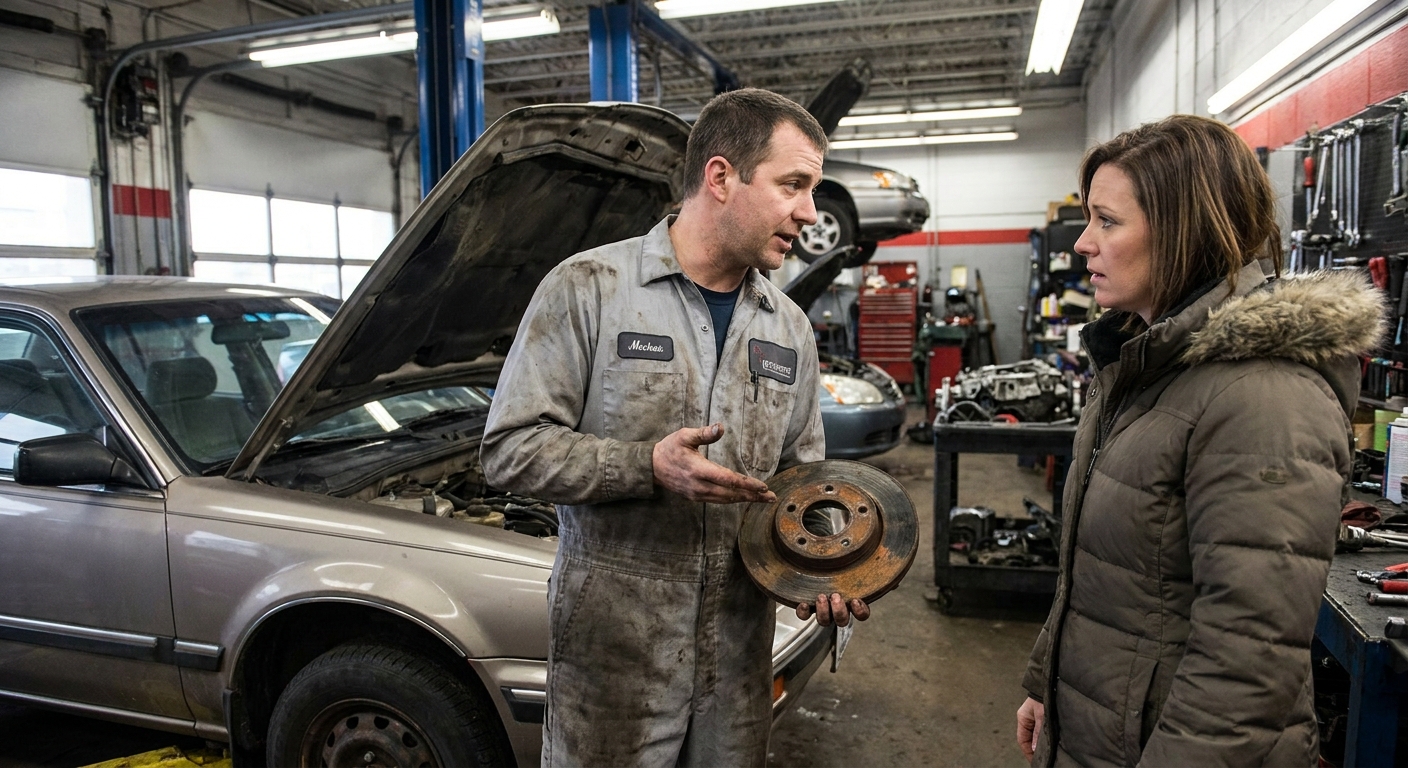
If you want extra peace of mind, ask: “Can you save the old parts for me?” Some warranty cores must be returned, and some parts are messy. Also, laws and shop policies vary. If this matters to you, ask up front so there are no surprises at pickup.
Warranties
A warranty is part of the value of the estimate, not an afterthought. Look for:
- Length and mileage (example: 24 months / 24,000 miles)
- What is covered (parts, labor, both)
- Conditions (proof of maintenance, exclusions for overheating, contamination, misuse)
- Where it is honored (that shop only, nationwide network, parts manufacturer only)
If the estimate is silent on warranty, ask before you authorize. A straightforward answer should be simple and direct, not a sales speech.
Authorization limits
This is the line I wish every driver would take seriously. A good shop will ask you to authorize work up to a certain amount, then call if anything changes. If they do not bring it up, you should.
Set a call-first limit
Use plain language and make it specific. For example:
- “You are authorized up to $400 total. Call me before you go over that for any reason.”
- “Do not add any additional diagnostic time without calling me first.”
- “If you find related issues, send photos and a revised estimate before proceeding.”
Estimate vs quote
Many shops provide an estimate, not a guaranteed price, especially when teardown could reveal additional damage. That is normal. What you want is a clear agreement about when you get called and what happens if the scope changes.
Extra diagnostic time happens
Intermittent faults, rust, seized fasteners, aftermarket wiring, and “it only does it sometimes” problems can turn a simple plan into more testing. That does not automatically mean you are being milked. It does mean you should insist on an updated estimate and a new authorization before more time is added.
Estimate vs invoice
An estimate is the plan and the projected cost. The invoice is the final bill and should reflect what was actually installed and actually billed. When you pick up the car, do a quick review:
- Do the parts and labor lines match what you authorized?
- Are there new fees or extra labor hours? If yes, is there a clear explanation and documented approval?
- Does the invoice show the warranty terms or reference the shop’s written warranty?
If the total changed, the shop should be able to tell you exactly what changed in the scope and when you approved it (phone call, text, signed update).
Common red flags
- Vague lines like “repair engine,” “service vehicle,” or “fix noise” with no parts list or labor hours.
- Bundled mystery packages where you cannot see what parts and labor you are paying for.
- Diagnostic fee plus repeated diagnostic hours on multiple lines without explanation.
- Parts listed with no brand or type on big-ticket items (alternators, CV axles, catalytic converters, modules).
- Sudden add-ons after you decline work that feel punitive (ask for itemization).
- Pressure language like “you have to decide right now,” especially for non-safety items.
Quick script
If you want a simple checklist you can read off the phone, here you go:
- “Can you explain the cause, not just the symptom?”
- “What tests did you do to confirm it?”
- “Is this urgent, soon, or monitor?”
- “What exactly is included in this line item?”
- “What warranty comes with the repair?”
- “Please note: call me before going over $___ total.”
FAQ
Is the diagnostic fee separate from the repair?
Often, yes. Diagnosis is paid time and skill. Some shops apply part of the diagnostic charge toward the repair if you approve the work. Ask whether that credit applies and get it reflected on the estimate.
Why does one estimate list more labor hours than another for the same repair?
It could be different labor guide times, different included steps (for example, programming, calibration, post-repair verification), or a different interpretation of the underlying problem. The right move is to ask each shop what is included, then compare.
What are “shop supplies,” and can I refuse them?
Shop supplies typically cover small consumables used across many jobs. Policies vary, and some states have disclosure rules. You can ask how the fee is calculated and whether it is capped. If it looks excessive for the size of the job, push for an explanation.
Should the estimate show part numbers?
Not always, but it should at least identify the part clearly and indicate OEM versus aftermarket when that matters. If it is a high-cost part, asking for the brand and warranty details is reasonable.
What does “estimate subject to change” mean?
It usually means the shop might find additional issues after teardown or further testing. That is not automatically a problem. Your protection is a clear authorization limit and a promise to call before any additional cost is added. Written authorization requirements vary by state, so it is smart to get approvals documented by text or email when possible.