A practical, mechanic-written guide to the car fixes you can confidently do at home and the repairs that can turn dangerous or expensive fast.
Some of the best money you can save as a driver comes from doing the small stuff yourself. Some of the worst money you can lose comes from getting brave at the wrong time.
I turned wrenches for years in independent shops, and I can tell you this: most people do not need to become a mechanic. You just need a clean line between routine maintenance you can handle and repairs where a lift, specialty tools, and experience keep you safe.
The quick rule: risk, cost, and consequences
If you only remember one decision check, use this:
- Risk: Could this job crush you, burn you, shock you, or expose you to hazardous dust or fluid?
- Cost: Will one mistake destroy an expensive part (or your whole engine or battery pack)?
- Consequences: If you do it slightly wrong, could you lose steering, braking, or a wheel at highway speed?
If the answer is yes to any of those, it belongs in a professional bay. If the answer is no and you can follow steps carefully, DIY is usually fair game.
Beginner DIY that makes sense
These are the jobs I recommend for most drivers who want to learn. They have a good payoff, low risk when done correctly, and they teach you how your car behaves.
Check and top off fluids (the right way)
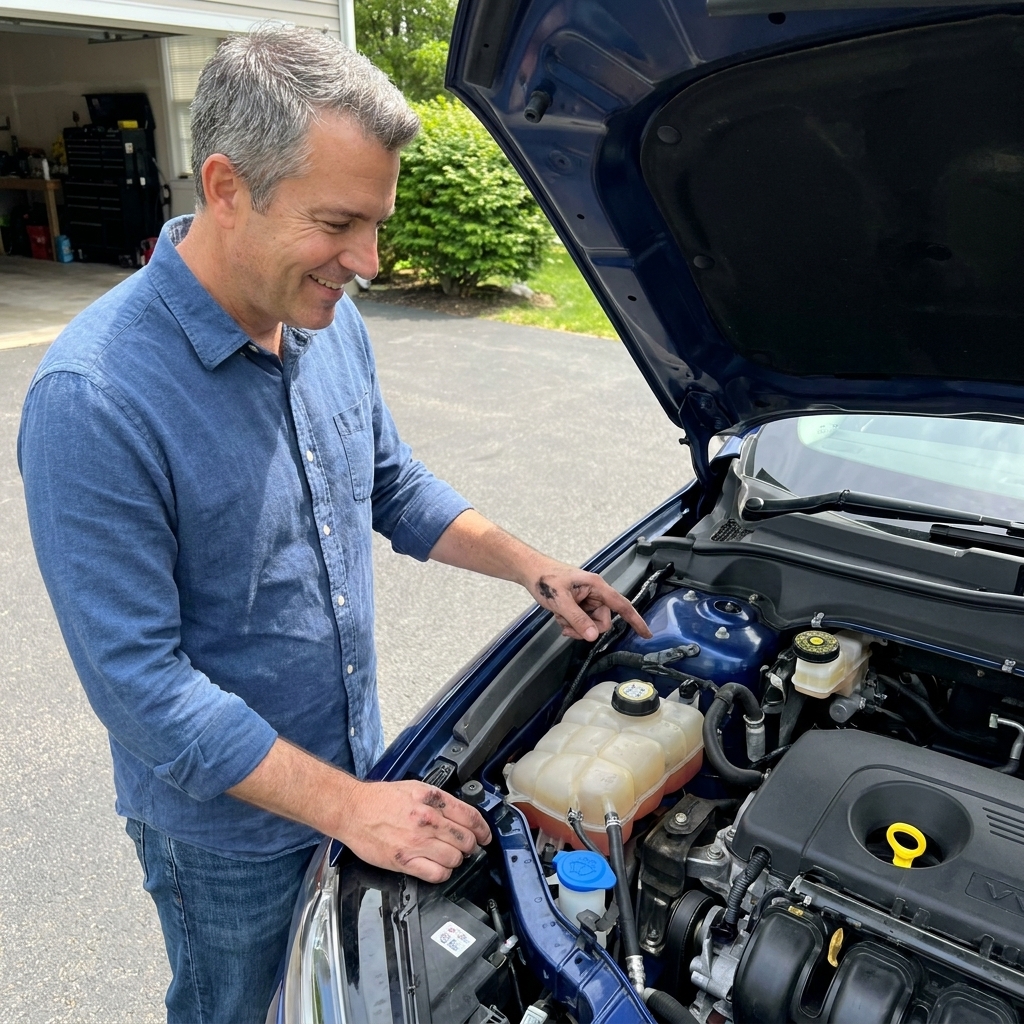
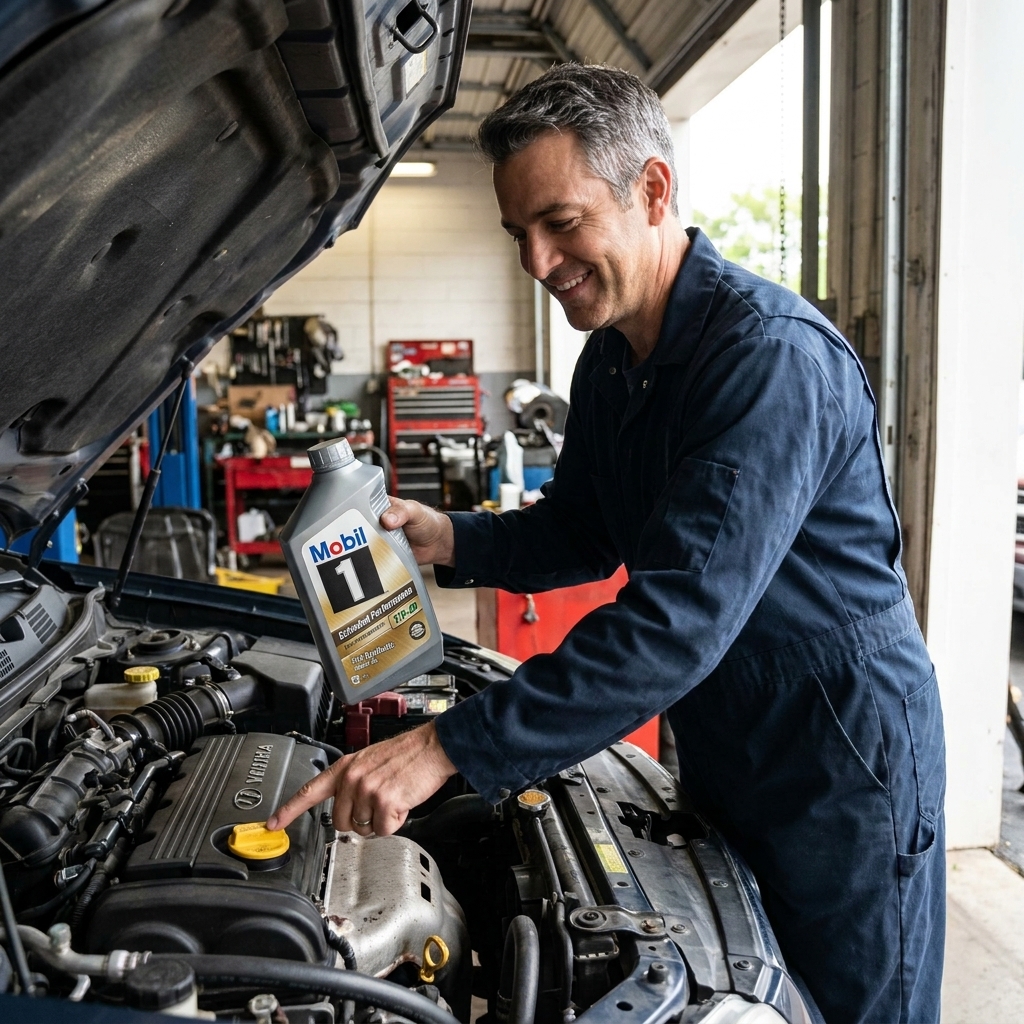
- Engine oil: Check on level ground. Follow your owner’s manual for hot vs. cold checking. Add small amounts and recheck.
- Coolant: Only open the system when it is cool. Never open a hot radiator cap. Use the correct coolant type.
- Washer fluid: Easy win, especially in winter.
- Brake fluid and power steering fluid: Checking is fine. If you’re low, that is often a leak, so treat topping off as a temporary move, not a fix.
DIY line: topping off is fine. Diagnosis and leaks are where a shop earns its keep.
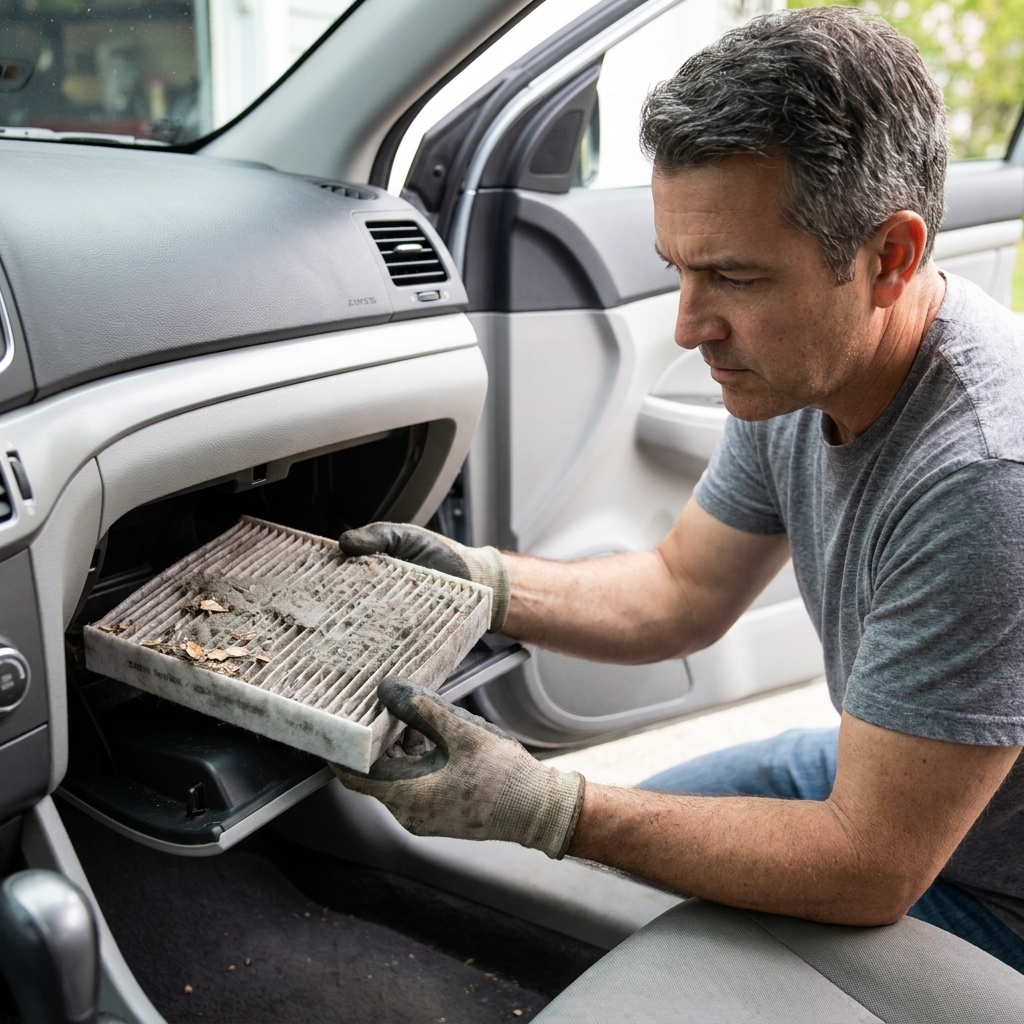
Replace the engine air filter and cabin air filter
Two of the highest confidence DIY jobs on most vehicles. The engine air filter is usually a few clips. The cabin air filter is often behind the glovebox.
Tip: If the cabin filter is packed with leaves, you may also want the shop to check the cowl drains. A clogged drain can cause wet carpets and electrical issues.
Wiper blades, bulbs, and simple fuses
Wiper blades are a classic “don’t overthink it” job. For bulbs, modern cars can be easy or maddening depending on access. If you have to remove the bumper or headlight assembly, that crosses into “maybe pay someone.”
Fuses are fine if you match the amperage exactly and you know what circuit you’re working on. If a fuse keeps blowing, stop and get the fault diagnosed.
Tire pressure, tread checks, and rotations (sometimes)
At-home tire pressure checks are non-negotiable. Do it monthly and before road trips. A simple tread depth gauge is cheap, but even the old penny test beats guessing.
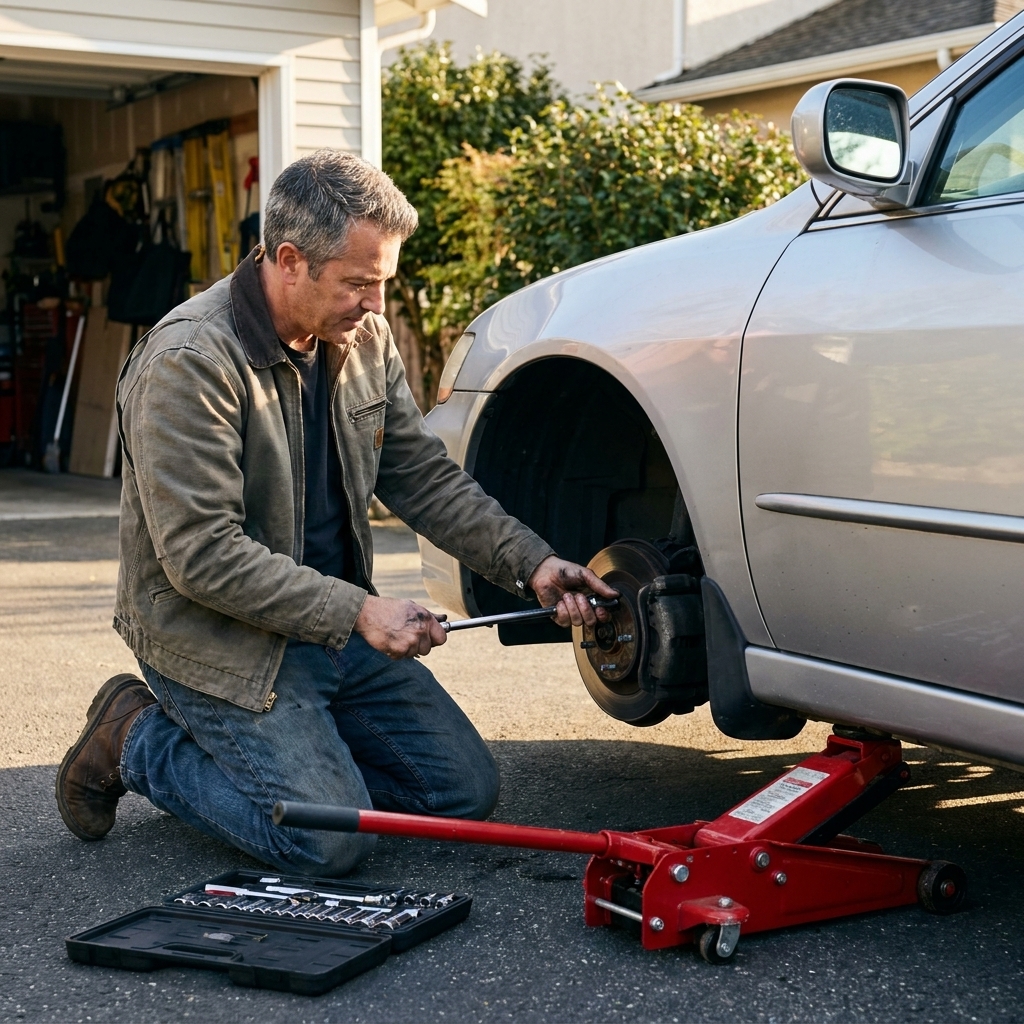
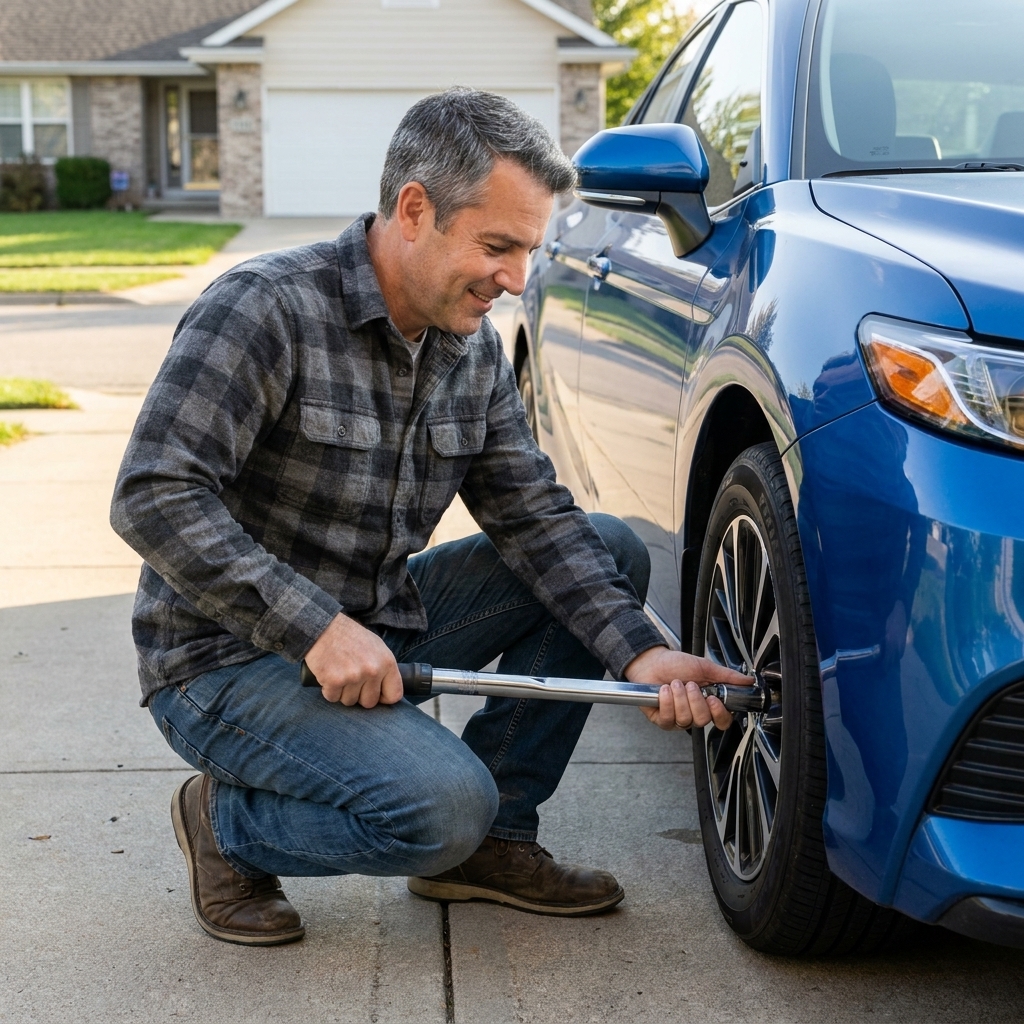
Rotations at home can be doable if you have a flat, safe surface, a proper jack and jack stands, and the correct torque specs. Use wheel chocks, set the parking brake, and break lug nuts loose before the tire leaves the ground. If any of those are missing, have a shop rotate them and torque the wheels.
Absolutely do not: work under a car supported only by a scissor jack.
Battery cleaning and 12-volt battery replacement (with caveats)
On many gas cars and hybrids, a 12-volt battery swap is straightforward. Typically, you disconnect the negative first, then the positive. Reconnect positive first, then negative. But procedures vary: some vehicles use remote jump posts, battery monitoring sensors on the negative cable, or require a memory saver and scan-tool steps. Follow the service manual or a trusted procedure for your exact vehicle.
Registration note: Some models require battery registration or coding after replacement. That is model-dependent, but it can affect charging strategy and battery life if skipped. If your car has start-stop and the battery type matters (AGM vs. standard), match what the car requires.
EV and hybrid nuance: 12-volt work is often DIY-friendly. High-voltage (orange-cable) components are not.
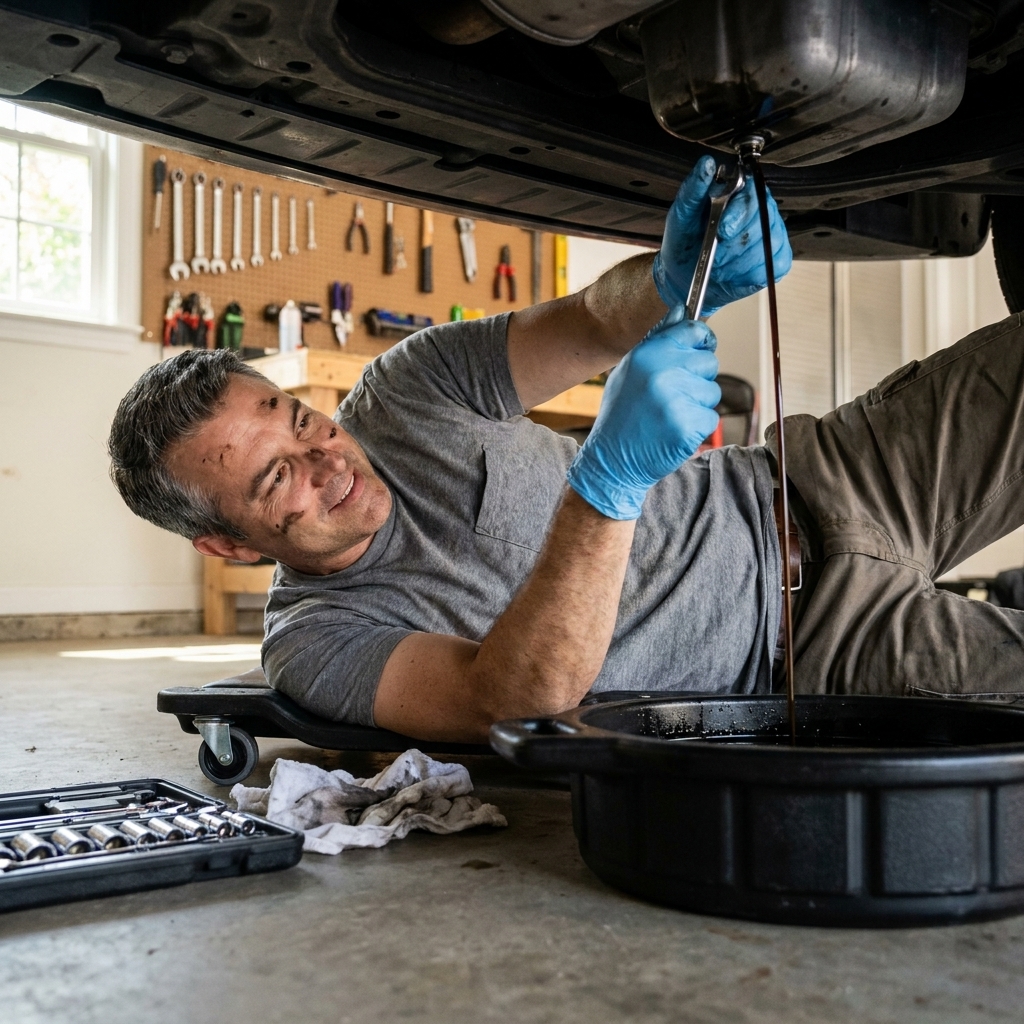
Oil changes (only if you can do it safely and cleanly)
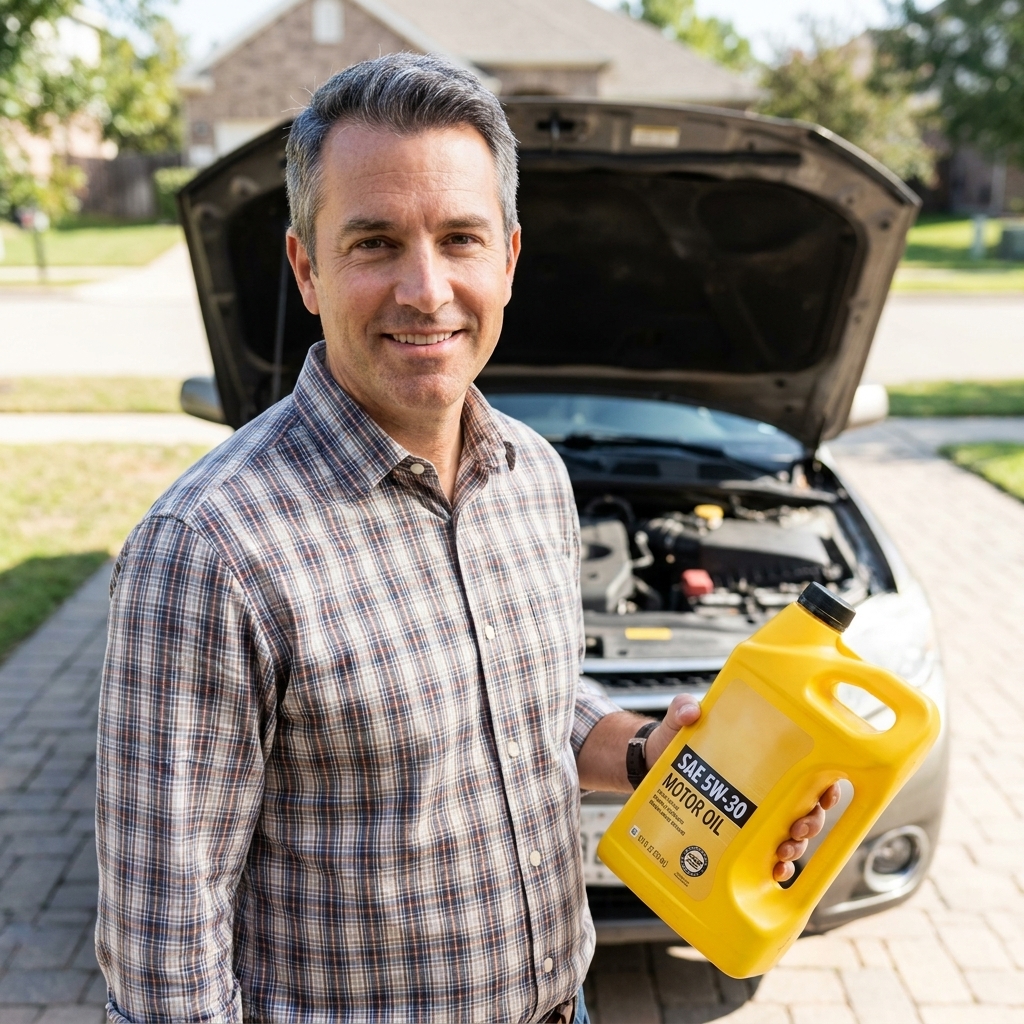
Oil changes are a rite of passage, but they are not mandatory DIY. If you do them at home, do them right:
- Use jack stands or ramps rated for the vehicle
- Replace the drain plug washer if required
- Torque the drain plug and filter correctly
- Make sure the old filter gasket is not stuck to the engine before installing the new filter
- Verify the oil level after running and letting it settle
- Dispose of oil properly
Used oil and filters are typically accepted by auto parts stores and municipal waste sites. Store oil in a sealed container and keep coolant and other fluids away from pets and kids, especially since coolant is toxic and animals are attracted to its smell.
If your car has a cartridge filter housing, a low-slung plastic belly pan, or a filter buried behind suspension components, that is when I tell people to consider a reputable shop instead of wrestling with it in the driveway.
Intermediate DIY: doable, but not first-weekend work
These can be reasonable for careful DIYers with the right tools, service info, and patience. They are also the ones I’ve seen go wrong most often when people rush.
Brake pads and rotors (with strict rules)
Brakes are not the place to guess. The job is doable, but the standards are higher:
- Use a torque wrench on caliper bracket bolts and lug nuts
- Support calipers properly, never let them hang by the hose
- Clean and lubricate slide pins with the correct brake grease
- Check rotor thickness and minimum spec, not just how it looks
- Bed pads properly after installation
Stop and call a pro if: you see brake fluid leaks, seized caliper pistons, heavily rusted lines, or you have an electronic parking brake you are not sure how to service. Some vehicles require a scan tool to put the rear brakes into service mode.
Spark plugs and ignition coils
On many 4-cylinder engines, this is a great skill-builder. On some transverse V6s and modern turbo engines, access is tough and broken plugs get expensive fast.
Rule: If the service procedure warns about engine temperature, soak time, or special tools, follow it. Stripping threads in an aluminum cylinder head is a bad day.
Serpentine belts (and tensioners if you know what you’re doing)
A worn belt is cheap. A failed tensioner can leave you stranded. If you can safely relieve tension and route the belt correctly using the belt routing diagram, it can be a solid DIY job. If access requires removing mounts or digging near the timing cover, consider a shop.
Jobs that should go to a certified mechanic
Here’s the blunt list. These jobs can be dangerous, require expensive diagnostic equipment, or carry a huge “one mistake costs thousands” penalty.
Airbags and seat belt pretensioners
Modern restraint systems are explosive devices by design. Diagnosis and replacement should be done by trained professionals with proper scan tools and procedures.
Steering and suspension safety-critical parts
- Ball joints
- Tie rod ends and inner tie rods
- Control arms and subframe work
- Wheel bearings (especially press-in types)
It is not that DIY is impossible. It is that the consequences of getting it wrong are severe, and these jobs often require presses, heat, alignment equipment, and experience reading wear patterns.
Brake hydraulics and ABS problems
Brake lines, master cylinders, ABS modules, and anything requiring scan-tool bleeding is pro territory for most people. Many routine pad and rotor jobs do not require a scan tool, and simple fluid bleeds can be possible on some vehicles. But if the ABS hydraulic unit has been opened, run dry, or air has been pulled into the modulator, scan-tool bleeding is often required to get a firm pedal back.
Timing belts, timing chains, and internal engine work
If your engine is interference design and timing is off by a tooth, you can bend valves. Shops charge what they charge here because the precision matters and the comeback risk is high.
Transmission work, internal differential work, and clutches
Even a “simple” clutch job can involve heavy lifting, seized hardware, and precise torque sequences. Automatic transmission diagnosis is its own specialty.
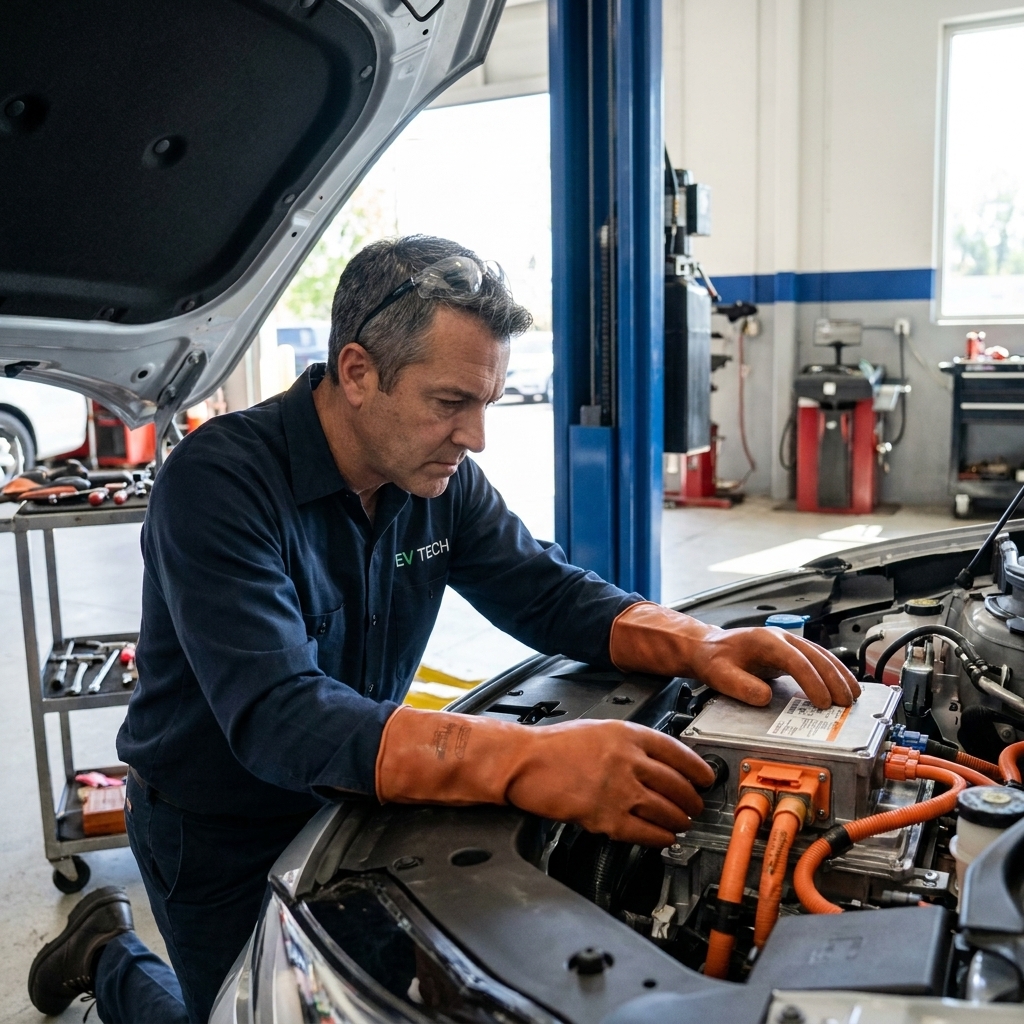
Hybrid and EV high-voltage systems
Hybrids and EVs can carry lethal voltage. High-voltage battery, inverter, orange-cable work, and high-voltage cooling circuits should be handled by techs trained for that system.
Tools that make DIY safer
You do not need a pro box to do basic maintenance, but a few essentials change everything.
- Quality floor jack and jack stands: rated above your vehicle’s weight
- Wheel chocks: cheap insurance when the car is in the air
- Tire pressure gauge: digital or dial, just consistent
- Torque wrench: especially for wheels and brake hardware
- OBD-II code reader: helpful for check engine lights and basic data
- Service info access: owner’s manual plus a reputable repair database if you’re going beyond basics
- Safety gear: nitrile gloves, eye protection, and a fire extinguisher in the garage
If you’re improvising tools to make a job “work,” that’s usually your signal the job is crossing into mechanic territory.
Common DIY mistakes I see
Overtightening everything
Oil drain plugs, spark plugs, wheel lugs, and plastic engine covers are frequent victims. Torque specs exist for a reason. “Good and tight” is not a number.
Using the wrong fluid
Coolant types, CVT fluid, power steering fluid, and brake fluid matter. Mixing types can cause seal damage, overheating, or poor shifting.
Chasing a check engine light with parts
A code is a clue, not a verdict. Randomly throwing sensors at a problem gets expensive fast. Use live data, smoke testing, and proper diagnosis, or pay someone who will.
Skipping the final safety check
After any wheel, brake, or suspension-related DIY:
- Re-torque lug nuts
- Confirm a firm brake pedal before moving
- Test at low speed in a safe area
- Recheck for leaks
When paying a mechanic is smarter
Sometimes the decision is not about ability, it’s about value.
- No safe workspace: sloped driveway, soft ground, or poor lighting
- No time buffer: if the car must run Monday morning and you’re starting Sunday night
- Rust belt reality: seized fasteners can turn a one-hour job into an all-day fight
- Warranty or service records matter: especially for newer vehicles or leased cars
- Calibration needs: many modern repairs require scan tools and resets
A good shop is not the enemy of DIY. Think of them as your escalation point.
A simple decision checklist
Before you start, ask yourself:
- Do I have the exact procedure and torque specs for my vehicle?
- Do I have the correct tools to do it without improvising?
- Can I stop mid-job and still get to work tomorrow?
- If I mess this up, is the result annoying, or dangerous and expensive?
If the answers feel shaky, book the appointment and save DIY for a job that builds confidence instead of stress.
FAQ
Is it worth doing your own oil changes anymore?
Sometimes. If you value control and you can do it safely, yes. Pure dollars-and-cents savings depends on oil capacity, filter type, and local shop pricing. For many drivers, the bigger benefit is knowing it was done right and being able to inspect for leaks, torn boots, and other issues while you’re under the car.
Can I do my own brakes as a beginner?
If you mean pads and rotors, it can be a second or third project after you’re comfortable lifting the car safely and torquing wheels correctly. If you mean bleeding lines, ABS problems, electronic parking brake service mode, or rusty brake line work, I’d leave that to a pro.
What’s the most dangerous DIY job people attempt?
Working under an improperly supported car is number one. After that, it’s high-voltage hybrid and EV work and brake or steering repairs done without proper torque specs and verification.
How do I find a mechanic I can trust?
Look for ASE certifications, state licensure where applicable, clear written estimates, and a willingness to explain without pressure. Reviews help, but they are not the whole story. A trustworthy shop can usually show inspection photos or notes, will tell you what can wait and what cannot, and will answer questions without getting defensive.